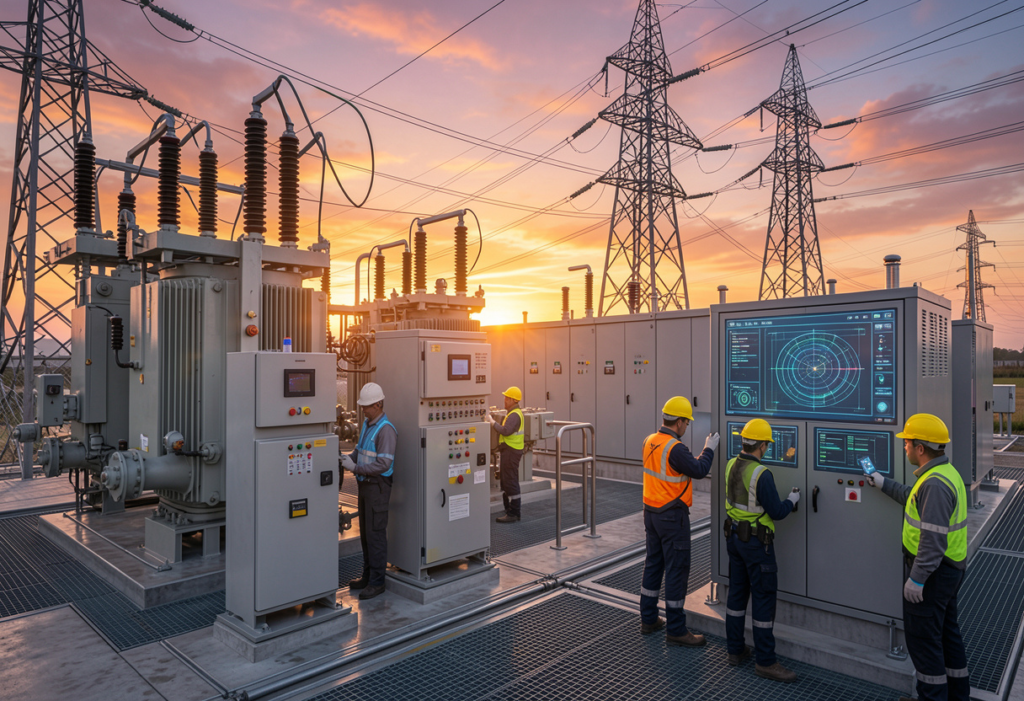
Modern electrical infrastructure depends heavily on well-planned substations. A properly designed substation improves power reliability, enhances operational safety, and supports future expansion needs. As power demand grows and grids become more complex, utilities and industries require smarter and more efficient substations that can operate safely under changing conditions.
Effective power substation design is not only about electrical equipment placement. It also includes protection systems, communication networks, automation, civil planning, and long-term operational reliability. Every component must work together to ensure uninterrupted power delivery and system stability.
This guide explains the best practices that engineers and utility planners should follow to achieve efficient and safe substation performance.
Understanding the Importance of Substation Design
Substations play a major role in transmitting and distributing electrical energy. They control voltage levels, isolate faults, and protect the overall power system. Poor planning can lead to operational failures, maintenance challenges, and costly downtime.
An efficient design improves:
- System reliability
- Equipment lifespan
- Maintenance accessibility
- Personnel safety
- Grid stability
- Future scalability
Modern substations must also support renewable energy integration, digital monitoring, and advanced automation systems. This makes careful engineering planning more important than ever.
Start with Proper Site Selection and Layout Planning
One of the first steps in successful substation engineering is selecting the right location. Site conditions directly impact construction costs, safety, and future operational performance.
Engineers should evaluate:
- Soil conditions
- Flood risk
- Accessibility for maintenance teams
- Environmental impact
- Nearby transmission routes
- Space for future expansion
A well-organized layout minimizes operational risks and simplifies maintenance activities. Equipment spacing must follow electrical clearance standards to prevent flashovers and ensure worker safety.
Good layout planning also reduces cable lengths and improves overall efficiency. Separating control buildings, transformers, switchgear, and protection systems properly helps avoid operational interference and simplifies troubleshooting.
Focus on Safety Standards and Protection Systems
Safety is one of the most critical parts of substation engineering. Every design must comply with local and international electrical standards to reduce risks to equipment and personnel.
Protection systems should be carefully coordinated to isolate faults quickly before damage spreads across the network. Key protection elements include:
- Circuit breakers
- Protective relays
- Grounding systems
- Surge protection devices
- Arc flash mitigation measures
Grounding design is especially important because it protects workers and equipment from dangerous fault currents. A properly designed grounding grid ensures that voltage levels remain safe during fault conditions.
Clear safety signage, restricted access zones, and emergency shutdown procedures should also be included during the planning stage.
Integrate Advanced Automation and SCADA Systems
Modern substations are becoming increasingly intelligent through automation technologies. A reliable substation scada system allows operators to monitor and control equipment remotely in real time.
SCADA systems provide several operational benefits:
- Faster fault detection
- Remote monitoring capabilities
- Reduced operational downtime
- Improved data analysis
- Better system coordination
With real-time communication between field devices and control centers, utilities can respond quickly to abnormal conditions. Automated alarms and predictive maintenance tools help reduce unexpected equipment failures.
Digital substations also improve cybersecurity and data management when designed properly. Engineers should include secure communication protocols and network redundancy to maintain reliable operations.
Integrating automation early in the design process ensures smoother installation and better long-term system performance.
Design for Energy Efficiency and Reliability
Efficiency is a major concern in modern substations. Poor equipment selection and system losses can increase operational costs over time.
To improve efficiency, engineers should:
- Use high-efficiency transformers
- Optimize conductor sizing
- Reduce transmission losses
- Select energy-efficient switchgear
- Implement proper cooling systems
Reliable equipment selection is equally important. Choosing quality components with proven performance records reduces maintenance costs and extends system lifespan.
Redundancy planning also improves reliability. Backup transformers, duplicate communication systems, and alternative power paths help maintain service continuity during faults or maintenance activities.
An efficient substation design should support both current operational requirements and future load growth without major reconstruction.
Improve Coordination Between Civil and Electrical Engineering
Successful substations require strong coordination between civil and electrical engineering teams. Structural planning directly affects equipment installation, safety, and maintenance access.
Civil engineers must consider:
- Foundation strength
- Drainage systems
- Cable trenches
- Fire protection systems
- Seismic requirements
Electrical engineers, meanwhile, focus on equipment placement, cable routing, and protection coordination. Close collaboration between disciplines reduces construction delays and prevents costly design conflicts.
Modern substation design build projects often benefit from integrated project delivery approaches where all engineering teams work together from the beginning. This improves communication, accelerates project timelines, and enhances overall project quality.
Plan for Future Expansion and Smart Grid Integration
Power systems continue to evolve with renewable energy integration, battery storage systems, and smart grid technologies. Substations designed only for current needs may become outdated quickly.
Future-ready substations should include:
- Additional space for expansion
- Flexible bus configurations
- Scalable communication systems
- Renewable energy compatibility
- Smart monitoring infrastructure
Planning for future upgrades reduces long-term costs and avoids major operational disruptions later.
Utilities are increasingly adopting digital substations that rely on advanced communication protocols and intelligent electronic devices. Preparing for these technologies during the initial design phase creates a more adaptable and sustainable power network.
Conclusion
Efficient and safe substations are essential for reliable power delivery in modern electrical networks. Careful engineering decisions during planning and construction significantly improve system reliability, operational safety, and long-term performance.
A successful power substation design combines strong protection systems, efficient layouts, modern automation, and scalable infrastructure. Integrating advanced monitoring through a reliable substation scada system further improves operational visibility and maintenance efficiency.
At the same time, collaborative substation design build strategies help streamline construction while maintaining engineering quality and safety standards.
As electrical infrastructure continues to evolve, substations must be designed with flexibility, efficiency, and resilience in mind. By following these best practices, utilities and industries can create substations that support reliable power delivery for decades to come.