Ever noticed how a patch of ground looks perfectly fine one day and starts sinking a few weeks later? It can be frustrating, especially when you are preparing a foundation, filling a trench, or leveling a yard. In many cases, the problem starts below the surface. Choosing quality fill sand near me in California is a good first step, but the way that sand is compacted matters just as much. Get it right, and the ground can stay firm and stable. Rush the job, and trouble may show up later.
Why Does Fill Sand Need Proper Compaction?
Fill sand is often used to raise ground levels, fill empty spaces, and prepare areas for construction. But pouring sand into a space and calling it a day will not always give you a solid base.
Loose sand contains small gaps between its grains. When pressure is applied, those grains can shift and settle into a tighter arrangement. Compaction helps reduce these gaps, giving the filled area better support.
Think about a driveway. If the sand underneath is loose, the surface may sink where vehicles pass most often. You might notice dips, uneven patches, or cracks appearing sooner than expected. Nobody wants to repair the same area twice!
How Compaction Improves Soil Stability
Proper compaction helps fill sand support the weight placed on it. The grains settle closer together, making the filled ground less likely to move under normal loads.
Here is how that helps with common projects:
- Better load support: A well-compacted layer can provide a firmer base for suitable construction work.
- Less unwanted settling: Compacting the sand reduces the chance of large voids collapsing later.
- More even surfaces: Proper preparation helps prevent low spots from forming under driveways, walkways, and slabs.
- Improved ground consistency: When the sand is spread and compacted evenly, the finished area is less likely to have soft and firm patches.
Of course, compaction alone cannot fix every soil problem. The original ground, drainage conditions, fill depth, and intended use all play a part.
What Happens When Fill Sand Is Overlooked?
Here is where things can get messy. If fill sand is placed in one thick layer and compacted poorly, the top may feel firm while the material underneath remains loose.
Over time, the buried sand can settle under the weight of the surface or nearby structures. That movement may lead to uneven paving, sinking ground, or cracks in areas that depend on a stable base.
Too much water can also cause trouble. Very dry sand may not compact as easily under certain conditions, while excessive moisture can make it harder to achieve the desired result. The goal is to work with suitable moisture levels and compact the material in manageable layers.
Simple Ways to Get Better Compaction
You do not need to make the job complicated, but a little care goes a long way.
Start with the ground underneath. Remove loose debris, organic material, and anything that could break down or shift later. If the existing soil is weak, it may need additional preparation before the fill goes in.
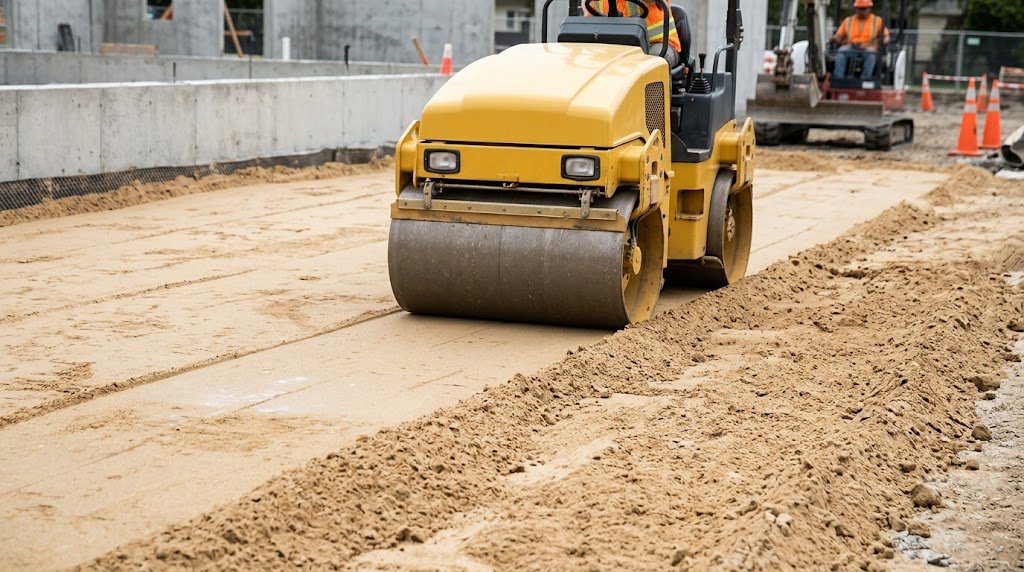
Build up the fill in layers. Rather than dumping a large amount of sand at once, spread it in manageable lifts. Compact each layer before adding the next. The right layer thickness depends on the equipment and project requirements.
Pay attention to moisture. Sand should have a suitable moisture level for the compaction method being used. Avoid guessing when the project requires specific compaction results.
Check the finished area. For important construction work, visual inspection may not be enough. Compaction testing can help confirm whether the material meets the required specifications.
Choosing the Right Fill Sand for Your Project
Not every sand works the same way in every situation. Grain size, material cleanliness, moisture, and the condition of the ground underneath can all affect the final result.
Before ordering, think about what you are filling and what will sit on top of it. A garden area, utility trench, driveway, and building foundation may each have different material requirements. Foundation work, in particular, should follow the project plans and the advice of a qualified professional.
If you are searching for fill sand near me in California, Western Materials can help you explore material options for your project. Share your intended use, approximate quantity, and delivery location so you can choose a suitable product without unnecessary guesswork.
Need fill sand for your next project? Get a quote from Western Materials and take the first step toward a properly prepared, stable base.
Frequently Asked Questions
1. Does compacted fill sand prevent soil from sinking?
Proper compaction reduces the risk of settlement by bringing sand grains closer together. Still, the result depends on the underlying soil, fill depth, drainage, and the weight the area must support.
2. Can fill sand be compacted when it is completely dry?
Yes, sand can be compacted when dry, but the results depend on its grain size, grading, and the equipment used. Some materials compact more effectively with controlled moisture.
3. How thick should each layer of fill sand be?
There is no single thickness for every project. Layer depth depends on the compaction equipment, sand type, and required density. Follow the project specifications and equipment guidance.
4. Is fill sand suitable for building foundations?
It may be suitable for certain foundation preparation or filling applications, but not every fill sand is approved for this purpose. Check the engineered plans, soil conditions, and required compaction standards before using it.
5. How can we tell if fill sand is properly compacted?
A firm-looking surface is not proof of adequate compaction. For construction projects, field density testing or other specified tests can verify whether the required compaction level has been reached.