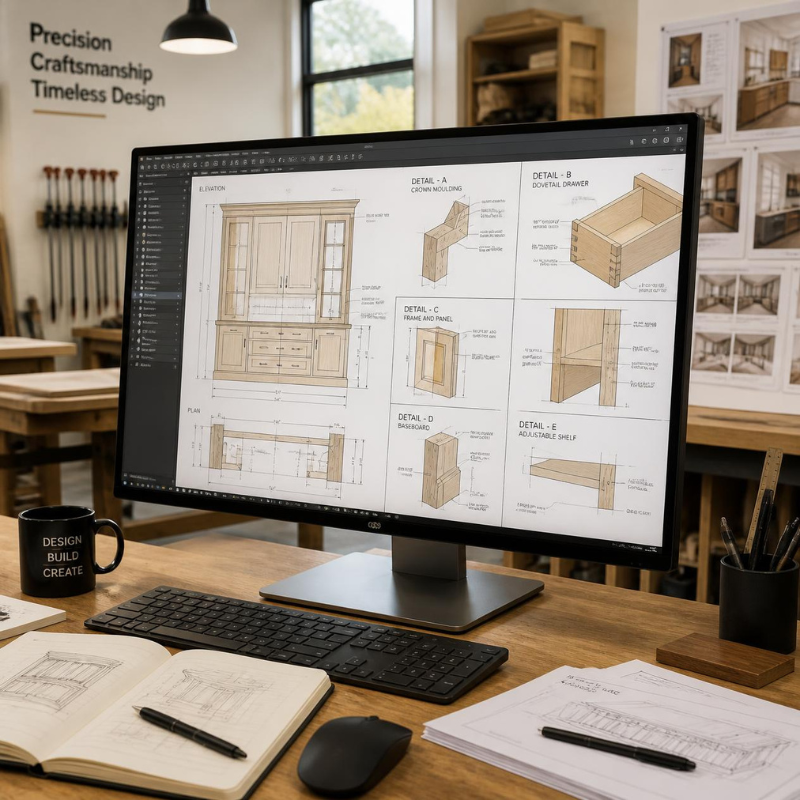
Modern millwork manufacturing has evolved significantly with the adoption of Computer Numerical Control (CNC) machines. From custom cabinets and reception desks to commercial casework and architectural woodwork, CNC technology enables manufacturers to achieve unmatched precision, speed, and consistency. However, CNC machines are only as accurate as the digital information they receive.
This is where millwork shop drawings drafters play a vital role. They bridge the gap between architectural design and CNC production by creating highly detailed, fabrication-ready drawings and machine-compatible digital files. Without accurate shop drawings, even the most advanced CNC equipment can produce costly mistakes, material waste, and project delays.
In this article, we’ll explore how millwork shop drawings drafters support CNC manufacturing and why their expertise is essential for successful woodworking projects.
Understanding CNC Manufacturing in Millwork
CNC manufacturing uses computer-controlled machines to cut, drill, rout, groove, shape, and engrave wood-based materials with exceptional precision.
Common CNC machines used in millwork include:
- CNC Routers
- CNC Panel Saws
- CNC Drilling Machines
- CNC Milling Machines
- Automatic Edge Banding Systems
- Nesting CNC Machines
These machines require precise digital data, including dimensions, hole locations, groove depths, panel sizes, machining sequences, and tooling instructions. Shop drawing drafters prepare this information before production begins.
The Role of a Millwork Shop Drawings Drafter
A millwork shop drawings drafter converts architectural drawings, design concepts, and specifications into detailed production documents that manufacturers can confidently use.
Their responsibilities include:
- Producing fabrication-ready shop drawings
- Creating panel layouts
- Defining joinery methods
- Preparing assembly drawings
- Generating cut lists
- Specifying hardware locations
- Providing CNC-ready geometry
- Coordinating with architects and production teams
The drafter ensures every component is accurately represented before machining starts.
Creating CNC-Ready Drawings
Unlike conceptual drawings, CNC-ready shop drawings contain every manufacturing detail required by fabrication equipment.
These include:
Exact Dimensions
Every panel, shelf, door, drawer, and molding is dimensioned precisely.
Even a small error can affect:
- Door alignment
- Cabinet assembly
- Hardware installation
- Finished appearance
Material Specifications
The drawings clearly define:
- Material type
- Thickness
- Grain direction
- Laminate finish
- Veneer orientation
- Core material
- Edge banding requirements
Correct material information allows CNC programs to use the proper machining parameters.
Machining Details
A drafter specifies:
- Drill holes
- Shelf pin locations
- Dado grooves
- Rabbets
- Mortises
- Pocket holes
- Counterbores
- Routing paths
These details become part of the CNC programming process.
Panel Identification
Every part receives a unique identification number.
This allows:
- Faster machining
- Easier assembly
- Better inventory control
- Reduced installation errors
Supporting CNC Programming
Many millwork companies use specialized software to generate CNC machine code directly from shop drawings.
Professional drafters prepare models compatible with systems such as:
- AutoCAD
- Autodesk Inventor
- Microvellum
- Cabinet Vision
- SolidWorks
- AlphaCAM
- WoodWOP
- Fusion 360
- TopSolid Wood
The drafter organizes the model so programmers can quickly generate:
- Tool paths
- G-code
- Machine operations
- Drilling cycles
- Routing sequences
- Nesting layouts
This dramatically reduces programming time.
Accurate Part Geometry
CNC machines rely entirely on geometry.
The drafter creates:
- Exact curves
- Angled panels
- Radius corners
- Complex profiles
- Decorative cutouts
- Curved cabinetry
- Custom furniture components
Any inaccurate geometry will be reproduced exactly by the CNC machine.
Optimizing Material Usage
Professional drafters help manufacturers reduce waste by organizing panel layouts efficiently.
Benefits include:
- Better sheet utilization
- Less offcut waste
- Lower material costs
- Faster nesting
- Improved production efficiency
Optimized layouts can significantly improve profitability on large projects.
Improving Manufacturing Accuracy
One of the greatest advantages of CNC manufacturing is repeatability.
Shop drawing drafters ensure:
- Every cabinet matches
- Every shelf aligns correctly
- Every drawer fits
- Every hardware hole is identical
- Every panel is interchangeable
Consistency is especially important for commercial millwork projects involving hundreds or thousands of components.
Reducing Human Error
Manual fabrication often relies on measurements taken directly from drawings.
CNC manufacturing eliminates much of this manual work—but only if the shop drawings are accurate.
Professional drafters minimize errors by:
- Checking dimensions
- Detecting conflicts
- Coordinating assemblies
- Reviewing tolerances
- Validating part relationships
This reduces costly production mistakes.
Supporting Complex Joinery
Modern millwork uses many joinery methods.
Examples include:
- Dado joints
- Rabbet joints
- Biscuit joints
- Confirm screws
- Cam lock connectors
- Dowels
- Mortise and tenon joints
- Pocket screw systems
The drafter accurately locates every connection so CNC machines can machine each component correctly.
Hardware Integration
Millwork projects involve numerous hardware components.
These include:
- Hinges
- Drawer slides
- Shelf supports
- Pull handles
- Locks
- Lift systems
- Adjustable feet
- Fasteners
Shop drawing drafters specify:
- Hole diameters
- Hole depths
- Mounting positions
- Clearances
- Manufacturer standards
This ensures hardware fits perfectly during assembly.
Assembly Coordination
CNC machining is only one stage of production.
Drafters also prepare:
- Exploded views
- Assembly drawings
- Installation details
- Part numbering systems
- Labeling schedules
These documents help production teams assemble products efficiently after machining.
Supporting Quality Control
Quality control starts before manufacturing begins.
Shop drawing drafters verify:
- Dimensions
- Material compatibility
- Hardware positioning
- Machining clearances
- Edge treatments
- Panel orientation
This proactive review reduces production defects and rework.
Improving Communication Between Departments
A millwork project typically involves:
- Architects
- Interior designers
- Engineers
- Estimators
- Project managers
- CNC programmers
- Machine operators
- Installers
Shop drawings serve as the common reference for all stakeholders.
This improves coordination and minimizes misunderstandings throughout the project lifecycle.
Supporting Custom Millwork Production
Every custom project presents unique manufacturing challenges.
Examples include:
- Curved reception desks
- Luxury kitchens
- Retail displays
- Hotel furniture
- Healthcare cabinetry
- Office casework
- Museum exhibits
- Residential built-ins
Experienced drafters translate these custom designs into CNC-compatible manufacturing documents while maintaining the designer’s intent.
Benefits of Professional Millwork Shop Drawings for CNC Manufacturing
Working with experienced millwork shop drawings drafters offers several advantages:
- Greater manufacturing accuracy
- Reduced material waste
- Faster CNC programming
- Improved production efficiency
- Fewer fabrication errors
- Better hardware integration
- Accurate cut lists
- Streamlined assembly
- Consistent product quality
- Faster project completion
- Lower production costs
- Easier quality inspections
Why Outsource Millwork Shop Drawings?
Many manufacturers choose to outsource drafting services to specialized professionals.
Outsourcing provides:
- Access to experienced millwork drafters
- Faster turnaround times
- Scalable drafting support
- Lower operational costs
- Expertise in industry-standard software
- High-quality CNC-ready documentation
- Reduced workload for in-house teams
This approach allows fabricators to focus on production while ensuring accurate documentation for every project.
Best Practices for CNC-Ready Millwork Shop Drawings
To maximize manufacturing efficiency, professional drafters follow several best practices:
- Use standardized layer management and naming conventions.
- Apply consistent dimensioning and tolerances.
- Include complete material and hardware specifications.
- Verify all measurements before issuing drawings.
- Maintain accurate panel numbering and labeling.
- Coordinate drawings with architectural and structural documents.
- Design with CNC tooling limitations in mind.
- Review drawings with production teams before release.
- Generate clear cut lists and assembly documentation.
- Update drawings promptly after design revisions.
These practices reduce production risks and improve communication across the project lifecycle.
Conclusion
CNC manufacturing has transformed the millwork industry by delivering exceptional speed, precision, and repeatability. Yet, the performance of CNC equipment depends on the quality of the information it receives. Skilled millwork shop drawings drafters create the detailed, production-ready documentation that drives efficient fabrication, minimizes errors, and ensures every component fits together as intended.
Whether producing custom residential cabinetry or large-scale commercial casework, investing in accurate shop drawings leads to smoother workflows, reduced material waste, faster production, and higher-quality finished products. For manufacturers seeking reliable and scalable drafting support, outsourcing experienced millwork drafting services is an effective way to enhance CNC manufacturing performance while keeping projects on schedule and within budget.
Frequently Asked Questions (FAQs)
1. What is the relationship between shop drawings and CNC manufacturing?
Shop drawings provide the precise dimensions, machining details, material specifications, and assembly information required to generate CNC machine programs and fabricate millwork accurately.
2. Can CNC machines work without detailed shop drawings?
No. CNC machines require accurate digital data and fabrication details. Incomplete or inaccurate shop drawings can lead to production errors, wasted materials, and costly rework.
3. What software do millwork drafters use for CNC-ready drawings?
Common software includes AutoCAD, Microvellum, Cabinet Vision, Autodesk Inventor, SolidWorks, AlphaCAM, WoodWOP, Fusion 360, and TopSolid Wood.
4. How do shop drawings reduce manufacturing costs?
They improve material optimization, minimize machining errors, reduce rework, streamline assembly, and accelerate production, resulting in lower overall project costs.
5. Why should manufacturers outsource millwork shop drawing services?
Outsourcing gives manufacturers access to experienced drafters, faster turnaround times, scalable resources, and high-quality CNC-ready documentation without increasing in-house staffing costs.