Okay, so is tankless actually worth it?
Mostly, yeah. Not always though. My neighbor put one in last spring and now he brings it up at every cookout, no more cold showers, got his garage corner back, whatever. Meanwhile a guy I know ordered a cheap unit online, paid somebody’s cousin to hook it up, and was calling for repairs before the year was out. So it can go great or it can go sideways. Instant water heaters tankless style aren’t magic, they’re just a different way of doing the same job. Most of what I’m telling you here comes from stuff plumbers in Cypress see week after week.
“Instant” is kind of a lie
Sorry to be the one saying it. Nothing’s instant. The heater kicks on when water starts moving, sure, and you’re not waiting on a fifty gallon tank to warm up, but the hot water still has to crawl through your pipes to reach the shower. If the master bath is way across the house from the heater, you’ll stand there a while. People blame the unit, call us angry, and it’s really just pipe length. A little recirculation pump can fix most of it. Ask about that before install, not after.
Gas versus electric
This one comes first because it changes everything else. Gas units put out more hot water and around here they’re usually cheaper to run every month. The catch is venting, plus your gas line might be too skinny for what the new heater needs, and that’s extra money nobody planned on. Electric is smaller, easier to mount, no venting headaches. But it pulls a lot of power, and plenty of older electrical panels just can’t take it. So before you fall for any model, have somebody look at your gas line and your panel. Boring step. Saves you a ton of grief.
Sizing it right
People mess this up constantly. Go too small and the shower turns lukewarm the second somebody starts the dishwasher, which is the worst. Go too big and you’ve paid for muscle you won’t ever use. It really boils down to two numbers. Flow rate, that’s gallons per minute, basically how much hot water you want running at once. And temperature rise, the difference between what comes into the house and what you want out of the tap. Our groundwater down here isn’t ice cold like up north, so you can often go smaller than the chart suggests. Count what runs at the same time, honestly that’s most of the work.
Think about how you actually live
Forget the brochure for a sec. What do your mornings look like? Three people showering back to back? Somebody filling a soaker tub every night? Those fancy rain heads with a bunch of body jets, they go through hot water like crazy. A family of five doesn’t live like a retired couple, so the heater shouldn’t be picked off an average on a chart. A decent plumber is gonna ask you about all this. If somebody quotes you a number without asking one question, I’d keep shopping.
Savings, but let’s not oversell it
Here’s where the savings come from. A tank keeps heating water all day and night even when nobody’s home, a tankless doesn’t. Look at the Uniform Energy Factor rating, bigger number is better. Condensing gas models squeeze extra heat out of the exhaust, they cost more upfront and take a while to pay back. Now, anyone telling you your bill gets cut in half is selling something. It drops, a bit. What really matters is lifespan, these things can go around twenty years, close to double a regular tank, and that’s where the value is.
What it’ll really cost you
The heater is only part of the bill. Installation can run more than the unit itself, especially if you’re swapping out a tank and need new venting or a bigger gas line or electrical work on top. Cheap models tend to cost you down the road in repairs. Get three written quotes from licensed plumbers in Cypress, and read what’s included, permits, venting, hauling off the old tank. If one quote is way lower than the rest, it probably leaves stuff out. You find out halfway through the job when you’re stuck with no hot water and no leverage.

Features that are worth it, and some that aren’t
Digital temperature control, yes. Set it once and nobody gets scalded, especially if you’ve got little kids. A built-in recirculation pump or a small buffer tank helps with that waiting issue. Wi-Fi apps are a toss up, some folks love checking their heater from the couch, I know people who never opened the app once. Freeze protection matters more than you’d think, we all remember that big freeze and it can happen again. Oh, and look at the error code system. A unit that tells you what’s wrong can save a service call. Sometimes two.
Hard water kills these things
This is the big one, honestly. Water in the Cypress area is hard, and minerals build up inside the heat exchanger faster than most people figure. Scale cuts the performance, then slowly kills the heater way earlier than it should have died. It’s the number one reason I see tankless units fail young. Get a water softener if you can, or at least plan to flush the thing every year. Takes about an hour, costs way less than a new heater. Most people skip it, and then they’re surprised when error codes start showing up.
Don’t DIY the install
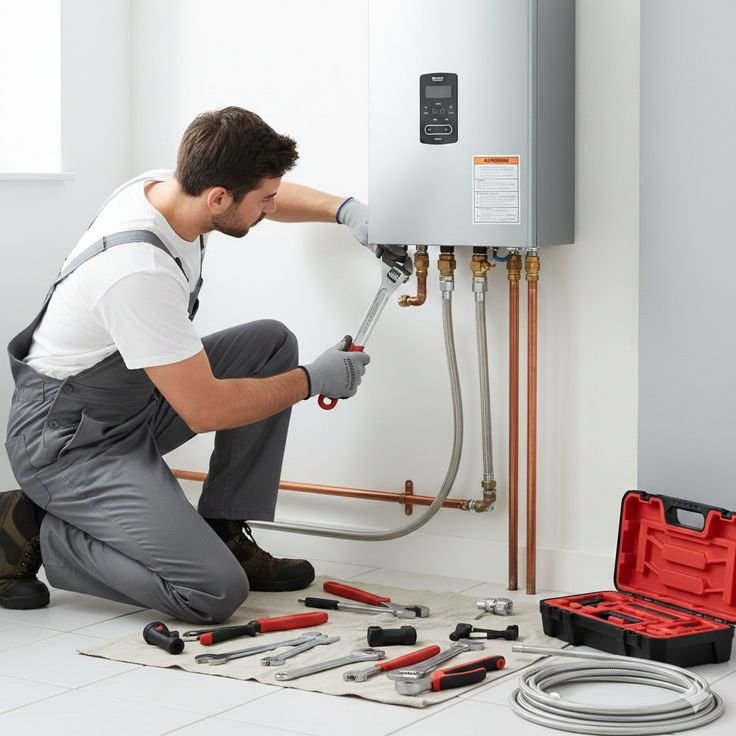
I know, there’s a video for everything. Still no. You’re dealing with gas, venting, water pressure, big electrical loads, and local code, and a mistake on any of those can mean carbon monoxide or a fire. That’s not drama, that’s just what happens. Plenty of manufacturers also void the warranty if a licensed pro didn’t do the work. Local plumbers in Cypress know the codes and the water here, and they’re close enough to actually show up when something breaks. Ask about license, insurance, and how many tankless installs they’ve done. Not tank jobs. Tankless.
Keeping it going
Once it’s in, it needs a little attention, nothing crazy. Flush it yearly, clean the inlet filter, make sure the vent isn’t blocked by something dumb like a bird nest. Book a professional tune up every year or two, more often if the water’s hard. Keep your service records too, because warranty claims sometimes want proof. And if you hear weird noises, or the temperature keeps swinging, or the same error code comes back, don’t wait around. Small problems get expensive fast.
Conclusion
Picking from all the instant water heaters tankless options out there isn’t rocket science if you slow down a little. Pick gas or electric, size it for how your family really uses water, deal with the hard water, and don’t cheap out on the install. Do that and it should last you twenty years or close. Still on the fence? Call a couple of plumbers in Cypress and let them look at your actual setup instead of guessing off a website. That one visit tells you more than any online review.
FAQs
What size tankless water heater do I need for my house?
Depends on how many fixtures run at the same time and how cold your incoming water is. Two showers and a dishwasher need way more capacity than two people living alone. Plumbers in Cypress can work it out in a few minutes.
Are instant water heaters tankless worth the money?
For most families, yeah. They last longer, free up space, and stop wasting energy keeping water hot all day. Upfront cost is higher, but it evens out over the years.
Do tankless water heaters give hot water instantly?
Not exactly. They heat on demand, but the water still has to travel through your pipes. A recirculation pump helps a lot.
How long does a tankless water heater last?
About twenty years with decent care, sometimes more. Skip flushing in a hard water area and that number drops fast.
Can I install a tankless water heater myself?
I wouldn’t. Gas, venting and electrical work need a licensed pro, and a DIY job can void your warranty.
How do I find reliable plumbers in Cypress for a tankless install?
Look for licensed, insured companies with lots of tankless experience. Read reviews, get written quotes, and make sure permits are included.