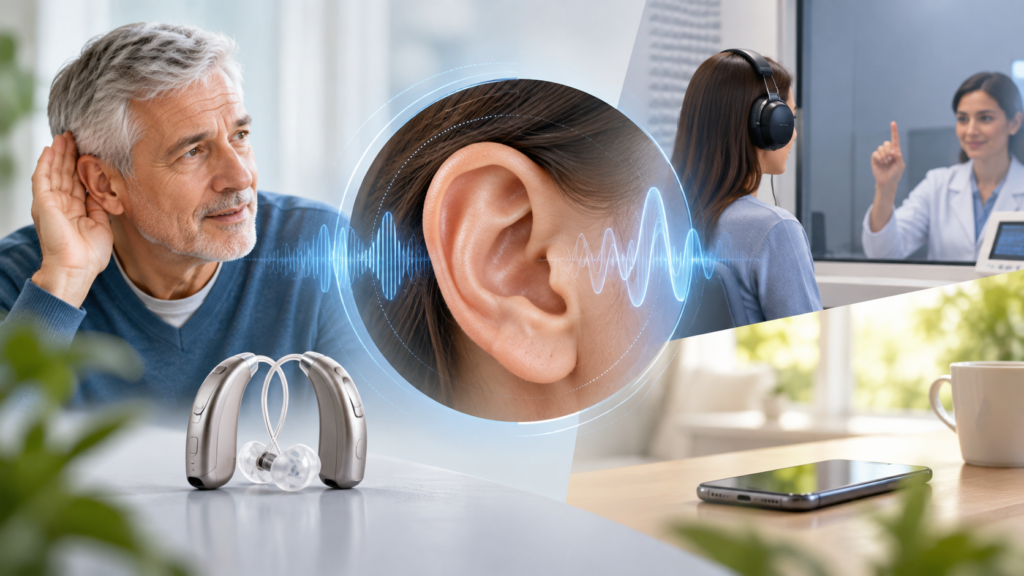
Hearing plays an important role in how we communicate, work, learn, and connect with the people around us. However, hearing difficulties often develop gradually, making them easy to overlook. Many people adjust their daily routines without realizing that their hearing may have changed.
You might find yourself asking others to repeat themselves, increasing the television volume, or struggling to follow conversations in busy environments. While these experiences do not always mean you have hearing loss, they can be signs that a professional hearing assessment may be helpful.
A hearing test is a simple and non-invasive way to understand how well you hear different sounds and frequencies. Identifying hearing difficulties early can help you explore appropriate support and maintain better communication in everyday life.
What Is a Hearing Test?
A hearing test is an assessment performed by a qualified hearing care professional or audiologist to evaluate a person’s ability to hear sounds. Depending on your symptoms and hearing needs, the assessment may include different tests to examine how you respond to sounds at various pitches and volumes.
A hearing assessment may help identify:
-
Difficulty hearing soft sounds.
-
Problems understanding speech.
-
Differences in hearing between the two ears.
-
Hearing changes associated with age or noise exposure.
-
Possible concerns that require further medical evaluation.
The type of test you need depends on your age, symptoms, medical history, and the professional’s assessment.
8 Signs You May Need a Hearing Test
1. You Frequently Ask People to Repeat Themselves
Occasionally asking someone to repeat a sentence is normal. However, if you regularly say “What?” or “Can you repeat that?” during conversations, it may be worth checking your hearing.
You may hear that someone is speaking but struggle to understand the words clearly. This can be particularly noticeable when people speak softly, quickly, or from another room.
2. You Struggle to Hear in Noisy Places
Restaurants, family gatherings, workplaces, and public spaces can be challenging when background noise makes it difficult to distinguish speech.
You may notice that:
-
You can hear someone speaking but cannot understand their words.
-
You rely heavily on lip reading or facial expressions.
-
You avoid conversations in crowded environments.
-
You feel tired after trying to follow discussions.
Difficulty understanding speech in noise can have several causes, including hearing loss. A hearing assessment can help determine whether further evaluation is appropriate.
3. You Keep Increasing the Television or Phone Volume
If your television, radio, or phone volume seems too low for you but too loud for others, this may be a potential sign of hearing difficulty.
Family members may notice this before you do. They might comment that the television is unusually loud or that you do not respond when they speak from another room.
This sign alone cannot confirm hearing loss, but it can be a useful reason to arrange a hearing test.
4. You Have Difficulty Hearing on the Phone
Telephone conversations can be challenging because you cannot rely on facial expressions or lip movements to understand what the other person is saying.
You may experience difficulty when:
-
The caller speaks quietly.
-
The connection is not clear.
-
You struggle to understand certain words.
-
You frequently switch ears while using the phone.
-
You prefer texting because phone conversations are difficult.
Modern hearing aids may offer features such as Bluetooth connectivity or direct audio streaming, depending on the device and your hearing needs. A professional assessment can help determine which options may be suitable.
5. You Find Certain Voices Difficult to Understand
Some people can hear sounds but struggle to distinguish particular speech sounds. High-pitched voices, children’s voices, or soft speech may be especially difficult to understand.
You may notice that you can follow a conversation with one person but struggle with another. This can happen when certain frequencies are harder to hear.
A hearing test evaluates hearing sensitivity across different frequencies and may help identify patterns that are not immediately obvious in everyday life.
6. You Experience Ringing or Other Sounds in Your Ears
Ringing, buzzing, humming, or hissing sounds in the ears are commonly described as tinnitus. Tinnitus can occur for different reasons and may be associated with hearing changes, noise exposure, ear conditions, or other factors.
If you experience persistent or bothersome tinnitus, a hearing assessment may help evaluate your hearing and identify whether further medical assessment is needed.
Seek prompt medical attention if tinnitus or hearing changes occur suddenly, particularly when accompanied by sudden hearing loss, dizziness, or other concerning symptoms.
7. You Avoid Social Situations Because of Hearing Difficulties
Hearing challenges can affect more than communication. If you regularly avoid gatherings, group discussions, restaurants, or family events because you are worried about missing conversations, it may be time to consider a hearing assessment.
Struggling to hear can be frustrating and exhausting. Understanding the cause of your difficulty may help you explore practical solutions and feel more confident in social situations.
8. Family Members Notice Your Hearing Difficulties
Sometimes, people close to you recognize changes in hearing before you do. Family members may notice that you:
-
Do not respond when someone calls your name.
-
Misunderstand questions.
-
Watch people’s faces closely while they speak.
-
Turn one ear toward the speaker.
-
Ask others to speak louder or more slowly.
Feedback from family members can be useful, especially when hearing changes develop gradually.
What Happens During a Hearing Test?
The exact process depends on the type of assessment and your individual needs. A professional hearing evaluation may include the following steps.
1. Discussion About Your Hearing Concerns
The hearing professional may ask about your symptoms, medical history, noise exposure, communication difficulties, and any changes you have noticed.
You may also be asked about your work environment, family history of hearing problems, and previous ear-related conditions.
2. Examination of the Ears
An ear examination may be performed to check for visible concerns, such as earwax buildup or other conditions that could affect hearing.
If a medical issue is suspected, you may be referred to an appropriate healthcare professional.
3. Hearing Sensitivity Assessment
During a hearing test, you may listen to sounds at different frequencies and volumes through headphones or other equipment. You will usually be asked to respond when you hear a sound.
The results can help the professional understand the softest sounds you can detect at different pitches.
4. Speech Understanding Assessment
Some assessments examine how well you understand spoken words at different volumes or in specific listening conditions.
This is important because hearing a sound and understanding speech are not always the same. Your communication difficulties may depend on the listening environment and the clarity of the sound.
5. Explanation of the Results
After the assessment, the hearing professional can explain the findings and discuss possible next steps. Depending on the results, recommendations may include monitoring, communication strategies, medical referral, or hearing aid options.
How Often Should You Have a Hearing Test?
There is no single testing schedule that is appropriate for everyone. The recommended frequency may depend on your age, hearing history, noise exposure, symptoms, and professional advice.
You may benefit from a hearing assessment if:
-
You have noticed changes in your hearing.
-
You regularly work in a noisy environment.
-
You have a history of ear problems.
-
Your family has noticed communication difficulties.
-
You use hearing aids and require follow-up care.
-
You are experiencing persistent tinnitus or other hearing-related concerns.
People who have already been diagnosed with hearing loss may need regular follow-up assessments to monitor changes and review their hearing care needs.
Can a Hearing Test Detect All Hearing Problems?
A hearing test provides valuable information, but no single test identifies every possible ear or hearing-related condition.
Some problems involve the outer ear, middle ear, inner ear, auditory nerve, or the way the brain processes sound. The appropriate evaluation depends on your symptoms and clinical history.
If the assessment identifies a concern outside the scope of routine hearing care, the professional may recommend a referral for additional medical evaluation.
What Happens If Hearing Loss Is Identified?
If hearing loss is identified, the next step depends on its type, severity, cause, and impact on your daily life.
Possible options may include:
-
Communication and listening strategies.
-
Hearing protection advice.
-
Medical assessment or referral.
-
Hearing aids where appropriate.
-
Follow-up hearing assessments.
-
Support for adjusting to and maintaining hearing devices.
Hearing aids are not suitable or necessary for every person with hearing difficulty. A qualified professional can help explain available options based on your hearing results, lifestyle, comfort, and communication needs.
How Can You Prepare for a Hearing Test?
You generally do not need complicated preparation for a routine hearing assessment. However, the following steps may help you get more from your appointment:
-
Make a note of situations where hearing is difficult.
-
Mention whether one ear seems different from the other.
-
Share any history of loud noise exposure.
-
Tell the professional about ringing, dizziness, pain, or ear pressure.
-
Explain whether phone calls or group conversations are difficult.
-
Bring information about previous hearing tests or hearing devices, if applicable.
Being open about your daily communication challenges can help the professional better understand your needs.
When Should You Seek Prompt Medical Attention?
Some hearing-related symptoms require more than a routine appointment.
Seek prompt medical assessment if you experience:
-
Sudden hearing loss, especially in one ear.
-
Hearing loss accompanied by severe dizziness.
-
New hearing loss after a head injury.
-
Ear discharge, significant pain, or signs of infection.
-
Sudden hearing changes with other neurological symptoms.
Sudden hearing loss can require urgent evaluation. Do not delay medical attention while waiting for a routine hearing test.
Get Professional Hearing Support With Softone Hearing
Hearing difficulties can affect communication, confidence, and everyday activities. Recognizing possible signs early and arranging an appropriate hearing assessment can help you understand your hearing needs more clearly.
Softone Hearing provides hearing care support, including hearing tests, hearing assessments, hearing aids, and guidance based on individual hearing requirements. A professional assessment can help you explore suitable options rather than relying on assumptions about your hearing.
If you have noticed changes in your hearing or frequently struggle to follow conversations, consider arranging a hearing assessment with a qualified professional.