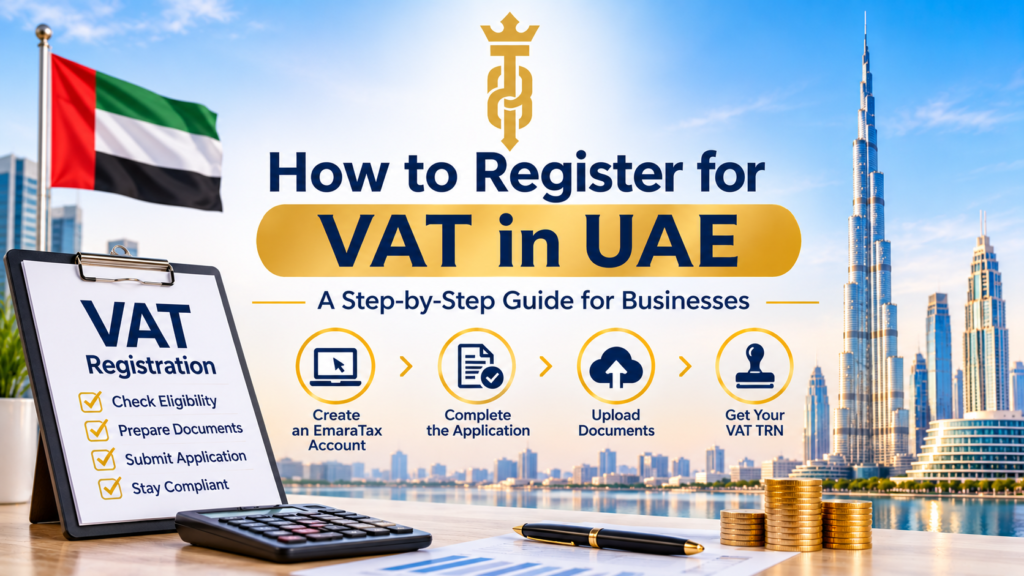
How to Register for VAT in UAE
Value Added Tax (VAT) is an important part of the UAE’s business and financial regulatory framework. Companies operating in Dubai and other emirates must understand their VAT responsibilities to maintain compliance, manage financial records, and conduct business confidently. Whether you operate a mainland company, a free zone business, or a growing startup, knowing when and how to register for VAT is essential.
If you are researching How to Register for VAT in UAE, this guide explains the eligibility criteria, registration thresholds, required documents, and application process. Understanding these requirements can help businesses prepare their applications and manage their tax responsibilities effectively.
What Is VAT in the UAE?
Value Added Tax is an indirect consumption tax applied to most goods and services supplied in the UAE. VAT was introduced on 1 January 2018, with a standard rate of 5%.
VAT-registered businesses generally collect VAT from customers on taxable supplies and account for it to the Federal Tax Authority (FTA). Eligible businesses may also recover input VAT paid on business-related purchases, subject to the applicable rules.
VAT registration provides a business with a Tax Registration Number (TRN), which is used for its tax-related transactions and reporting obligations.
Who Needs to Register for VAT in the UAE?
VAT registration is mandatory or voluntary depending on a business’s taxable supplies, imports, and eligible expenses.
Mandatory VAT Registration
A UAE-based business must register for VAT if the total value of its taxable supplies and imports exceeds AED 375,000 during the previous 12 months or is expected to exceed this threshold within the next 30 days.
Businesses that become liable to register must submit their application within the prescribed timeframe, generally 30 days from the date they become required to register.
Voluntary VAT Registration
Businesses that do not meet the mandatory threshold may apply for voluntary registration if their taxable supplies, imports, or eligible taxable expenses exceed AED 187,500 over the previous 12 months or are expected to exceed this amount within the next 30 days.
Voluntary registration may be useful for eligible startups and businesses that incur VAT on business expenses before generating substantial revenue.
VAT Registration for Foreign Businesses
Non-resident businesses making taxable supplies in the UAE may have a VAT registration obligation regardless of the usual registration threshold, unless another person in the UAE is responsible for accounting for the VAT under the applicable rules.
How to Register for VAT in UAE: Step-by-Step Process
The Federal Tax Authority provides an online VAT registration service through its EmaraTax platform. Businesses can follow these steps to submit an application.
Step 1: Create an EmaraTax Account
Visit the FTA’s official online services platform and create an EmaraTax account. Complete the registration details and activate the account using the required verification process.
Step 2: Create a Taxable Person Profile
After signing in, access the dashboard and create a new taxable person profile. Provide the relevant business information, including the legal name, registration details, business activities, and contact information.
Step 3: Open the VAT Registration Service
Select the relevant taxable person account and choose the VAT registration option. The platform will guide you through the application sections and request information about your business activities and financial position.
Step 4: Complete the Application
Enter the required information accurately. This may include taxable turnover, imports, expected revenue, business expenses, banking details, and customs information where applicable.
Ensure that the figures are supported by appropriate financial records and documents.
Step 5: Upload Supporting Documents
Attach the required documents in the accepted format. Check that the information is readable, complete, and consistent with your company registration records.
Step 6: Review and Submit
Before submitting, review the application carefully. Confirm that the business details, financial figures, and supporting documents are accurate. Submit the application through EmaraTax and monitor the account for updates or requests for additional information.
Once approved, the VAT registration certificate and TRN become available through the taxpayer’s online account.
Documents Required for VAT Registration
The exact documentation depends on the legal structure and circumstances of the applicant. Commonly requested documents include:
- Valid trade licence and commercial registration documents
- Certificate of incorporation, Memorandum of Association, or partnership agreement, where applicable
- Passport and Emirates ID copies of owners and authorised signatories
- Proof of authority for the person submitting the application
- Financial statements, invoices, and sales records
- Purchase orders, contracts, or other evidence of expected revenue
- Bank account details and supporting information, where applicable
- Customs registration details, if relevant
The FTA may request additional evidence depending on the application category and business activities.
What Happens After VAT Registration?
Once registered, a business must meet its ongoing VAT obligations. These responsibilities generally include:
- Charging VAT on taxable supplies at the applicable rate.
- Issuing tax invoices that meet UAE requirements.
- Maintaining accurate accounting records and supporting documents.
- Filing VAT returns within the assigned tax periods.
- Paying VAT due within the applicable deadlines.
- Reviewing transactions to identify eligible input VAT recovery.
VAT returns and related payments are generally due within 28 days after the end of the relevant tax period, subject to the FTA’s requirements.
Businesses should also monitor changes in turnover and notify the FTA when registration details or other relevant circumstances change.
Common VAT Registration Mistakes to Avoid
Some businesses experience delays because of incomplete applications, incorrect turnover calculations, missing documents, or inconsistent company information.
Other common mistakes include overlooking the registration deadline, misunderstanding the voluntary threshold, and assuming that free zone companies are automatically exempt from VAT registration.
Businesses should also distinguish between taxable, zero-rated, and exempt supplies because their treatment can affect registration calculations and VAT recovery.
How Takween Advisory Can Help
Understanding how to register for VAT in UAE involves more than completing an online application. Businesses must assess their eligibility, organise financial records, prepare supporting documents, and understand their continuing tax obligations.
Takween Advisory supports businesses and entrepreneurs with VAT-related guidance and corporate services. Its assistance can help companies understand registration requirements, organise documentation, and navigate the administrative steps involved in meeting UAE business compliance responsibilities.
Conclusion
Learning How to Register for VAT in UAE is essential for businesses that meet the mandatory registration criteria or qualify for voluntary registration. From checking turnover thresholds and preparing documents to submitting an EmaraTax application and managing ongoing returns, each step contributes to effective tax compliance.
With accurate financial records, timely applications, and professional guidance from Takween Advisory, businesses can approach VAT registration with greater clarity and confidence while focusing on their operations and growth in the UAE.