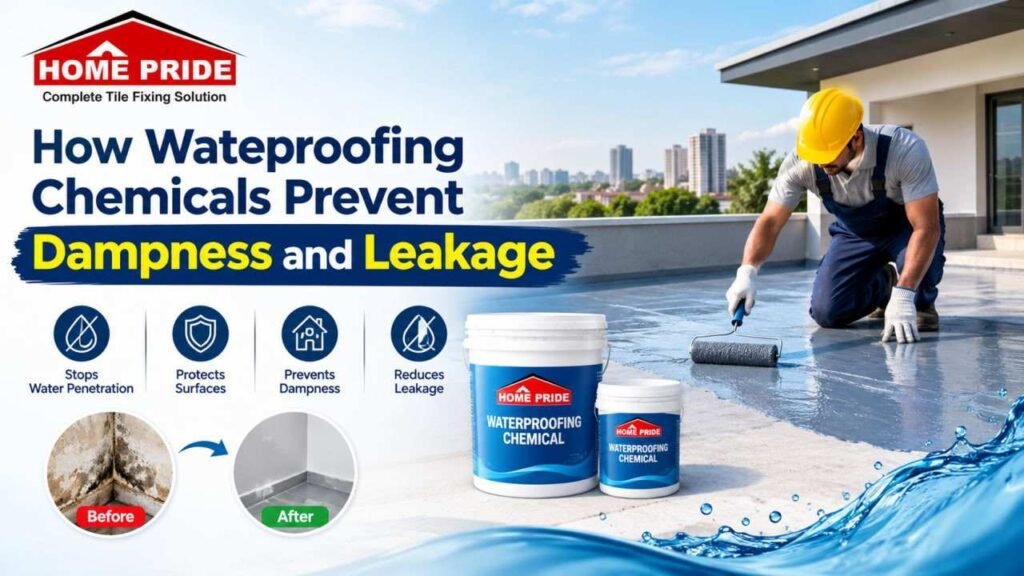
Damp walls, peeling paint, water stains, and leaking roofs are common problems in residential and commercial buildings. If left untreated, moisture can damage plaster, weaken finishes, encourage mould growth, and increase long-term maintenance costs. The right waterproofing system helps protect a building by reducing water penetration and directing moisture away from vulnerable surfaces.
Waterproofing chemicals are specially formulated products used to reduce water absorption, seal suitable surface pores, bridge minor cracks in compatible systems, or create a protective barrier against moisture. However, their effectiveness depends on the source of leakage, surface condition, product selection, and correct application.
For homeowners, builders, and contractors looking for a reliable Waterproofing Chemical Manufacturer in India, understanding how these products work is an important first step towards choosing an appropriate solution.
This guide explains the causes of dampness, the working principles of waterproofing chemicals, their different applications, and how to select the right product for roofs, bathrooms, and other moisture-prone areas.
What Causes Dampness and Water Leakage in Buildings?
Before selecting a waterproofing product, it is important to identify where the moisture comes from. Different problems require different treatments, and applying a coating without diagnosing the cause may only provide temporary relief.
Common causes include:
- Roof leakage: Cracks in concrete, deteriorated waterproofing membranes, damaged joints, and poorly sealed roof outlets can allow rainwater to enter.
- Bathroom leakage: Failed floor-wall junctions, damaged grout, unsealed pipe penetrations, and missing or deteriorated waterproofing layers can allow water to seep into adjoining rooms or lower floors.
- Wall dampness: Rainwater entering through exterior walls, porous masonry, or defective window seals can create damp patches and peeling paint.
- Terrace water accumulation: Poor drainage and inadequate slope can cause water to remain on the roof, increasing the risk of leakage through weak points.
- Rising damp: Moisture may travel upwards from the ground through masonry where an effective damp-proof barrier is absent or defective.
- Plumbing leaks: Damaged supply pipes, waste pipes, and concealed connections can cause persistent moisture that waterproofing coatings alone cannot resolve.
Identifying the source helps determine whether the building needs a surface coating, a flexible membrane, crack repair, joint sealing, plumbing repairs, or a more comprehensive waterproofing system.
How Do Waterproofing Chemicals Prevent Dampness and Leakage?
Waterproofing chemicals work through different mechanisms depending on their formulation and intended application. Some reduce the absorption of liquid water, while others form continuous protective layers or improve the water resistance of cement-based materials.
1. Creating a Protective Waterproof Barrier
Many liquid-applied waterproofing products form a continuous film over a properly prepared surface. When applied at the specified thickness and allowed to cure correctly, the coating helps prevent rainwater or other external moisture from passing through the treated area.
This approach is frequently used on exposed roofs, terraces, balconies, and selected exterior surfaces.
A suitable waterproofing chemical for roof applications should be compatible with the substrate, expected water exposure, temperature changes, and any subsequent protective finish.
2. Reducing Water Absorption
Some water-repellent treatments reduce the amount of liquid water absorbed by porous materials such as concrete, masonry, or mineral-based surfaces. Certain formulations penetrate the substrate, while others work primarily at the surface.
These products can help protect suitable walls and masonry from rain penetration. However, water repellents are not automatically suitable for areas exposed to standing water or hydrostatic pressure.
3. Sealing Suitable Cracks and Surface Defects
Cracks, construction joints, and gaps around pipes can become pathways for water. Depending on the crack type and movement involved, compatible sealants, repair mortars, injection systems, or flexible waterproofing membranes may be required.
A coating should not be treated as a universal solution for structural cracks or active movement. Such defects may require assessment by a qualified engineer or waterproofing specialist before repairs begin.
4. Improving the Water Resistance of Cement-Based Systems
Certain waterproofing admixtures and cement-compatible products are designed to reduce water penetration in concrete or mortar. Their performance depends on the formulation, dosage, mixing procedure, curing conditions, and quality of the underlying construction.
These products can be useful in appropriate construction applications, but they do not replace good concrete quality, proper detailing, or structural crack control.
Types of Waterproofing Chemicals and Their Applications
Choosing a product based on the actual application is more effective than selecting one simply because it is labelled as waterproofing chemical.
| Type of product | Common applications | Important consideration |
| Liquid-applied waterproofing membrane | Roofs, terraces, balconies | Confirm UV resistance, flexibility, and exposure suitability |
| Cementitious waterproofing coating | Bathrooms, selected concrete surfaces, water-retaining structures | Check substrate compatibility and whether the system suits the expected water pressure |
| Integral waterproofing admixture | Suitable concrete and mortar applications | Follow the specified dosage and mixing instructions |
| Water-repellent treatment | Selected exterior masonry and porous surfaces | Not a substitute for a membrane where standing water is expected |
| Flexible sealants and crack-repair products | Joints, penetrations, and compatible cracks | Select according to joint movement and crack characteristics |
The correct solution may combine several materials. For example, a terrace repair might require crack treatment, drainage correction, a waterproofing membrane, and protective finishing rather than a single coating.
How to Choose the Best Waterproofing Chemical for Roof Leakage
The best waterproofing chemical for roof leakage is the product or system that addresses the actual cause of water entry and suits the roof’s construction and exposure conditions.
Consider the following factors before purchasing:
- Identify the roof surface
Concrete roofs, metal roofs, tiled roofs, and roofs with existing membranes have different requirements. Confirm that the selected product is suitable for the particular substrate.
- Inspect cracks and joints
Look for visible cracks, loose material, damaged pipe collars, and gaps near parapet walls. Repair defects using compatible materials before applying the main waterproofing system.
- Check water stagnation
If water remains on the terrace after rainfall, drainage and slope should be assessed. Not every coating is suitable for prolonged ponding, even when it is marketed for roof waterproofing.
- Evaluate weather exposure
Indian roofs may experience intense sunlight, heavy monsoon rainfall, and substantial temperature fluctuations. Check the manufacturer’s technical documentation for UV resistance, flexibility, and exterior exposure suitability.
- Follow application and curing requirements
Surface moisture limits, primer requirements, mixing ratios, application thickness, number of coats, and curing periods all affect performance. Follow the product’s technical data sheet rather than relying on a generic application method.
A carefully selected Terrace Waterproofing Chemical can help reduce rainwater penetration, but only when the substrate, drainage, detailing, and application process are addressed together.
Bathroom Waterproofing: Preventing Hidden Leakage
Bathrooms require particular attention because water repeatedly contacts floors, walls, drains, and pipe connections. Small defects can allow moisture to reach the screed, concrete slab, or neighbouring rooms.
A suitable bathroom waterproofing chemical should be designed for the intended substrate and exposure. Cementitious waterproofing systems and flexible liquid-applied membranes are common options, depending on the project specification.
For reliable results:
- Prepare a sound, clean substrate and repair unsuitable cracks or damaged areas.
- Treat floor-wall junctions, corners, drains, and pipe penetrations with compatible detailing components.
- Apply the specified number of coats at the required thickness.
- Allow the system to cure according to the manufacturer’s instructions.
- Conduct an appropriate flood test or other specified watertightness test before installing tiles, where the system and site conditions permit.
Tile grout and surface sealers should not be assumed to replace the waterproofing layer beneath the tiles. A durable bathroom installation depends on the complete system, including the membrane, drainage details, tile adhesive, and grout.
How to Select a Reliable Waterproofing Chemical Manufacturer in India
Choosing a dependable Waterproofing Chemical Manufacturer in India involves more than comparing prices. Product suitability, technical documentation, consistency, and application support all matter.
Use these checks when comparing manufacturers:
Product-specific technical information: Look for a technical data sheet covering intended use, coverage, application thickness, surface preparation, curing, and limitations.
Safety documentation: Review the safety data sheet for handling precautions, storage requirements, personal protective equipment, and first-aid guidance.
Relevant product range: A manufacturer offering different systems for terraces, bathrooms, exterior walls, and concrete applications can help buyers identify products suited to distinct moisture problems.
Quality and batch consistency: Ask about quality-control procedures, batch identification, shelf life, and recommended storage conditions.
Technical assistance: Clear guidance on product selection and application can help contractors avoid common mistakes that lead to premature failure.
For buyers seeking a Waterproofing Chemical Manufacturer in Ghaziabad, the same criteria apply. A nearby supplier may simplify communication and delivery, but location alone does not establish product quality or suitability.
Home Pride can be considered as one option when researching waterproofing products. Buyers should assess the relevant product’s documented application, technical specifications, and compatibility with their particular project before making a decision.
Common Waterproofing Mistakes to Avoid
Even a well-formulated product may fail when the underlying problem is not properly addressed.
- Applying a coating over a damp, dusty, or weak surface: Poor adhesion can cause peeling or blistering.
- Ignoring the source of leakage: Plumbing defects, failed joints, and drainage problems may continue even after surface treatment.
- Using the wrong product: A wall water repellent may not be suitable for a terrace exposed to standing water.
- Applying insufficient thickness: Coverage and thickness requirements must be followed to achieve the intended performance.
- Skipping curing and testing: Premature covering or failure to test the system may conceal defects.
- Expecting permanent results without maintenance: Movement, weathering, and damage from later construction work can affect waterproofing performance over time.
Where leakage is extensive, recurring, or associated with structural cracking, consult a qualified waterproofing professional or structural engineer.
Conclusion
Waterproofing chemicals help prevent dampness and leakage by limiting water absorption, forming protective membranes, improving the water resistance of suitable cement-based materials, and sealing compatible joints or defects. The right solution depends on the moisture source, substrate, exposure conditions, and quality of application.
Whether you need a waterproofing chemical for roof protection, a Terrace Waterproofing Chemical, or a bathroom waterproofing chemical, start by identifying the problem and reviewing the product’s technical requirements.
Home Pride encourages a practical approach to waterproofing: choose products according to the application, follow the manufacturer’s instructions, and address drainage, cracks, and joints before they develop into more serious problems. When comparing the Best Waterproofing Chemical Company in India, prioritise documented performance, product suitability, and reliable technical guidance over marketing claims alone.
Frequently Asked Questions (FAQs)
1. How do waterproofing chemicals prevent dampness in walls?
Waterproofing chemicals can reduce water absorption or create a protective layer that limits moisture penetration. The correct treatment depends on whether dampness comes from rain, plumbing leaks, ground moisture, or another source. The cause should be identified before choosing a product.
2. Which is the best waterproofing chemical for roof leakage?
The most suitable product depends on the roof material, crack condition, drainage, and exposure to sunlight and standing water. A compatible liquid-applied membrane or another specified waterproofing system may be appropriate. Persistent leakage should be diagnosed before treatment.
3. Which waterproofing chemical is suitable for bathroom floors?
Cementitious waterproofing coatings and flexible liquid-applied membranes are common options for bathroom floors. The product must be compatible with the substrate, drains, pipe penetrations, and planned tile installation. Follow the complete system instructions and conduct the specified watertightness test before tiling.
4. How do I choose a reliable Waterproofing Chemical Manufacturer in India?
Compare product-specific technical data sheets, safety documentation, quality-control practices, application instructions, and technical support. Check that the product is designed for your particular surface and moisture conditions rather than relying solely on price or promotional claims.
5. How can I find a Waterproofing Chemical Manufacturer in Ghaziabad?
Research manufacturers and suppliers serving Ghaziabad, then verify their product range, technical documentation, quality procedures, and availability of application guidance. Home Pride is one brand buyers may evaluate, provided the selected product meets their project’s requirements.
For More Information Click Here:- https://homepride.in/