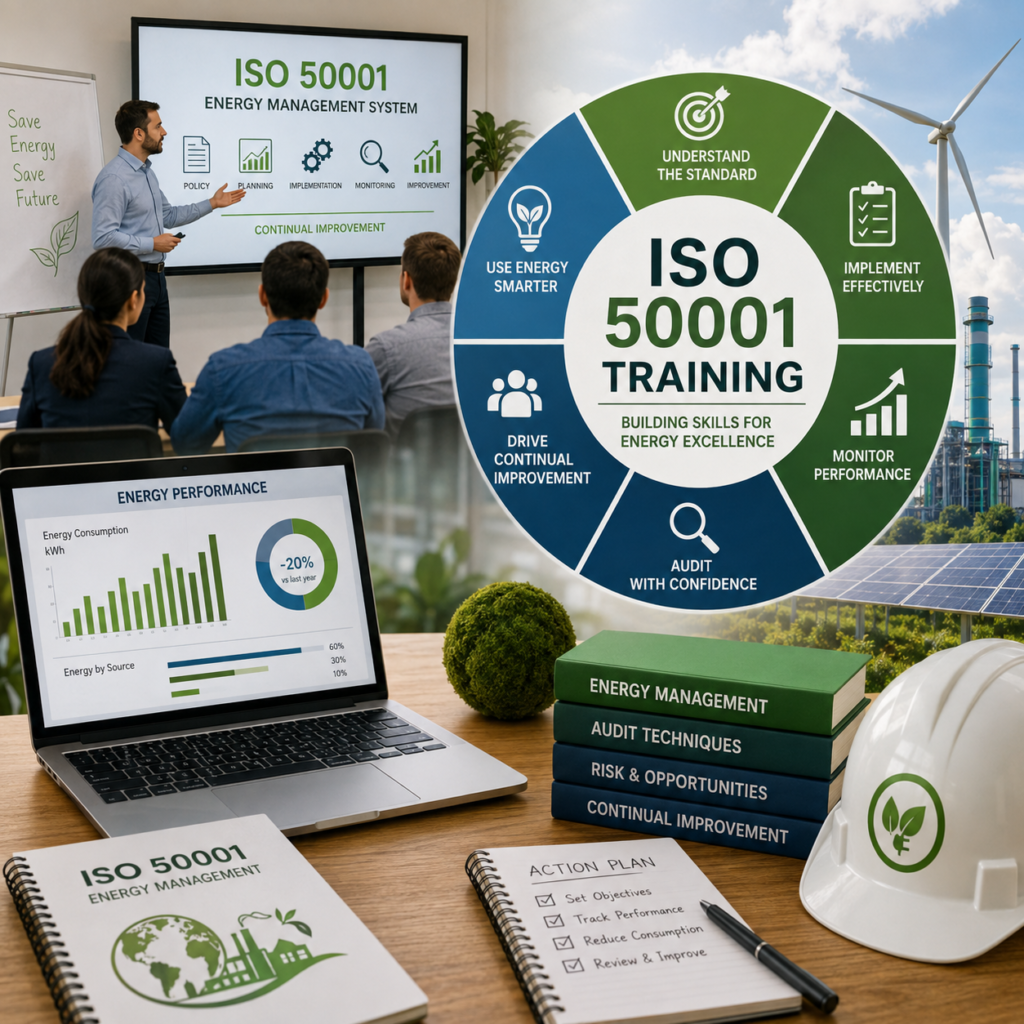
Managing energy performance effectively requires more than good intentions — it requires people across an organization who genuinely understand how an energy management system works and what it takes to keep it improving over time. ISO 50001 training gives professionals this understanding, whether their role involves implementing the system, monitoring performance, or formally auditing whether it’s working as intended.
Rather than treating energy management as a purely technical or engineering concern, this training connects energy performance to broader management system thinking, helping organizations build genuinely sustainable improvement rather than one-off efficiency projects.
Why Energy Management Training Matters Broadly
Moving Beyond One-Time Efficiency Initiatives
Many organizations have pursued isolated energy efficiency projects in the past, only to see gains fade once initial attention moves elsewhere. Training grounded in management system thinking helps build habits that sustain improvement over the long term.
Supporting Data-Driven Decision-Making
Understanding how to properly track, analyze, and act on energy performance data helps organizations make genuinely informed decisions, rather than relying on assumptions about where the biggest opportunities for improvement actually lie.
Different Types of ISO 50001 Training
Awareness-Level Training
This introductory training explains what the standard requires and why energy management systems matter, giving staff a general understanding without necessarily building hands-on implementation or audit skills.
Implementation-Focused Training
This training goes further, teaching participants how to actually build and maintain an energy management system that meets the standard’s requirements within their own organization.
Auditor Training
This training focuses specifically on evaluating whether an energy management system is functioning as intended, covering audit planning, and evidence gathering, and reporting technique.
Why Professionals Pursue This Training
Building Skills That Support Career Growth
Professionals with formal training in energy management systems often find themselves well positioned for roles involving sustainability, facilities management, or compliance more broadly.
Strengthening Organizational Energy Performance
Organizations benefit significantly from having trained staff who understand what genuine energy management requires, rather than relying on guesswork or isolated technical fixes.
Exploring iso 50001 training options helps professionals and organizations identify which type of training best matches their specific goals, whether that’s building awareness, supporting implementation, or developing audit capability.
How Training Fits Into a Broader Professional Journey
Building on Awareness with Deeper Specialization
Many professionals start with awareness-level training and later pursue implementation or auditor training as their responsibilities grow, making energy management training a genuinely scalable path.
Complementing Other Professional Skills
Training in energy management tends to complement other professional skills, such as facilities management or sustainability reporting, since the underlying discipline of structured, data-driven thinking applies broadly.
Who Should Consider This Training
Energy managers, facilities professionals, and sustainability coordinators are common candidates, but training extends well beyond these roles. Operations staff, finance professionals tracking energy costs, and even senior leadership often benefit from at least awareness-level training.
Professionals earlier in their careers often find that energy management training provides a genuinely transferable skill set, increasingly relevant across a wide range of industries.
What Good Training Typically Covers
Core Principles behind the Standard
Training explains not just what the standard requires, but why those requirements exist, helping participants apply them thoughtfully rather than mechanically.
Practical Application through Examples
Well-designed training uses realistic examples and case studies, helping participants connect abstract requirements to situations they’re likely to encounter in their own facilities.
How Training Connects to Broader Organizational Success
Reducing Reliance on External Support Alone
Organizations with trained internal staff tend to rely less heavily on outside support throughout implementation, since staff already understand the requirements and can address gaps proactively.
Supporting a Culture of Continual Improvement
Training doesn’t just prepare staff for certification — it tends to build a broader mindset of continual improvement that influences how teams approach energy use even outside formal management activities.
Common Questions about Energy Management Training
How Do I Know Which Type of Training I Need?
The right training depends on your role and goals — awareness training suits general understanding, while implementation or auditor training suits those with hands-on responsibilities.
Is Training Necessary Even If My Organization Already Tracks Energy Use?
Yes. Tracking data is only part of effective energy management; training helps ensure that data is actually being used to drive genuine, structured improvement over time.
Can This Training Support a Transition Into Sustainability Roles?
Yes. Many professionals use energy management training as a stepping stone toward broader sustainability or facilities leadership positions, since it demonstrates structured, credible expertise beyond day-to-day operational tasks.
Balancing Training with Ongoing Work Commitments
Choosing a Format That Fits Your Schedule
Many programs offer both in-person and virtual options, allowing professionals to choose whichever format best accommodates their existing work responsibilities.
Applying Learning Incrementally After Training
Rather than expecting to master every concept immediately, many professionals find it more effective to apply what they’ve learned gradually, starting with smaller reviews before larger initiatives.
Making Training Part of a Broader Energy Strategy
Connecting Individual Learning to Organizational Goals
Training delivers the most value when it’s connected to a broader organizational energy strategy, rather than existing as an isolated learning exercise disconnected from actual performance goals.
Building a Team with Complementary Skills
Organizations often benefit from training a mix of staff across awareness, implementation, and audit levels, creating a team with complementary skills rather than relying on a single trained individual to carry the entire effort, since energy management works best as a shared organizational responsibility.
Bringing It All Together
ISO 50001 training gives professionals and organizations the foundation needed to genuinely understand and apply energy management principles, rather than treating energy performance as a purely technical afterthought. Investing in the right type of training tends to pay off considerably, both in smoother certification processes and in stronger, more sustained operational performance across the years that follow.