
Ordering moving house boxes feels like a simple task right up until you’re standing in front of a delivery of forty identical boxes, realising that none of them are quite right for half the things you actually need to pack. The mistake most people make isn’t buying too few boxes, but buying only one type and assuming it’ll somehow work for everything from paperbacks to picture frames to a set of golf clubs nobody remembered until the garage got cleared out.
Why “One Type of Box” Is the Most Common Moving Mistake
It’s an understandable assumption that a box is a box, and more of the same size should cover most situations. In practice, a move involves items with wildly different weights, shapes, and fragility, and treating them identically is precisely how boxes end up collapsing under books or arriving with cracked frames.
The Real Cost of Getting This Wrong
A box that fails mid-move doesn’t just risk the item inside it but also often means an afternoon lost to repacking, replacing, or simply discovering damage after everything’s already unloaded at the new address, when there’s very little that can be done about it. Planning box types properly at the start avoids nearly all of these issues.
Double Wall Cardboard Boxes: Where Real Strength Matters
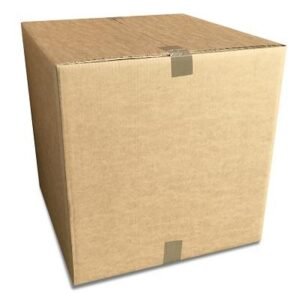
The single most useful upgrade most people skip is choosing double wall cardboard boxes for anything genuinely heavy, rather than defaulting to the same lightweight box used for pillows and jumpers.
What the Extra Layer Actually Does
Double wall board adds a second layer of corrugation, which measurably improves crush resistance and stacking strength compared to standard single wall board. That matters directly for anything dense like books, as books in particular are far heavier in bulk than people expect, and a surprising number of “the box just gave way” stories trace back to books packed into a board that was never built to hold that kind of weight.
Where Else Double Wall Earns Its Place
Beyond books, a double wall is the right call for kitchenware, tools, anything fragile that also carries real weight, and boxes that are likely to be stacked underneath others during transit or storage. If a box is going to sit at the bottom of a stack for any length of time, it needs to be strong enough to bear that weight without deforming.
Where Single Wall Boxes Are Still the Right Choice
It’s worth saying plainly that not everything needs double wall strength, and over-specifying every box adds unnecessary cost without any real benefit.
Matching Strength to Actual Weight
Bedding, clothing, lampshades, and other bulky but light items are genuinely well suited to single wall boxes. The goal isn’t to use the strongest box available for every item; instead, it is to match the box’s strength to the actual contents, ensuring that you don’t pay for structural capacity that a lightweight item will never require.
Golf Club Boxes: A Specialist Category That Many People Overlook
Every move eventually surfaces a handful of items that don’t fit neatly into “light” or “heavy”—they’re just the wrong shape entirely. Golf clubs are one of the most common examples, and they’re a genuinely useful case study in why specialist boxes exist at all.
Why Standard Boxes Are Inadequate for Golf Clubs
A standard box is either too short to hold clubs properly, forcing them in diagonally with wasted space around them, or oversized to the point of wasting both postage and protection. Neither outcome protects the clubs properly, and neither makes effective use of van space on moving day, when every cubic foot genuinely matters.
What a Dedicated Golf Club Box Solves
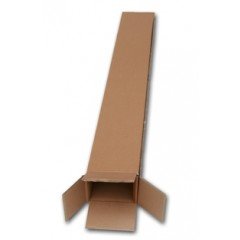
High-grade tall and narrow boxes, built from single-wall fluted cardboard specifically for this shape, are suited to golf clubs, umbrellas, cricket bats, and anything else long, thin, and awkward in standard sizing. Because the box is shaped around the item rather than the item being forced to fit the box, there’s no compromise on protection and no wasted space taking up room in the moving van.
The Broader Lesson Behind This One Example
Golf club boxes are a specific example of a general principle worth applying across an entire move, which is, if something genuinely doesn’t fit well into a standard box, it’s worth checking whether a specialist option exists before forcing the fit. The same logic applies to framed artwork, musical instruments, and anything else with an unusual shape that a general-purpose box was never designed to hold.
Building a Box Plan Before You Start Packing
The businesses and households that experience the fewest problems during a move are not necessarily those that purchased the most boxes; rather, they are the ones that carefully determined, room by room, the appropriate strength and shape needed for each category of belongings before placing any orders.
A Simple Way to Plan It Out
Walk through each room and sort belongings into three rough categories:
1. Light and bulky (single wall)
2. Heavy or fragile (double wall)
3. Awkwardly shaped (a specialist box like a golf club box or picture pack).
This takes far less time than it sounds, and it turns a guessing-game order into a genuinely accurate one.
Sourcing Everything from One Place
Once you know what you need, sourcing it from an established provider of packaging supplies in the UK, rather than piecing an order together from several different sellers, tends to be both cheaper and considerably less stressful, particularly if you discover partway through packing that you’re short on a specific size or type and need it delivered quickly rather than waiting on a second, separate order to arrive.
Summing Up
To sum up, choosing the right moving house boxes was never really about the boxes themselves but was more about taking ten minutes before packing day to think honestly about what you’re actually moving, room by room, rather than defaulting to whatever’s easiest to order in bulk. When you have the right boxes decided in advance, that is what actually prevents damage, wasted space, and the last-minute scramble that turns moving day into something harder than it needs to be.