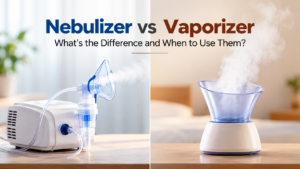
When a person is coughing, wheezing, has nasal congestion or is having trouble breathing, it is natural to look for something that can help ease the symptoms quickly.
That is when two devices often come up in the discussion: a nebulizer and a vaporizer.
They might look similar. Both involve breathing something in. They are not the same.
A vaporizer makes warm water vapor to add moisture and might help ease a stuffy nose and throat. A nebulizer, on the other hand, changes liquid medicine into a fine mist that can be breathed into the lungs.
Understanding this difference is important because using the wrong device could mean treating the wrong issue.
Nebulizer Versus Vaporizer: The Simple Difference
The way to understand the difference between a nebulizer and vaporizer is to look at what each device provides.
| Feature | Nebulizer | Vaporizer |
|---|---|---|
| What it produces | Fine aerosol mist | Warm water vapour |
| Main purpose | Delivers prescribed inhaled medication | Provides moisture and temporary symptomatic comfort |
| Where it is intended to act | Lower airways and lungs | Mainly nose, throat and upper airways |
| Medication | Yes, when prescribed | No |
| Common situations | Asthma, COPD and other conditions requiring inhaled medication | Nasal congestion, dry throat and some cold-related symptoms |
| Can it replace prescribed respiratory treatment? | No | No |
A nebulizer is a medicine delivery device. A vaporizer is mainly a moisture device.
That one difference answers questions about nebulizers or vaporizers.
What Is a Nebulizer? How Does It Work?
A nebulizer is a device that changes liquid medicine into a mist that can be inhaled through a mouthpiece or mask.
Depending on the type of nebulizer, compressed air, ultrasonic vibrations or a vibrating mesh may be used to make the mist. The person then breathes the mist into the lungs over several minutes. Using a nebulizer at home can involve challenges at every stage, including setting up and operating the device, filling it with medication, using the correct inhalation technique, dismantling it after use and maintaining it. (1)
This is why nebulizers are different from steam inhalation.
The purpose is not just to make the air warm or moist.
The purpose is to deliver medicine in a form that can be inhaled into the breathing system.
Some medicines used in nebulizers are bronchodilators, which help relax airway muscles. Others can include corticosteroids or other medicines, depending on the breathing condition being treated.
What Are the Uses of a Nebulizer?
The uses of a nebulizer depend entirely on the medicine prescribed and the person’s breathing condition.
Nebulizers may be used for conditions such as:
- Asthma
- Chronic obstructive pulmonary disease (COPD)
- Bronchiectasis
- Cystic fibrosis
- Certain breathing conditions where inhaled medicine is needed
They can be especially helpful for people who have trouble using an inhaler properly or need medicine delivered in a mist form.
This does not mean a nebulizer is always better than an inhaler.
For people with asthma, an inhaler used correctly can be just as effective, and inhalers are usually easier to carry and use. The right device depends on the person’s condition, medicine and ability to use the device properly.
What Is a Vaporizer?
A vaporizer, sometimes called a steam inhaler, heats water to make warm water vapour.
The warm, moist air might help make a stuffy nose or dry throat feel better. Steam inhalers and vaporizers are commonly used to provide relief from symptoms associated with colds, flu, allergies and sinusitis.
This is where the uses of a vaporizer differ from the uses of a nebulizer.
A vaporizer does not turn prescribed breathing medicine into a mist that goes into the lungs.
It provides moisture.
That means a vaporizer should not be used as a nebulizer when a person has been told to use inhaled medicine.
Does Steam Open the Airways Like a Nebulizer?
This is an important difference.
Steam can feel comforting when your nose or throat feels dry or blocked. That feeling does not mean it is treating airway swelling or tightness.
For example, if someone is having an asthma attack, breathing in steam does not deliver a bronchodilator into the lungs.
A nebulizer, when prescribed, can deliver medicine such as a bronchodilator through an inhaled mist.
If someone is wheezing or having serious trouble breathing, do not use steam instead of prescribed breathing treatment.
Nebulizer or Vaporizer: Which One Do You Need?
The answer depends on what issue you are trying to address.
Choose a nebulizer when:
- A doctor has prescribed medicine for nebulization.
- The person has a breathing problem that requires medication.
- The patient has trouble using an inhaler properly.
- A healthcare provider has specifically recommended nebulizer treatment.
A vaporizer may be used when:
- You want moisture for temporary comfort from a dry nose or throat.
- Congestion from a cold is making your nose or throat uncomfortable.
- You are looking for comfort, not medicine delivery.
Can You Put Medicine in a Vaporizer?
No.
A vaporizer is not designed to turn breathing medicine into a mist that goes into the lungs.
Similarly, you should not add oils, medicine or other substances to a nebulizer unless the product instructions and healthcare professional say it is appropriate.
For nebulizers, use only the medicine or solution prescribed by your healthcare provider and follow the recommended dose.
Can You Use a Nebulizer With Water?
This is a common mistake.
A nebulizer is not a steam machine.
Putting ordinary water into a nebulizer does not make it a substitute for a vaporizer and is not a treatment for breathing problems. Use only the prescribed medicine or an appropriate solution recommended by a healthcare professional.
What About Children?
Choosing the right device is especially important for children.
Young children might have trouble with the breathing technique needed for some inhalers. A nebulizer with a mask can sometimes make it easier to administer prescribed medicine because the child can breathe normally through the mist.
Steam has a different risk.
Hot water and steam can cause burns, especially in young children who might pull over a container or touch a hot surface.
Research has highlighted the risk of burn injuries in children from homemade steam inhalation methods. (2)
Never assume that a traditional steam method is automatically safer just because it is familiar.
The Part People Often Forget: Cleaning Is Important
Buying the device is only half of home breathing care.
A nebulizer has parts that come into contact with medicine and moisture. If these parts are not cleaned properly, germs can grow inside the equipment.
Clean the medicine cup and mouthpiece after each use and let them dry. Follow the manufacturer’s instructions for cleaning the device and changing filters. Studies have identified contamination risks associated with inappropriate nebulizer cleaning and disinfection. (3)
Cureka also provides guidance on cleaning the medicine cup and mask after nebulizer use and allowing them to dry.
Cleaning is just as important for vaporizers because warm, moist environments can encourage microbial growth if the device is not maintained properly. Clean the vaporizer according to the manufacturer’s instructions.
A device that is used correctly but not cleaned properly can become a hygiene problem rather than a health aid.
A Simple Home-Care Rule to Remember
Think of the two devices like this:
Nebulizer = medicine delivery
Vaporizer = warm moisture
A vaporizer may help you feel better when your nose or throat feels stuffy or dry. A nebulizer is used when prescribed medicine needs to enter the breathing system as a mist.
They are therefore not two versions of the same treatment.
If a person has asthma, COPD, wheezing, trouble breathing or another diagnosed breathing condition, the question should not simply be “nebulizer or vaporizer?”
The more important question is:
“What has been recommended for this condition?”
Choosing a Nebulizer for Home Use
If a healthcare provider has said nebulizer treatment is needed, look beyond appearance and price.
Consider:
- Whether the device is suitable for the prescribed medicine
- How easy it is to assemble and clean
- Availability of masks and replacement parts
- Noise level, especially if it will be used by children
- Portability if treatment is needed away from home
- Manufacturer instructions and after-sales support
Cureka’s range of healthcare devices includes nebulizers and other breathing tools from brands such as Omron, Dr. Morepen, Romsons and Dr Trust.
For example, the Omron Compressor Nebulizer NE-C28 is listed by Cureka as a compressor nebulizer, while the Dr. Morepen CN06 Compressor Nebulizer is another home nebulizer option. The right choice should depend on the person’s treatment needs, not simply on the price.
For those looking specifically for steam-based comfort, Cureka also offers steam inhaler and vaporizer options.
The point is not to buy both devices because they look similar.
Choose the device that fits the intended purpose.
Frequently Asked Questions
1. What is the difference between a nebulizer and a vaporizer?
A nebulizer turns prescribed liquid medicine into a fine mist that can be inhaled into the lungs. A vaporizer heats water to produce moisture and is generally used for temporary symptomatic comfort.
2. Can a vaporizer be used instead of a nebulizer?
No. A vaporizer cannot replace a nebulizer when a person has been prescribed inhaled medicine. Steam does not deliver the medicine to the lungs.
3. Can I use a nebulizer for a cough?
A nebulizer may be prescribed for breathing problems that cause coughing, but it is not automatically suitable for every cough. The medicine and reason for using a nebulizer should be determined by a healthcare professional.
4. Is a nebulizer better than a vaporizer for asthma?
They serve different purposes. A nebulizer can deliver prescribed asthma medicine, while a vaporizer provides warm moisture and does not treat asthma-related airway inflammation or tightness. Many people with asthma also use inhalers, which can be effective and may be preferred in some situations.
5. Can steam inhalation cure a respiratory infection?
No. Steam may provide temporary comfort, but it does not eliminate the virus that causes a cold. Steam inhalation can also cause burns, so hot-water steam methods require particular caution around children.
Conclusion
The nebulizer-versus-vaporizer question becomes much simpler once you understand what each device is designed to do.
A nebulizer changes medicine into a mist that can be breathed in and is used when prescribed for breathing conditions that require inhaled treatment.
A vaporizer heats water to make moisture, which may help ease nasal or throat symptoms temporarily.
Neither device should be used as a solution for every cough, cold or breathing problem.
If someone has severe or worsening breathing difficulty, blue or grey lips, confusion or trouble speaking because of breathlessness, home steam or nebulizer treatment should not delay urgent medical help.
When it comes to breathing health, the safest choice is not always the device that makes the mist.
It is the device that is right for the condition, used properly and recommended by a healthcare professional.
References
- A Systematic Review on KAP of Nebulization Therapy at Home – 2021 Jul – https://pmc.ncbi.nlm.nih.gov/articles/PMC8404745/
- Homemade Steam Inhalation Therapy Devices: A Neglected Cause of Severe Pediatric Burns—An Urgent Call for Education and Safety Measures – 2026 Jan – https://pubmed.ncbi.nlm.nih.gov/40657784/
- Nebuliser hygiene in cystic fibrosis: evidence-based recommendations – 2020 Jun – https://pmc.ncbi.nlm.nih.gov/articles/PMC7341620/#s6
Medical Disclaimer
This article is for educational purposes and does not replace professional medical advice, diagnosis or treatment. Use nebulized medicines only as prescribed and follow the instructions supplied with your device. If breathing difficulty is severe, sudden or worsening, seek medical care rather than relying on home inhalation devices.