Moving into a new-build home is an exciting opportunity to create a kitchen that suits your lifestyle from the beginning. With fresh cupboards, clean worktops, and a new hob ready to use, it can be tempting to buy an entire collection of pots and pans at once. However, building a practical kitchen does not require filling every cupboard immediately. The smarter approach is to choose versatile cookware that supports everyday meals, works with your hob, and fits your budget.
For first-time homeowners, the most useful shopping list usually includes a frying pan, a saucepan, a larger cooking pot, and a few essential accessories. Depending on your cooking habits, Pre-Seasoned Cast Iron Cookware can also be a valuable addition because it offers excellent heat retention and supports several cooking techniques with one piece of equipment.
Understanding what to buy first, what can wait, and how different cookware materials behave will help you create a functional kitchen without unnecessary spending.
Start by Understanding Your New Hob
Before purchasing cookware, identify the type of hob installed in your new home. Different cooking surfaces have different requirements, and a pan that works perfectly on one appliance may not be suitable for another.
Induction hobs use magnetic energy to heat compatible cookware directly. For these appliances, the pan must have a magnetic base. Cast iron is generally compatible with induction, although you should check the cookware manufacturer’s guidance and the hob’s requirements.
Ceramic and electric hobs typically work with cookware designed to make good contact with the cooking surface. Gas hobs use flames to heat the base and sides of a pan, making stable positioning and suitable dimensions important.
Check the hob manufacturer’s instructions before buying your first set. Using the correct cookware can improve heating performance and reduce the risk of scratching or damaging the cooking surface. For glass and ceramic hobs, lift heavy pans rather than dragging them across the surface.
Choose a Reliable Everyday Frying Pan
A frying pan is one of the first items worth purchasing for a new kitchen because it supports a wide range of meals. Breakfast eggs, sautéed vegetables, grilled sandwiches, fish, and quick evening dinners can all be prepared using a suitable pan.
When choosing a frying pan, consider the number of people you usually cook for. A smaller pan may suit an individual or couple, while a larger option provides more room for family portions. However, the pan should still fit comfortably on your hob without extending excessively beyond the cooking zone.
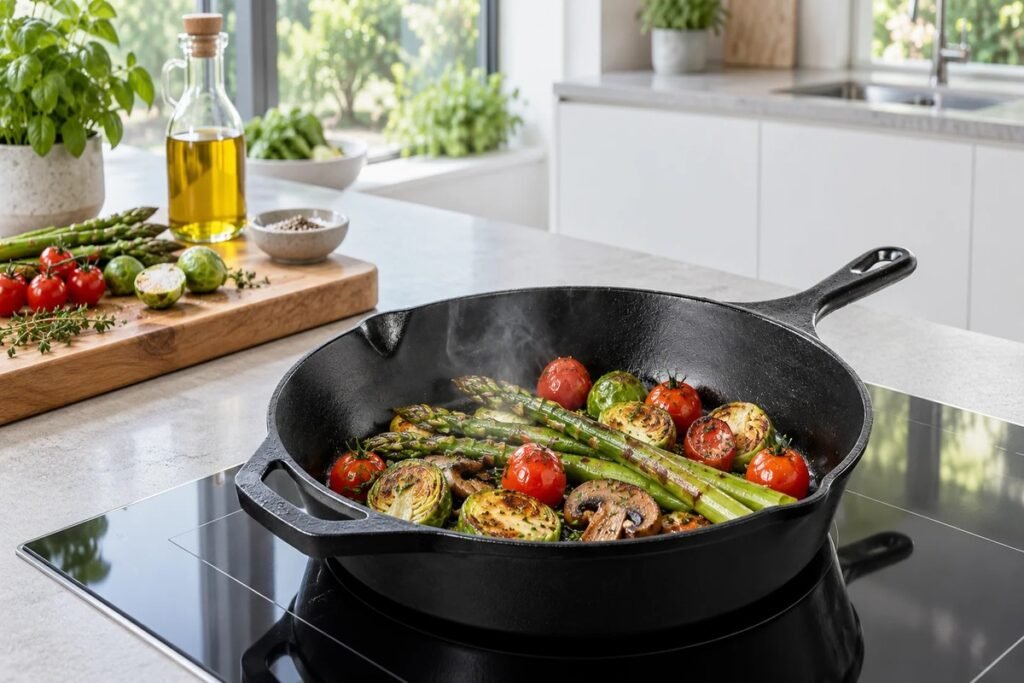
Pre-Seasoned Cast Iron Cookware is worth considering if you want a frying pan that can handle high-heat cooking and retain heat effectively. Cast iron is particularly useful for searing meat, browning vegetables, and preparing dishes that benefit from steady temperatures.
Pre-seasoned models arrive with an initial layer of seasoning, which helps protect the iron and can improve food release when maintained properly. They still require appropriate preheating, cooking oil, and regular care. Cast iron is also heavier than many alternatives, so make sure the pan is comfortable to lift and manoeuvre.
A traditional non-stick frying pan may be more convenient for delicate foods and quick, low-fat cooking. You do not need to buy both immediately. Choose the option that best matches the meals you prepare most often.
Add a Saucepan for Everyday Essentials
A saucepan is another essential purchase for a new-build kitchen. It handles tasks that a frying pan cannot easily manage, including boiling eggs, heating milk, preparing sauces, cooking rice, and warming soup.
A medium-sized saucepan with a secure lid is a sensible starting point. Look for a comfortable handle, a stable base, and a design that suits your hob. Stainless steel is a common option because it is durable and versatile, while aluminium models can offer relatively lightweight handling.
You may eventually want two saucepans in different sizes, but buying several at once is unnecessary if you are starting with a limited budget. One suitable pan can cover many everyday needs while you learn which additional sizes would genuinely improve your cooking routine.
Consider the storage space available in your cupboards, too. A saucepan with a lid that fits securely and a handle that does not occupy excessive space can make a small kitchen easier to organise.
Decide Whether You Need a Stockpot or Dutch Oven
The next item depends on your cooking habits. A larger pot is useful for pasta, soups, stews, batch cooking, and meals prepared for several people.
If you regularly cook large portions, a stockpot may be a practical addition. It provides the capacity needed for boiling pasta or preparing substantial quantities of soup. However, if you prefer one-pot meals, a Dutch oven could offer more versatility.
A cast iron Dutch oven retains heat well and can be useful for slow-cooked dishes, casseroles, and some oven-based recipes. Certain models are designed for use on the hob and in the oven, but always check the manufacturer’s temperature limits, lid specifications, and appliance compatibility.
For homeowners interested in Pre-Seasoned Cast Iron Cookware, a Dutch oven can complement a skillet by covering recipes that require greater depth and longer cooking times. Nevertheless, cast iron Dutch ovens can be expensive and heavy. If you rarely prepare stews or large meals, a basic cooking pot may be the better first purchase.
Build Your Cookware Collection Around Your Budget
Furnishing a new kitchen involves more than buying pans. You may also need utensils, cutlery, plates, cleaning supplies, storage containers, and small appliances. Setting a cookware budget helps prevent one category from consuming money needed elsewhere.
Begin with the pieces required to prepare your regular meals. For many households, a frying pan, a saucepan, and a medium-sized pot provide a practical foundation. Additional cookware can be purchased when a genuine need arises.
Compare individual items with cookware sets before deciding. Sets sometimes provide better value per piece, but only when you will use most of the included products. A large collection containing several pans of similar sizes may offer less practical value than three carefully selected items.
When comparing Pre-Seasoned Cast Iron Cookware, consider the total cost, product dimensions, weight, construction, seasoning, and care requirements. A lower-priced skillet may be suitable for everyday cooking, while a more expensive option may include a useful lid or a design better suited to your needs.
Avoid choosing cookware based on appearance alone. A beautiful pan is only a good purchase if it works with your hob and supports the way you cook.
Understand the Benefits of Pre-Seasoned Cast Iron
Cast iron is popular because it is durable and retains heat effectively. Once sufficiently heated, a cast iron pan can maintain a relatively steady temperature, which is helpful for searing and browning food.
The seasoning layer consists of oil that has been heated to form a bonded coating on the iron surface. This helps protect the metal from moisture and contributes to food release. Pre-seasoned cookware arrives with this initial layer already applied, making it convenient for buyers who do not want to start with an unseasoned pan.
However, pre-seasoning does not mean the cookware is maintenance-free. Clean the pan after use, dry it thoroughly, and apply a thin layer of cooking oil when appropriate. Avoid leaving it soaking in water because prolonged moisture can encourage rust.
Cast iron also heats more slowly than some lightweight materials. It is not necessarily the best choice when you need to boil water quickly or frequently move a pan around the kitchen.
For a first kitchen, one cast iron skillet can be a useful investment if its weight, price, and maintenance requirements suit your lifestyle. There is no need to purchase an entire cast iron collection to enjoy its advantages.
Do Not Forget the Small Accessories
The right accessories can make a new kitchen much easier to use. A heat-resistant spatula, wooden spoon, kitchen tongs, oven gloves, and a suitable chopping board are practical starting points.
You should also consider a lid for compatible pans, a trivet for placing hot cookware on suitable surfaces, and a kitchen brush or scraper for cleaning cast iron. These relatively small purchases support safer cooking and help protect both cookware and kitchen worktops.
If you choose cast iron, remember that the handle can become extremely hot during cooking. Use appropriate protection when handling the pan, including when moving it from a hob to an oven if the cookware is rated for that use.
Avoid placing hot cookware directly on worktops unless the surface manufacturer confirms that it can withstand the heat. New kitchens often feature worktop materials that require specific care, so checking the relevant guidance can help prevent accidental damage.
Make Storage and Cleaning Part of Your Plan
A new kitchen can look spacious before cookware, groceries, and utensils begin filling the cupboards. Planning storage early makes it easier to keep the worktop clear and find the equipment you need.
Store frequently used pans where they are easy to reach. Heavier cookware should be placed in cupboards or drawers that can safely support its weight. If you stack cast iron pans, use suitable separators to reduce scratching and make lifting individual pieces easier.
Cleaning requirements should also influence your decisions. Stainless steel and many lightweight pans have different maintenance needs from cast iron. Choose cookware that fits the amount of time you are willing to spend caring for it.
A practical kitchen is not necessarily the one with the most equipment. It is the one where the cookware is accessible, easy to maintain, and suited to everyday use.
Your First-Hob Shopping List at a Glance
Before completing your first cookware purchase, use this checklist to prioritise the essentials.
- Frying pan for eggs, vegetables, searing, and quick meals.
- Medium saucepan for sauces, rice, soup, and boiling.
- Cooking pot for pasta, larger portions, and one-pot meals.
- Heat-resistant utensils for stirring, turning, and serving food.
- Oven gloves and a trivet for safer handling and surface protection.
- Cleaning accessories suited to your cookware materials.
- Optional cast iron skillet or Dutch oven if you regularly cook meals that benefit from heat retention.
You can expand this collection gradually as your cooking habits become clearer.
Create a Kitchen That Works From Day One
Setting up a new-build kitchen is easier when you focus on function rather than quantity. Start with cookware that matches your hob, prepare the meals you enjoy most, and leave room in your budget for other household essentials.
Pre-Seasoned Cast Iron Cookware can be a useful addition for homeowners who value heat retention, durability, and versatile cooking performance. A skillet may cover searing and frying, while a Dutch oven can support slow-cooked meals when you need greater capacity.
The best shopping list is ultimately the one that fits your home, budget, storage space, and cooking style. By investing in a few dependable essentials first, you can build a well-equipped kitchen over time without filling your cupboards with items you rarely use.