Building a new home or adding another room to your property involves dozens of decisions. You choose the layout, plan the electrical and plumbing systems, and decide how each space should look. But one part of construction that deserves more attention is drywall installation.
Drywall creates the finished walls and ceilings that define your living space. When installed correctly, it provides a smooth surface for painting, supports the required wall assembly, and gives rooms a clean, finished appearance.
Poor installation, however, can leave visible seams, uneven corners, cracks, and surfaces that require expensive corrections.
Whether you’re building from the ground up or expanding your existing home in Raleigh, NC, understanding the drywall installation process helps you plan your project more effectively.
This guide covers drywall materials, installation steps, finishing options, common mistakes, and what to expect when hiring a professional contractor.
Why Drywall Installation Matters in New Construction
Drywall is one of the most widely used materials for interior walls and ceilings in residential construction.
Most drywall panels contain a gypsum core covered with facing material. Once installed and finished, they create surfaces suitable for paint, wallpaper, and other decorative treatments.
But drywall does more than improve a room’s appearance.
When used as part of an appropriately designed assembly, it can contribute to fire resistance and sound control. The specific performance depends on the complete wall or ceiling system, including framing, insulation, panel type, and installation details.
Professional new construction drywall installation Raleigh NC services help homeowners and builders complete this important stage with suitable materials and proper finishing techniques.
Accurate measurements, secure fastening, careful joint treatment, and consistent finishing all influence the final result.
Choosing the Right Drywall for Your Project
Not every room requires the same drywall material. Choosing panels based on the space and its intended use can improve durability and help meet building requirements.
Standard Drywall
Standard drywall is commonly used for interior walls and ceilings in dry residential spaces.
It provides an economical surface that can be finished and painted in many styles.
The appropriate thickness depends on the framing, application, and applicable building requirements.
Moisture-Resistant Drywall
Bathrooms, laundry rooms, and other areas with elevated humidity may benefit from moisture-resistant drywall.
These panels are designed to resist moisture exposure better than standard products.
However, moisture-resistant drywall is not waterproof. Areas exposed to direct water, such as shower enclosures, require suitable approved backing materials and waterproofing systems.
Fire-Resistant Drywall
Certain wall and ceiling assemblies require fire-resistant materials.
Type X drywall is commonly used in tested fire-resistance-rated assemblies, but the panel alone does not establish a fire rating.
The complete installation must follow the required assembly specifications.
Sound-Control Drywall
Home offices, bedrooms, and entertainment rooms may benefit from improved sound isolation.
Specialized drywall products can contribute to sound control when combined with appropriate insulation, framing details, and sealing methods.
The best choice depends on the desired performance and project budget.
How New Construction Drywall Installation Works
Drywall installation typically begins after framing and the necessary mechanical, electrical, and plumbing work have reached the appropriate stage.
The process involves several steps, each affecting the finished surface.
Step 1: Inspecting the Framing
Before installing panels, the contractor checks that framing surfaces are ready for drywall.
Uneven studs, protruding fasteners, and framing irregularities can affect how panels sit against the structure.
Correcting these issues early helps reduce visible imperfections later.
The contractor should also verify that required inspections have been completed before covering concealed work.
Step 2: Measuring and Cutting Panels
Drywall sheets are measured and cut to fit walls, ceilings, doors, windows, and other openings.
Careful planning reduces unnecessary seams and material waste.
Panel layout also matters because poorly positioned joints can increase the risk of visible finishing imperfections.
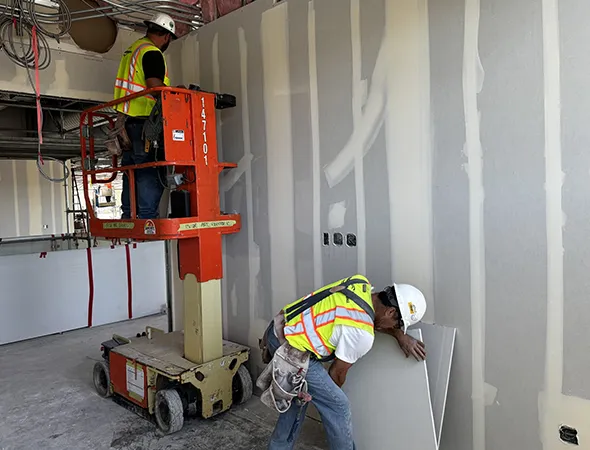
Step 3: Hanging the Drywall
Panels are secured to framing using appropriate drywall fasteners.
Ceiling panels are commonly installed before wall panels, although the exact sequence can depend on project requirements.
Installers must follow applicable fastening schedules and manufacturer instructions.
Step 4: Taping and Applying Joint Compound
Once the panels are installed, the finishing process begins.
Joint tape and compound cover seams, corners, and fastener locations.
Multiple applications may be necessary to build a smooth transition between panels.
Each coat needs sufficient drying time before additional finishing work.
Step 5: Sanding and Surface Preparation
After the compound dries, the installer sands and checks the finished areas.
The goal is to remove ridges and create consistent transitions without damaging the drywall facing.
Proper dust control is important during this stage.
Step 6: Priming and Painting
The completed drywall surface is prepared for primer and paint.
A suitable drywall primer helps create more consistent paint absorption across paper and joint compound.
The finished appearance depends on both the quality of the drywall work and the chosen paint system.
What Makes Drywall Installation Different for Home Additions?
Adding a bedroom, home office, or living area presents challenges that don’t always exist in new construction.
In a new house, drywall is installed throughout an unfinished structure. In an addition, the new walls and ceilings may need to connect with existing finished surfaces.
This creates additional planning requirements.
Matching Existing Wall Textures
An older home may have smooth walls, orange peel texture, knockdown texture, or another finish.
When new drywall meets an existing wall, the difference can become noticeable.
Matching the texture helps the addition feel consistent with the original home.
Managing Transitions Between Rooms
Openings between existing and new spaces require careful finishing.
Corners, ceiling transitions, and changes in wall alignment may need additional attention.
A poorly finished transition can remain visible even after painting.
Working Around Occupied Areas
Home additions often take place while homeowners continue living in the property.
Drywall cutting, sanding, and finishing can generate dust and temporarily limit access to certain rooms.
Contractors should discuss protective coverings, work areas, cleanup, and scheduling before installation begins.
Professional home addition drywall installation Raleigh services can help coordinate these details while completing the new interior surfaces.
Popular Home Additions That Require Drywall Installation
Different additions have different drywall requirements.
Understanding the intended use of the space helps determine the materials and finishing approach.
Bedroom Additions
A new bedroom typically needs finished walls and ceilings, along with careful treatment around doors, windows, and closets.
Sound control may also be worth considering, especially when the bedroom shares walls with busy living areas.
Home Office Additions
A home office may require additional electrical outlets, data connections, and sound insulation.
These elements should be planned before drywall installation to avoid unnecessary openings and repairs later.
Garage Conversions
Converting a garage into a living space often requires changes to insulation, electrical systems, and interior wall finishes.
Drywall materials and assemblies must meet the applicable requirements for the converted space.
Family Room Extensions
Larger living areas may involve broad ceiling surfaces and long wall sections.
Careful panel layout and finishing help reduce the appearance of seams under natural and artificial lighting.
Laundry Room Additions
Laundry areas may require moisture-resistant materials in appropriate locations.
Ventilation, plumbing connections, and access to equipment should be coordinated before walls are closed.
Common Drywall Installation Mistakes to Avoid
Drywall may look straightforward, but small installation mistakes can affect the appearance and durability of the finished room.
Using the wrong panel type: Materials should match the location, assembly requirements, and intended use.
Poorly aligned panels: Uneven panel placement can create difficult joints and visible surface irregularities.
Incorrect fastener installation: Fasteners driven too deeply can damage the panel facing, while protruding fasteners interfere with finishing.
Rushing joint compound applications: Applying additional coats before earlier layers dry can cause finishing problems.
Insufficient surface preparation: Skipping proper sanding, inspection, or priming can leave imperfections visible after painting.
Ignoring moisture problems: Drywall should not conceal active leaks or wet building materials.
Professional installation helps address these issues before they affect the completed project.
How Much Does Drywall Installation Cost in Raleigh?
Drywall installation costs vary depending on the size and complexity of the project.
A straightforward room with standard-height walls may require less labor than an addition with vaulted ceilings, multiple corners, and complicated transitions.
Several factors influence pricing.
Project Size
Larger projects require more materials and labor.
However, the cost per square foot can vary based on access, layout, and the amount of finishing work involved.
Drywall Material
Standard panels, moisture-resistant products, and specialized sound-control materials have different costs.
The selected panel thickness and assembly requirements also affect material quantities.
Ceiling Height and Accessibility
High ceilings, stairwells, and difficult-to-reach areas may require additional equipment and labor.
Finishing Requirements
Smooth finishes can require more preparation and inspection than some textured surfaces.
The desired finish level should be discussed before work begins.
Existing Surface Conditions
Home additions may require patching, transition work, or matching existing textures.
These details can increase the project scope.
Rather than relying on a general online estimate, request a written quote based on your actual plans.
How to Prepare Your Property for Drywall Installation
A little preparation can help the installation process move forward with fewer interruptions.
Before work begins, confirm that framing is ready and that required electrical, plumbing, insulation, and other inspections are complete.
Discuss access to the work area and identify where materials can be delivered and stored safely.
For occupied homes, move furniture and valuables away from the construction area when practical.
Ask how the contractor plans to manage dust and protect nearby finished surfaces.
It’s also helpful to confirm who will handle debris removal, final cleanup, priming, and painting.
Very Handy Wall and Ceiling Repairs offers drywall hanging, finishing, texture matching, ceiling repairs, and light painting services in Raleigh.
The company also works on remodels and additions, making it a relevant option for homeowners who need new drywall installed and finished.
How to Choose a Drywall Contractor in Raleigh
Finding the right contractor involves more than comparing prices.
Ask prospective contractors about their experience with similar projects, the materials they recommend, and the finishing work included in their estimates.
A clear written quote should identify the work being performed and any exclusions.
You should also discuss the expected schedule, payment terms, and how changes will be handled.
For additions, ask how the contractor plans to match existing walls and ceilings.
Very Handy Wall and Ceiling Repairs advertises 37 years of hands-on drywall experience and provides free estimates for projects in its stated Raleigh service area.
When considering new construction drywall installation Raleigh NC, confirm that the contractor can accommodate your project’s size, location, and construction schedule.
For home addition drywall installation Raleigh, pay particular attention to experience with texture matching and transitions between old and new surfaces.
Frequently Asked Questions
How long does drywall installation take in a new home?
The timeline depends on the property’s size, crew availability, finish requirements, and drying conditions. Hanging drywall may take only a portion of the overall schedule, while taping, compound application, sanding, and preparation require additional time. Your contractor can provide a project-specific estimate.
Can new drywall be matched to existing walls?
Yes, contractors can often match common wall textures and finishes. However, achieving an exact visual match may depend on the original texture, paint condition, lighting, and surface age. Sometimes refinishing a larger area produces a more consistent appearance than treating only the transition.
Should drywall be installed before flooring?
Drywall is commonly installed and finished before final flooring materials are placed. This helps protect finished floors from construction dust and damage. However, the exact sequence depends on the flooring system, building design, and construction schedule.
Do I need moisture-resistant drywall in every room?
No. Standard drywall is suitable for many dry interior spaces. Moisture-resistant panels may be appropriate in certain humid locations, but material selection should follow the specific application and applicable building requirements. Direct wet areas often require different backing and waterproofing systems.
What drywall finish is best for a new home?
The best finish depends on your lighting, paint selection, budget, and desired appearance. Smooth finishes can create a clean look but may reveal imperfections under strong side lighting. Textured finishes can provide a different appearance and may help conceal minor surface variations.
Conclusion
Drywall installation is an important stage in building a new home or completing an addition. Proper material selection, accurate hanging, careful finishing, and attention to existing surfaces all contribute to a better final result.
For Raleigh homeowners, planning these details early can help prevent unnecessary repairs, scheduling problems, and visible finishing issues.
Very Handy Wall and Ceiling Repairs provides drywall installation, hanging, finishing, patching, texture matching, and ceiling repair services. With 37 years of hands-on experience, the company serves homeowners and businesses within its Raleigh, NC 27604 service area.
Whether you’re finishing a newly constructed room or connecting an addition to your existing living space, professional drywall work can help create walls and ceilings that look consistent and are ready for everyday use.