A tall oak leaning toward a roof can turn a quiet weekend into a stressful one. Maybe a storm cracked a limb overnight, or a pine near the driveway has slowly started to die. Either way, the homeowner needs to decide what to do, and quickly.
That is when reliable tree removal services in Greensboro, NC become more than a line in a phone book. The right crew protects the property, the people nearby, and the rest of the landscape. The wrong one can leave behind damage, debris, and unexpected costs.
This guide explains what tree removal involves, why experience matters, and how property owners can tell a dependable provider from a risky one.
Why Tree Removal Is More Complicated Than It Looks
From the ground, cutting down a tree can seem simple. In practice, every tree behaves differently once it is cut. Weight distribution, hidden rot, wind, and nearby structures all affect where it falls.
The Piedmont region adds its own challenges. Large willow oaks, tulip poplars, sweetgums, and loblolly pines are common across residential neighborhoods. Many of these trees reach heights of 80 feet or more and sit close to homes, fences, and power lines.
The local red clay soil also plays a role. It holds water after heavy rain, which can loosen root systems. Trees that looked stable for years may suddenly lean after a wet season or a strong storm.
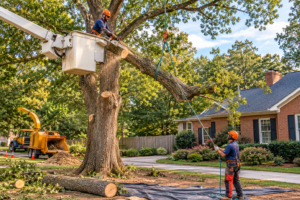
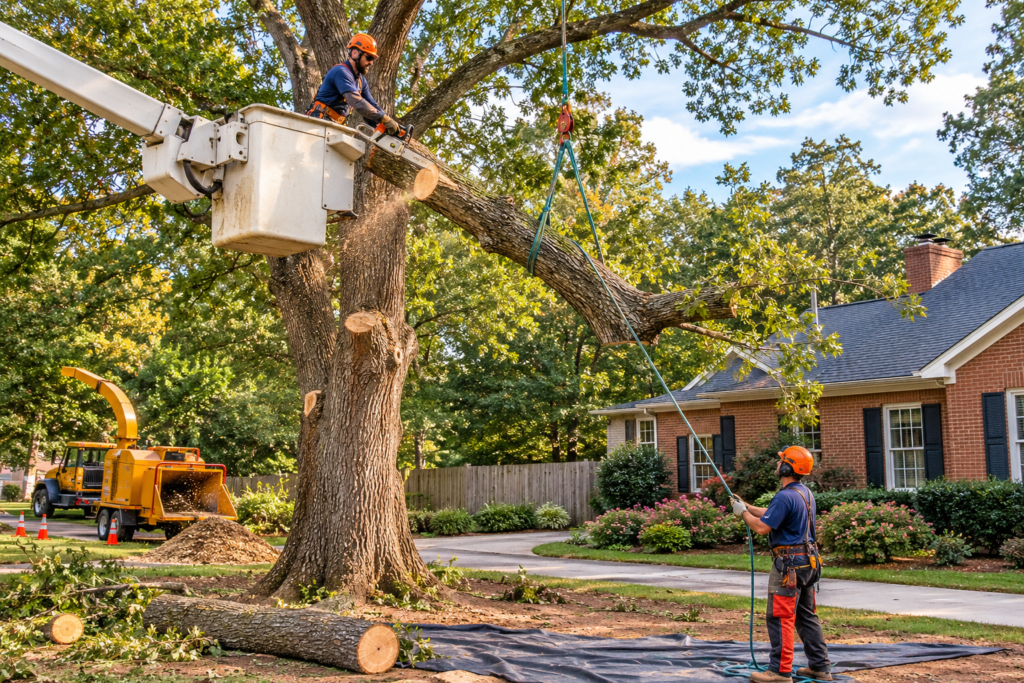
Because of these factors, professional crews rarely fell a large tree in one piece. They often climb or use bucket trucks to remove it in sections. Then they lower each piece with ropes and rigging so nothing crashes onto a roof or lawn.
What Makes a Tree Service Reliable
Reliability in this industry comes down to a few core qualities. None of them are flashy, but each one matters when a heavy tree is coming down near a house.
Proper Insurance and Credentials
A dependable tree service carries both general liability insurance and workers’ compensation coverage. Without them, a homeowner could be held responsible if a worker gets hurt or a neighbor’s property is damaged.
Many experienced companies also employ ISA Certified Arborists. These professionals understand tree biology and can tell whether a tree truly needs removal or can be saved with pruning or cabling.
Honest Assessments
A trustworthy provider does not push removal when it isn’t necessary. Sometimes a struggling tree only needs deadwood pruning or better care. A good assessment explains the tree’s condition clearly, along with the reasons behind the recommendation.
Clear Written Estimates
Price surprises are one of the most common complaints in tree work. Reliable crews put everything in writing, including stump grinding, debris hauling, and cleanup. When those details are missing, the final bill often climbs.
In short, insurance, expertise, and transparency separate dependable crews from those that simply own a chainsaw.
The Benefits of Hiring Experienced Professionals
Safety is the most obvious benefit. Tree work ranks among the more dangerous outdoor jobs, and most serious accidents involve people without the right training or gear. Professionals use harnesses, rigging systems, and protective equipment designed for this kind of risk.
Property protection follows close behind. A skilled crew can remove a large tree just feet from a home without scratching the siding. They plan drop zones, protect garden beds, and avoid damaging underground utilities or irrigation lines.
There is also the matter of time. A job that might take a homeowner several weekends can often be finished by a trained team in a single day. That includes cutting, chipping, hauling, and leaving the yard clean.
Finally, experienced arborists can spot problems in surrounding trees. While on site, they may notice disease, insect damage, or weak limbs that could cause trouble later. That early warning can save money and prevent future emergencies.
Real-World Situations Where Professional Help Matters
Consider a family in an older neighborhood near downtown. Their backyard maple has a large hollow at the base, but the canopy still looks green. An arborist taps the trunk, measures the decay, and explains that the tree could fail in the next major storm. Removing it in sections keeps the nearby shed and fence intact.
Another common scenario happens after severe weather. Ice storms and the remnants of tropical systems regularly bring down limbs across the Triad. In these moments, homeowners often face a tree resting on a roof or blocking a driveway. Emergency crews know how to release that tension safely, which is far riskier than it appears.
Then there are larger projects. A landowner preparing a lot for a new home or barn may need dozens of trees removed, plus brush and stumps cleared. That type of work falls closer to land clearing than single-tree removal. In growing areas south of the Triad, many property owners compare tree removal with professional land clearing services in Pittsboro, NC, where new development has created steady demand for clearing work.
Each situation calls for different equipment and planning. A reliable provider will explain which approach fits the property instead of using a one-size-fits-all method.
How Homeowners Can Evaluate Their Options
Getting at least two or three estimates is a smart habit. Comparing quotes reveals the typical price range and helps homeowners spot offers that seem too good to be true.
Reading recent reviews also helps. Look for comments about cleanup, communication, and how crews handled tricky jobs near structures. A pattern of complaints about leftover debris or missed appointments is worth noting.
It is also worth asking about permits and utility lines. Trees near power lines usually require coordination with the utility company. Trees in a public right-of-way or within HOA boundaries may need approval before work begins.
Local companies such as Your Way Lawn and Tree are among the providers homeowners may come across while researching. Whatever company they choose, the same standards apply: proper insurance, honest assessments, and clear pricing.
Tree Removal vs. Land Clearing
These two services overlap, but they are not the same. Tree removal focuses on individual trees, often in tight residential spaces where precision matters most.
Land clearing covers broader areas. It typically includes removing multiple trees, underbrush, stumps, and sometimes grading the ground for construction. Projects that involve professional land clearing services in Pittsboro, NC, for example, often use forestry mulchers, excavators, and other heavy machinery.
Knowing the difference helps property owners describe their project accurately and get more useful quotes.
Final Thoughts
A dying or damaged tree is not something to ignore. Waiting too long can turn a manageable job into an emergency, especially during storm season.
Finding reliable tree removal services in Greensboro, NC comes down to asking the right questions. Check insurance, look for certified expertise, and insist on a clear written estimate. Taking those simple measures upfront protects the property and brings peace of mind long after the last branch is hauled away.
FAQs
How much does tree removal usually cost?
Costs vary based on the tree’s size, location, and condition. Smaller trees may cost a few hundred dollars, while large trees near homes or power lines can cost well over a thousand.
Do I need a permit to remove a tree on my property?
Most residential trees on private property don’t require a city permit. However, trees in a public right-of-way, protected areas, or HOA communities may need approval first.
Is stump grinding included in tree removal?
Not always. Many companies list stump grinding as a separate charge, so it is worth confirming whether it is included in the written estimate.
How can I tell if a tree needs to be removed?
Warning signs include large dead branches, deep trunk cracks, fungus at the base, and a sudden lean. A certified arborist can confirm whether removal or treatment is the better option.
Who is responsible if a neighbor’s tree falls on my property?
In many cases, the property owner whose home was damaged files a claim with their own insurance. If the tree was clearly dead or neglected, the neighbor may share responsibility.