Best Ways to Remove Wrinkles from a Leather Jacket Without Damage
I’ll never forget the day I unpacked my favorite brown leather jacket after storing it over the summer. It had been folded in a drawer, and now it looked like a crumpled paper bag—deep lines across the elbows, creases running down the front, and weird bunching around the shoulders. I panicked at first, thinking I’d ruined a piece I’d spent good money on. But after some research and careful trial and error (including a few small disasters on cheaper items), I discovered several safe, effective ways to remove wrinkles from a leather jacket without causing any damage. These methods have saved multiple jackets for me, and I’m happy to share what actually works.
Why Leather Develops Wrinkles So Easily
Leather is basically animal hide, so it behaves like skin. It’s supple and molds to your movements, but it also holds the shape it’s left in for too long. Heat, moisture changes, poor storage, and even repeated wear in the same spots can set in creases. The key to fixing them safely is working with the leather’s natural properties instead of forcing it. I learned that aggressive methods like high heat or chemicals often lead to cracking, drying, or discoloration, so everything I do now focuses on gentle relaxation of the fibers.
Start with Proper Assessment and Preparation
Before touching the jacket, lay it flat on a clean surface in good lighting. Gently shake it out and identify the worst areas. Let it come to room temperature for an hour or two if it’s been in storage or a cold package. This small step makes the leather more responsive and reduces the risk of damage during treatment. I always use this time to check for any existing dryness or scuffs so I can address those too.
The Safest Method: Controlled Steam Relaxation
Steam has become my absolute favorite way to remove wrinkles from a leather jacket because it’s effective and low-risk when done right.
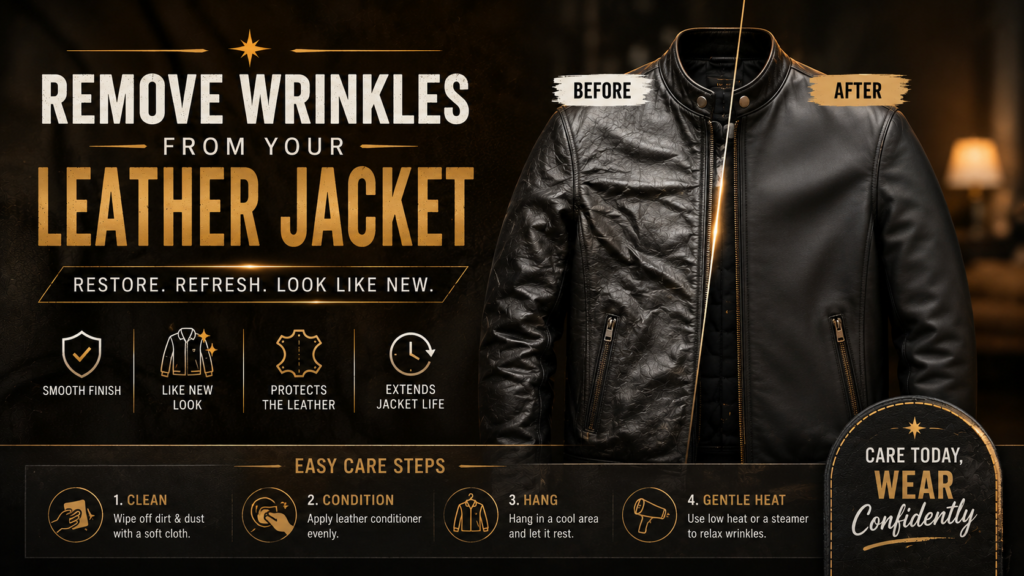
Hang the jacket on a sturdy wooden or padded hanger in a bathroom. Run a hot shower for 10-15 minutes to fill the room with steam, keeping the jacket several feet away from direct water. The gentle humidity softens the leather fibers without soaking them.
Once the room is steamy, take the jacket out and use clean hands to softly smooth the wrinkled areas. Work in long strokes following the natural grain of the leather. For tougher spots like sleeves, I use a handheld steamer on the lowest setting from at least 10 inches away—never letting the nozzle touch the surface. After steaming, hang the jacket properly and let it air dry naturally. I’ve seen major improvements in just one session, and the leather feels more supple afterward, not damaged.
Gentle Heat with Protective Barrier
When steam alone isn’t enough for deeper creases, I turn to low-heat ironing with serious precautions. This method works well but demands patience to avoid any heat damage.
Set your iron to the lowest possible temperature (usually the synthetic or silk setting) with zero steam. Place a clean white cotton cloth or parchment paper over the wrinkled section as a barrier. Glide the iron lightly and quickly across the cloth—never press down firmly or hold it in place. Keep moving constantly.
This indirect heat relaxes the leather safely. I focus on flat areas like the back or chest first. For sleeves, I stuff them lightly with clean towels to help them hold shape. Immediately after, hang the jacket so it cools in the right position. This prevents new wrinkles and locks in the smooth result. Always test on a hidden inside seam first, especially on lighter-colored or finished leathers.
Gravity, Weight, and Natural Stretching
Sometimes the best approach is the simplest and most damage-free. After steaming or light heating, hang the jacket on a quality wide-shouldered hanger in a cool, dry area with good airflow. Let gravity pull the wrinkles out over 24 to 48 hours.
For extra stubborn lines, I place smooth, clean weights—like books wrapped in soft fabric—on the affected areas while it hangs. This gentle stretching works with the leather instead of against it. No heat, no moisture, zero risk of damage. I’ve revived shoulder creases and hem lines this way many times, especially on newer jackets.
The Essential Role of Leather Conditioning
You can’t talk about safe wrinkle removal without mentioning conditioning. Dry leather wrinkles more and damages easier, so rehydrating is non-negotiable.
After smoothing out wrinkles, apply a high-quality leather conditioner with natural oils. Use a soft microfiber cloth and rub in small circular motions using very little product at a time. Let it absorb for several hours or overnight, then buff gently. This step restores moisture, increases flexibility, and helps the jacket resist future creases.
I condition after every wrinkle treatment and every couple of months in general. My jackets now stay softer longer and show fewer deep wrinkles overall. Look for conditioners made specifically for genuine leather jackets—avoid anything with heavy silicone.
Hand Massaging and Manual Smoothing
This underrated technique works surprisingly well for light wrinkles. After steaming, while the leather is warm and flexible, spend 10-15 minutes gently massaging the entire jacket with clean hands. Focus on creased areas using the palms rather than fingertips to avoid dents.
The warmth from your hands combined with light pressure helps realign the fibers naturally. I often do this while watching TV, turning it into a relaxing process rather than a chore. It’s completely safe and gives you a better feel for the jacket’s condition.
Tools and Products I Actually Recommend
Over time, I’ve settled on a small set of reliable items that help without risk:
- Padded wooden hangers for proper support
- Handheld garment steamer (low-heat models)
- Natural leather conditioner (beeswax or mink oil based)
- Soft microfiber cloths
- Clean white cotton sheets or towels as barriers
Keep everything clean to prevent transferring dirt or oils that could stain the leather.
Critical Mistakes That Cause Damage
I’ve made some of these errors myself, so learn from them:
- Never use direct high heat from irons, hairdryers, or radiators
- Avoid putting leather in washing machines or dryers
- Skip harsh chemicals, alcohol, or household cleaners
- Don’t over-wet the jacket—excess moisture leads to stiffness or spots
- Never use wire hangers, which create permanent shoulder marks
- Avoid cheap wrinkle sprays marketed for leather; many leave residue or dry it out
Building Better Habits to Prevent Future Wrinkles
The best wrinkle removal strategy includes prevention. Always hang your jacket properly after wearing it. Store it in a cool, dry closet with space to breathe. When packing for travel, fold carefully with tissue paper or use a garment bag. Rotating jackets instead of wearing the same one daily also helps.
These habits have dramatically reduced how often I need to treat wrinkles.
When to Call in Professional Help
Some situations are better left to experts—especially with expensive, vintage, or heavily detailed jackets. A professional leather cleaner or tailor has specialized tools and experience that minimize any risk. I’ve taken one particularly delicate jacket to a pro after a bad wrinkle situation, and it came back looking incredible. If DIY methods aren’t showing progress after two attempts, it’s worth the investment.
Embracing Leather’s Natural Character
Here’s what I’ve come to appreciate: leather is meant to develop some personality. Light, natural creasing from wear actually makes a jacket look better over time. The goal isn’t perfection but removing the obvious, neglected-looking wrinkles while keeping the authentic feel. My jackets now have that loved, broken-in appearance without looking sloppy.
Final Results and Long-Term Care
Using these methods, most wrinkles disappear within a few days, and the leather often looks and feels better than before. My brown jacket that started this whole journey now hangs smooth and gets worn regularly again. The combination of steam, gentle heat, conditioning, and good habits keeps it in great shape season after season.
Removing wrinkles from a leather jacket without damage is all about patience, gentle techniques, and respecting the material. Start with steam and conditioning, add heat or weights only when needed, and always prioritize prevention. Your favorite leather jacket can easily last for years with this kind of care.
If you have a wrinkled leather jacket sitting in your closet right now, try the steam method this weekend. Take it slow, document the before and after, and enjoy the process. A well-cared-for leather jacket rewards you with style, comfort, and confidence every time you wear it.