Shopify Plus features for scalable online stores
Growing an e-commerce brand into new markets around the globe, is exciting, but it comes with incredibly complex operational challenges. Growing across borders is so much more than simply localizing your web pages or offering generic currency conversion. Localized tax requirements, regionally-specific payment methods, cross-border fulfillment, the need to maintain country-specific pricing models while still holding your entire system stable, all conspire to keep this from simply being “more of the same.”
Many expanding enterprise brands hit a “performance ceiling” operating off standard e-commerce setups.
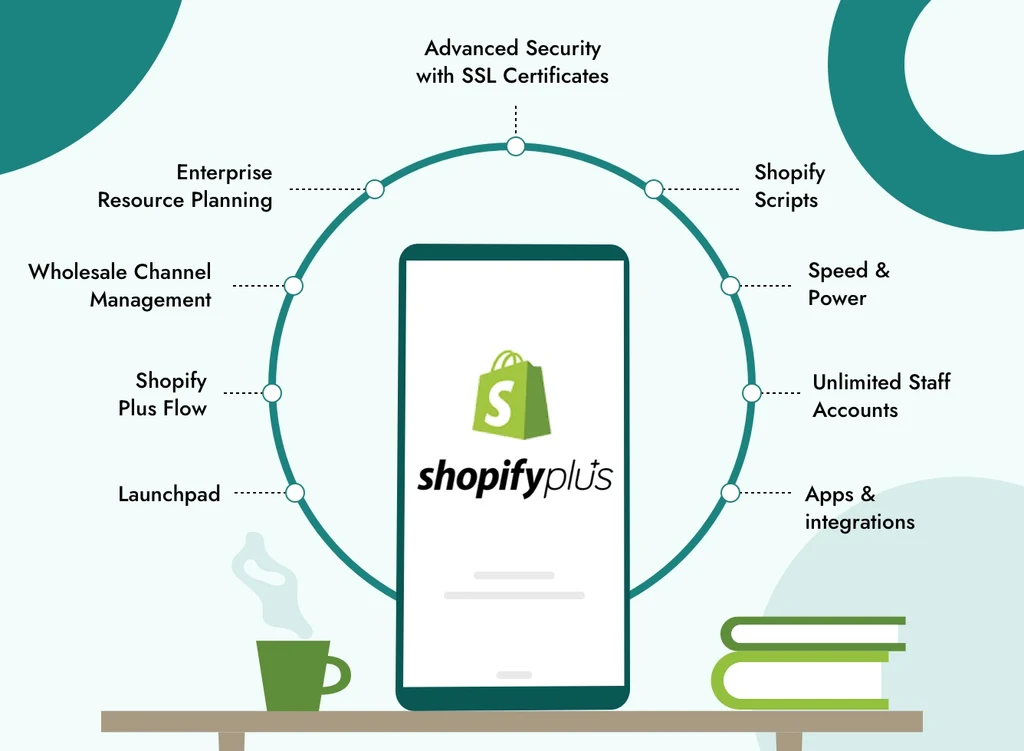
If your current trajectory calls for a huge shift-like executing a woo-commerce to shopify migration, or upgrading an existing Shopify account-the choice of the right infrastructure can be critical. Shopigy Plus-designed specifically to handle high-volume e-commerce merchants-provides a single platform for international e-commerce expansion. The following Shopify Plus features help you to scale into new global markets without collapsing your existing business:
1. Unified, Multi-Market Control, from a single Shopify dashboard via Shopify Markets
Managing a large number of international storefronts usually requires a collection of separate platforms or code-heavy custom solutions. Shopify Markets eliminates the need for both of them to allow you to operate markets in over 150 countries from your one centralized Shopify account. Instead of having individual website stores to manage, you simply indicate how different regions should be treated, using various rules available from your primary administrative interface:
- Localized, item-level pricing & category management: Price products individually, set regional, item-level markdowns, or disable particular products due to varying licensing or shipping needs of different regions.
- Automatic geo-specific SEO subfolders: Automatically add targeted, region-specific, URL subfolders (e.g. ‘/en-gb’ or ‘/fr-ca’), and auto-implementedhreflang attributes, without needing to upload duplicate site copies or manage their settings individually-all protected through native SEO.
- Out-of-the-box multiple currency conversions: Customers will automatically see prices shown dynamically based on real-time exchange rates converted from a particular country’s local currency to ensure you reduce lost customers due to checkout sticker shock-no surprise fees at the finish.
2. Dedicational Expansion Stores to Support Region-Specific Endeavors

If you require country-specific brand messaging, need to hold separate inventory or legal entities for a country market, the approach taken at Shopify Plus is that you can always run a dedicated online store where needed. The platform allows you to create up to nine additional expansion stores, on the same core contract-helping larger organizations maintain flexibility with hyper-personalized campaigns in particular markets. While using centralized methods is appropriate for some large, international businesses, opening up new, separate stores opens the door for wholly different shopping experiences-for example, US-based clothing brand expanding into Japan might establish its own, completely standalone Japanese website, with distinct cultural messaging, local payment methods, and entirely separate warehousing systems. The hybrid platform is one thing all international brands do: useShopify Marketsfor global coordination, where appropriate, then build standalone stores where specialized, localized needs justify the independent channel.
3. Automation for Taxes, duties and duty paid checkouts globally
Unexpected international shipping fees are a guaranteed one-way ticket out of customers’ digital carts. Customers who land in an unexpected, but high bill for customs duty or other clearance fees just before checkout simply back out-customers abandon carts more often this way than with high shipping fees alone. When customers are presented with unanticipated additional international fees at the point of delivery that were not pre-collected, both trust and satisfaction plummet. This is the space where Shopify Plus has you covered. Automated global tax, duty and duty-paid checkouts prevent unnecessary shipping costs, shipping delays, and frustrated customers.
- Collected-duty transactions: Charge customers the exact, duty and tax liability owed to that country, for example via VAT or GST, at checkout, then allow your package to move smoothly as a delivered duty paid item-at no additional cost to the customer when the package arrives.
- Automated international product classification (using HS codes): Shopify plus automatically takes the HS code entered, ensuring international duties and other taxes levied on goods shipped from country to country comply, are processed accurately.
- Regional, checkout-customized payment and information delivery: Make changes on your checkout page like local credit cards (such as Boleto or Klarna) or bank transfers as well as the proper shipping names, regional brands, country-specific addresses and trust signals are seamlessly applied to the transaction through your existing account, but localized dynamically on the international site, without further coding or separate development work-just the additional modules available through Checkout Extensibility.
4. Native Enterprise Cross-Border B2B Selling
International growth is not just for the DTC segment; enterprise wholesale is enormous for business growth worldwide. Shopfiy Plus has built-in B2B functionallity that enables brands to run both their DTC & B2B businesses from a single backend.
If you are selling to wholesale distributors or retailers in the international market, you will be able to customize price list per customer type, tiered volume discounts and choose net payment terms (i.e. Net 30, Net 60) per location.
Wholesale buyers also have B2B self-serve customer portals where they can view custom catalog, place volume re-orders and check out with preferred local currency to avoid any manual and pricey B2B software, separate legacy systems (disconnected) databases.

Pros & Cons of Shopify Plus Global Growth and FAQs
When you move over to the world of an enterprise commerce engine there will be some strategic trade-offs to think about for your ops teams.
Strategic Trade-offs
Pros
- Unified governance– manages all of your international inventory, customer profiles and border fulfillment logic within one administrative center.
- Lower TCO– integrated internationalization and localization prevents having expensive custom enterprise software built out.
- Higher Checkout Conversion rates – Cart abandonment decreases significantly as duties are calculated, currencies are pre-computed, and local payment options are pre-set.
- Integrated B2B and DTC synergy– run your retail storefront and each wholesale business in international markets on the same platform.
Cons
- Higher Platform investment – Standard Shopify accounts has more budget friendly monthly subscription fee compared with Shopify Plus.
- Boundaries of SaaS customization– In spite of the checkout extensibility, there is definite boundary for cloud based hosted infrastructure over a fully open source one.
Frequently Asked Questions
How does migrating from WooCommerce to Shopify Plus help international store growth?
Migrating away from open-source systems eliminates plugin conflicts, server management overhead, and security vulnerabilities that slow down global sites. Shopify Plus provides fully managed hosting, localized checkout flows, and automated tax systems natively, allowing your team to focus on international marketing rather than platform maintenance.
Can I run direct-to-consumer and wholesale B2B stores on the same platform?
Yes. Shopify Plus supports blended storefronts where wholesale customers log into dedicated account portals to see custom pricing and payment terms, while retail shoppers browse the standard DTC interface.
Do I need a separate Shopify store for every country I expand into?
No. You can serve dozens of countries using Shopify Markets within a single store. Separate expansion stores are generally reserved for regions requiring independent inventory databases, separate bank accounts, or vastly different brand identities.
Scaling Your Global Commerce Footprint
Expanding into international markets is one of the most effective strategies for unlocking enterprise-level retail growth. However, handling multi-currency conversions, complex shipping rules, localized tax laws, and wholesale accounts requires a technical foundation that scales without breaking.
By utilizing core shopify plus features—from localized checkout flows and automated duty management to multi-market catalog controls—brands can eliminate cross-border friction. Whether you are consolidating an existing multi-store network or planning a complete platform shift through a woocommerce migration to shopify, taking advantage of native enterprise tools ensures your global storefront stays fast, compliant, and highly profitable.