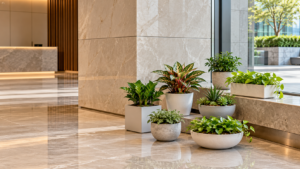
Creating an attractive green environment requires the right combination of plants, containers and design elements. Whether it is a residential balcony, a modern office, a hotel reception or a landscaped commercial property, planters help introduce natural elements into the surroundings. However, selecting suitable containers involves considering durability, weight, maintenance, appearance and available space.
A Small FRP Planter offers a versatile option for people seeking compact and visually appealing planting solutions. Manufactured using fiberglass-reinforced plastic, these planters can be produced in various shapes, sizes and finishes to complement different interior and landscape designs. Their practical characteristics make them worth considering for residential users, architects, interior designers and commercial project managers.
What Makes FRP Planters a Practical Choice?
FRP, or Fiberglass Reinforced Plastic, is a composite material that combines resin with reinforcing glass fibres. The resulting material can be moulded into different forms, making it useful for products that require a balance of design flexibility and structural performance.
In planter manufacturing, the properties of the finished product depend on factors such as material selection, reinforcement, moulding techniques and quality control. A well-manufactured planter can provide a convenient alternative to heavier containers while offering flexibility in appearance and dimensions.
Small FRP planters are particularly useful when buyers want to incorporate greenery without introducing oversized containers into limited spaces.
Key Benefits of Small FRP Planters
1. Space-Efficient Planting Solutions
Small planters make it easier to introduce greenery into compact areas. They can be positioned on windowsills, office tables, apartment balconies, reception counters and selected shelving arrangements, provided the location offers suitable support and light.
For interior designers, these containers provide an opportunity to add greenery without overwhelming the existing layout. Multiple planters can also be arranged together to create a coordinated display.
When choosing a size, consider the mature dimensions of the plant and the space required for its roots. A visually attractive container should also provide appropriate growing conditions.
2. Convenient Handling and Placement
FRP is generally lightweight compared with many traditional planter materials of similar dimensions. This characteristic can simplify transportation, installation and repositioning.
The advantage is especially relevant for businesses that periodically update their interiors or rearrange decorative displays. Nevertheless, the final weight depends on the planter’s construction and the materials placed inside it.
For elevated locations, balconies and commercial installations, buyers should consider the complete filled weight and verify that the supporting surface is suitable.
3. Design Flexibility for Different Interiors
A planter contributes to the overall appearance of a space, making its shape and finish important selection factors. FRP can be moulded into round, square, rectangular and geometric designs, depending on the manufacturer’s product range.
Matte finishes and neutral colours may complement contemporary offices and minimalist homes, while textured surfaces and contrasting colours can help create decorative focal points.
Buyers planning coordinated interiors should confirm the availability of matching finishes and dimensions before ordering multiple units.
4. Straightforward Cleaning and Care
Routine maintenance is generally uncomplicated. Dust and light dirt can usually be removed with a soft cloth, water and a mild cleaning solution suitable for the product’s finish.
Avoid abrasive pads and aggressive chemicals unless specifically approved by the manufacturer. Outdoor planters should also be inspected periodically for surface wear, drainage problems and signs of damage.
The planter’s suitability for prolonged sunlight, rain and temperature changes should be checked before it is installed outdoors.
Factors to Consider Before Purchasing
Selecting the right planter requires more than comparing designs. Start by measuring the intended location and determining the container dimensions needed for the chosen plant.
Next, inspect the product’s construction, surface finish and base stability. Ask whether the planter includes drainage holes or requires a separate drainage solution. For indoor placement, consider a suitable tray or other method of protecting floors and furniture from excess water.
If the product will be used outdoors, confirm that its materials and finish are appropriate for the expected environmental conditions. For projects involving several planters, verify consistency in dimensions, colour and finish.
Price should also be evaluated alongside product specifications, customization requirements, order quantity, packaging and delivery arrangements. Comparing these factors helps buyers make decisions based on overall suitability rather than purchase price alone.
How to Choose Reliable Small FRP Planter Manufacturers
Finding a suitable manufacturing partner is particularly important for landscapers, architects, retailers and businesses purchasing planters in quantity. Reliable Small FRP Planter Manufacturers should be able to explain their available designs, dimensions, finishes and customization options clearly.
Before confirming an order, ask about material specifications, manufacturing quality checks, minimum order quantities and expected lead times. For larger projects, requesting a sample or approving a reference finish can help ensure consistency across the final supply.
Buyers should also clarify packaging methods, delivery responsibilities and the process for addressing products damaged during transit. Written specifications can reduce misunderstandings when several units or customized products are involved.
Conclusion
Small FRP planters provide a flexible way to introduce greenery into modern homes, workplaces and commercial environments. Their relatively low weight, adaptable designs and manageable routine care make them a practical option for many compact planting applications.
However, the best choice depends on plant requirements, dimensions, drainage, construction quality and the intended installation environment. By reviewing these factors and confirming product details with the supplier, buyers can select planters that complement their spaces while supporting practical day-to-day use.
Frequently Asked Questions
What are the main advantages of small FRP planters?
Small FRP planters can offer relatively low weight, design flexibility, varied finishes and convenient routine cleaning. Their suitability depends on the product’s construction and intended application.
Can small FRP planters be used in offices?
Yes. They can be used on reception counters, office desks and in meeting rooms, provided the chosen plants receive appropriate lighting, watering and drainage.
Are small FRP planters available in different designs?
Depending on the manufacturer’s range, they may be available in round, square, rectangular and geometric shapes, with different colours and surface finishes.
How can buyers evaluate the quality of an FRP planter?
Check the surface finish, dimensional consistency, base stability and available product specifications. Ask the supplier about construction methods, quality-control procedures and suitability for the intended environment.
What should businesses ask before placing a bulk order?
Businesses should confirm dimensions, colour consistency, customization options, minimum order quantities, packaging, delivery schedules and the process for handling transit damage before approving an order.