Commercial hydroseeding services
Commercial landscaping projects often involve much more than planting trees, installing irrigation, or maintaining attractive flower beds. Establishing healthy grass across large areas can be one of the most challenging parts of a development, especially when the site has exposed soil, slopes, drainage concerns, or a tight completion schedule. Commercial hydroseeding services provide an efficient way to establish vegetation across expansive properties while promoting relatively uniform grass growth. From construction sites and business parks to sports fields and roadside developments, hydroseeding can help transform bare ground into a stable, attractive landscape. Understanding the process, pricing factors, benefits, and selection criteria can help property owners and contractors make a more informed decision.
What Are Commercial Hydroseeding Services?
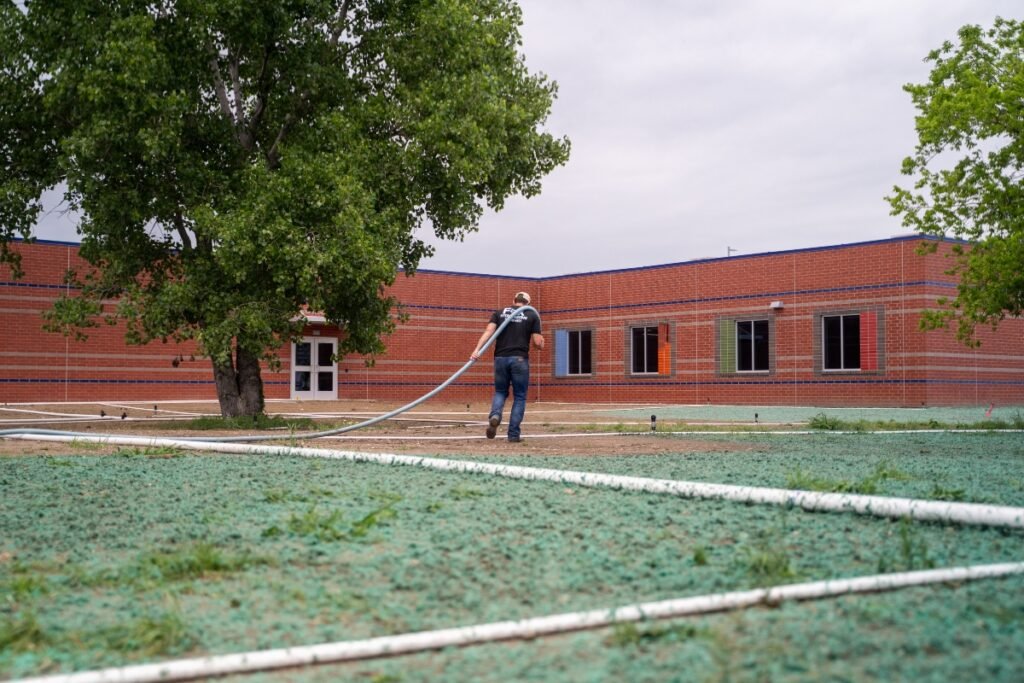
Commercial hydroseeding is a planting method that combines grass seed with water, mulch, fertilizer, and other soil-supporting ingredients before applying the mixture to prepared ground. Specialized hydroseeding equipment sprays the slurry evenly across the designated area, helping distribute seed more consistently than many conventional broadcasting methods. The mulch component helps retain moisture around the seed while also providing some protection from wind, erosion, and temperature fluctuations. Depending on the project, the mixture may be customized for soil conditions, climate, sunlight exposure, drainage, and the intended use of the property. This flexibility makes hydroseeding particularly useful for large commercial landscapes where consistent coverage and efficient installation are important.
The process is not simply a matter of spraying seed over bare soil and waiting for grass to appear. Successful commercial hydroseeding begins with proper site preparation, including grading, debris removal, soil evaluation, and correction of significant drainage or compaction problems. Contractors may amend the soil when necessary and select seed blends that are appropriate for the project’s environmental conditions and expected traffic levels. Once the surface is prepared, the hydroseeding slurry is applied using equipment designed to cover large areas efficiently. After installation, proper watering and early-stage maintenance remain essential for helping the seed establish strong roots and develop into a durable turf surface.
How Does the Commercial Hydroseeding Process Work?
A professional project generally begins with a site assessment because every commercial property has different requirements. The contractor evaluates soil quality, slope, drainage, sunlight, existing vegetation, erosion risks, and the property’s intended use. Based on those findings, an appropriate seed mixture and application strategy can be developed rather than relying on a one-size-fits-all formula. Soil preparation may involve grading, loosening compacted areas, adding amendments, and establishing a suitable seedbed. Thorough preparation is one of the most important factors affecting the eventual quality of the finished turf.
After preparation, the contractor combines the selected seed with water, mulch, fertilizer, and potentially soil conditioners or tackifiers in a hydroseeding tank. The mixture is mechanically agitated so the ingredients remain distributed throughout the slurry during application. The equipment then sprays the material across the prepared surface, allowing the contractor to cover broad areas in a controlled manner. On sloped or difficult terrain, the process can provide coverage in places where conventional seeding may be inconvenient or less consistent. Once application is complete, the property enters the establishment phase, during which irrigation, weather conditions, mowing, and other maintenance practices influence the final results.
What Factors Affect the Cost of Hydroseeding?
The cost of a commercial hydroseeding project can vary significantly because pricing depends on the characteristics of the property and the materials required. One of the most obvious factors is the total square footage being treated, as larger projects require more seed, mulch, water, labor, and equipment time. Site accessibility can also influence the estimate, particularly when crews must work around buildings, construction equipment, steep slopes, narrow access points, or other obstacles. The type of seed selected can affect material costs as well, with specialized or premium blends generally costing more than basic mixtures. A reliable contractor should provide a project-specific estimate rather than presenting a single price as though every property were identical.
Preparation requirements can also have a major effect on the overall investment. A relatively level site with healthy topsoil may require minimal preparation, while a heavily compacted construction site may need grading, soil amendments, erosion control measures, or additional site work before hydroseeding begins. Water availability, slope conditions, required application thickness, and the desired speed of establishment can also influence pricing. Property owners should therefore compare estimates based on the complete scope of work rather than choosing the lowest initial number. A detailed quote should explain what is included, such as preparation, seed selection, slurry application, materials, labor, and any recommended follow-up services.
Why Choose Hydroseeding for Commercial Properties?
One of the biggest advantages of hydroseeding is its ability to cover large areas efficiently. Traditional hand seeding can require considerable labor, particularly when a commercial property includes several acres of open ground or difficult terrain. Hydroseeding equipment allows crews to distribute the mixture across extensive surfaces in a relatively short period while maintaining controlled application. The mulch in the slurry also helps create a favorable environment around the seed by retaining moisture and reducing exposure to certain environmental stresses. These characteristics can make hydroseeding a practical option for developers, contractors, municipalities, property managers, and other organizations managing substantial landscapes.
Hydroseeding can also support erosion management when properly designed and maintained. Establishing vegetation quickly is important on exposed commercial sites because bare soil can be vulnerable to rainfall, wind, and surface runoff. A developing root system helps stabilize soil over time, while the applied mulch can provide temporary surface protection during the early stages of growth. This can be particularly valuable around slopes, drainage areas, roadsides, and construction projects where soil movement is a concern. However, hydroseeding should be viewed as one component of an overall erosion-control strategy when a site has significant environmental or engineering challenges.
How to Find a Reliable Hydroseeding Contractor
When searching for a hydroseeding company near me, commercial property owners should look beyond convenience and focus on experience, technical knowledge, equipment, and project history. A contractor experienced with residential lawns may not necessarily have the resources or expertise required for a large commercial development. Ask potential providers about similar projects they have completed, the seed blends they commonly use, their site-preparation process, and how they handle challenging terrain. It is also useful to verify whether the company understands local growing conditions and can recommend vegetation appropriate for the property’s long-term needs. A professional contractor should be willing to explain the process clearly instead of promising unrealistic results.
References, reviews, project photographs, and business credentials can provide additional insight into a contractor’s reliability. When reviewing previous work, pay attention to projects that resemble your own in size, terrain, soil conditions, and intended use. It is also important to ask what happens after the slurry is applied because installation is only the beginning of turf establishment. A responsible provider should explain watering requirements, expected germination, mowing recommendations, potential maintenance needs, and circumstances that could affect results. Clear communication before the project begins can reduce misunderstandings and make it easier to evaluate the contractor’s overall professionalism.
Commercial Applications and Long-Term Benefits
Commercial hydroseeding can be used for a wide range of properties and projects, including office campuses, industrial developments, retail centers, parks, sports facilities, schools, municipal land, roadside areas, construction sites, and large recreational spaces. It can also be useful when a development requires vegetation across irregular terrain or areas that are difficult to seed manually. The appropriate seed mixture depends on the project’s purpose, local climate, soil characteristics, expected foot traffic, and maintenance plan. For example, a high-traffic recreational area may require a different turf strategy than an erosion-control project along a commercial roadway. Matching the application to the site’s actual purpose is essential for achieving sustainable results.
Beyond appearance, properly established turf can contribute to soil stability, dust reduction, stormwater management, and overall site usability. A healthy vegetative cover can make a newly developed property look more finished and welcoming while helping integrate buildings and hardscape into the surrounding landscape. Over the long term, the quality of the installation can also influence maintenance requirements, because healthy turf generally has a better foundation for handling normal environmental stresses. Hydroseeding is not a substitute for ongoing irrigation, mowing, fertilization, and soil management, but it can provide an efficient starting point for a well-planned commercial landscape. When combined with appropriate maintenance, the initial investment can support a healthier and more functional outdoor environment.
Is Commercial Hydroseeding Worth the Investment?
For many large-scale projects, hydroseeding can offer a practical balance between installation efficiency, coverage, and long-term landscape performance. Its value is particularly apparent when a property has extensive areas of exposed soil that need vegetation without the labor demands associated with some traditional establishment methods. However, the best choice depends on project-specific factors such as soil condition, climate, schedule, terrain, seed requirements, and available irrigation. Property owners should evaluate the complete project rather than judging hydroseeding solely by its initial price. A properly prepared and professionally managed installation can deliver considerably more value than an inexpensive application performed without adequate preparation.
Before approving a project, request a detailed proposal that identifies the seed blend, preparation work, materials, application method, estimated schedule, watering requirements, and any post-installation recommendations. Confirm that the contractor has experience with commercial-scale work and understands the conditions of your particular property. It is also wise to discuss realistic establishment expectations because weather, soil quality, irrigation, and maintenance can all affect germination and growth. By choosing a qualified provider and following the recommended care plan, businesses and developers can give their landscapes a stronger foundation for healthy turf. Ultimately, commercial hydroseeding services can be a valuable solution for turning large areas of bare or disturbed ground into attractive, stable, and functional green space.