A family finally gets approval to build a backyard cottage. Then the plans land on the table, and there’s a problem. A 20-year-old olive tree sits exactly where the foundation needs to go.
For years, the only answer in a case like this was the chainsaw. Today, more property owners are asking a different question. Can the tree simply move? That question is driving steady interest in Tree Moving Services in Santa Clara, CA, where mature landscaping adds real value and replacing it takes decades.
Why Moving a Tree Is Possible and Why It’s Tricky
Imagine lifting a houseplant out of a small pot and settling it into a larger one. Keep enough soil around the roots, and the plant hardly notices. Tear the roots apart, and it wilts within days.
Tree relocation works on the same principle, just on a much bigger scale. The goal is to keep a large, healthy root ball intact so the tree can keep drinking and feeding after the move.
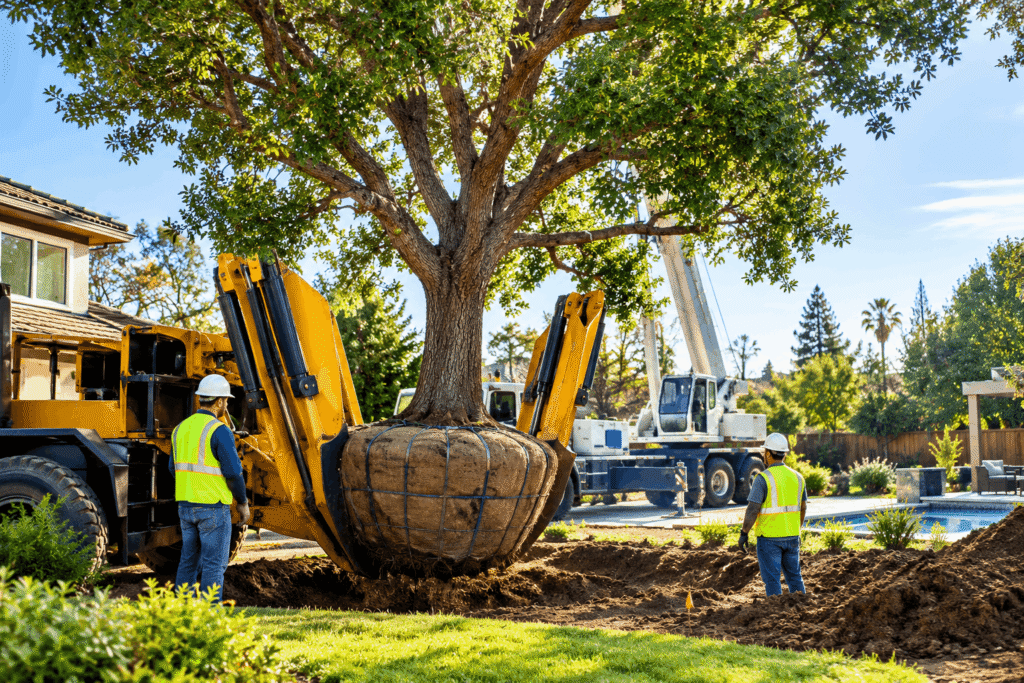
The tricky part is size. A mature tree’s root ball can weigh several tons. Moving it safely takes planning, heavy equipment, and a solid understanding of how the species will react.
How Professionals Approach a Tree Relocation
Most projects start with an assessment long before any digging happens. An arborist or tree-moving specialist checks the tree’s health, species, trunk size, and root spread. They also look at access. A crane or large tree spade needs a clear path in and out.
Some trees get root pruning weeks or months ahead of the move. Think of it like training for a marathon. Cutting the outer roots early pushes the tree to grow new feeder roots closer to the trunk, so it’s better prepared for the big day.
Two methods show up most often. Smaller trees are usually lifted with a hydraulic tree spade, which scoops out the tree and soil in one motion. Larger specimens are often “boxed,” meaning crews dig around the root ball and build a wooden box to hold it together before a crane lifts it.
Local conditions matter too. Much of the South Bay has dense clay soil and long, dry summers. Those factors shape how deep crews dig, how the new planting hole is prepared, and how much water the tree needs afterward.
Timing, Species, and Local Rules
Timing plays a big role in success. Many deciduous trees handle relocation best during their dormant season, from late fall through winter. Evergreens and palms follow different schedules, and specialists usually plan around each species.
Some trees tolerate moving better than others. Olives, palms, and many oaks are known for bouncing back well when handled correctly. Trees with long taproots or poor health may not be good candidates at all.
Local rules are worth checking early. Many Bay Area cities protect certain trees based on species or trunk size, and native oaks often get special attention. Anyone planning Tree Transplant Services in Santa Clara, CA should confirm whether a permit is needed before work begins.
The Real Benefits of Keeping a Mature Tree
The most obvious benefit is time. A newly planted sapling may need 15 to 30 years to reach the size of the tree being moved. Relocation keeps that growth instead of starting over.
Property value is another factor. Mature trees shape curb appeal, provide shade, and make outdoor spaces feel established. Real estate professionals often point out that buyers notice landscaping in the first few seconds of a showing.
There’s an environmental side as well. Established trees cool the ground around them, reduce stormwater runoff, and support birds and insects. In a region with hot summers and growing water concerns, keeping existing shade trees can lower cooling demand at home.
Emotional value counts too. Some trees were planted to mark a birth, a wedding, or a family’s first home. For many owners, saving that tree matters more than any spreadsheet.
Real-World Situations Where Tree Moving Makes Sense
Home remodels are among the most common reasons. A new pool, garage expansion, or accessory dwelling unit often lands right where a favorite tree stands. Moving the tree a few dozen feet can keep both the project and the landscape.
Commercial redevelopment is another. Tech campuses and office parks across Silicon Valley often redesign their grounds. Instead of clearing mature trees, many developers relocate them to new courtyards or parking areas.
Homeowners preparing to sell sometimes reshape their yards, too. A large specimen tree blocking a view or crowding the house can shift to a better spot, which improves the layout without losing character.
Then there are trees in trouble. A tree planted too close to a foundation, sidewalk, or power line may cause damage as it grows. Relocation can solve the problem before roots start cracking concrete.
What Happens After the Move
The tree’s journey doesn’t end when it lands in its new spot. Transplant shock is common. Think of it like jet lag. The tree needs time to adjust, and it may drop leaves or look tired for a season.
Aftercare usually includes deep, regular watering, mulching, and sometimes bracing to keep the tree steady while new roots grow. Many specialists recommend close monitoring for one to three years.
Established companies such as Mighty Tree Movers Inc often stress that aftercare is just as important as the lift itself. A well-moved tree can still struggle if watering stops too soon.
A Growing Shift in How People Think About Trees
For a long time, trees were treated as obstacles on a building site. That view is changing. Owners, builders, and cities increasingly see mature trees as assets worth protecting.
The demand for Tree Moving Services in Santa Clara, CA reflects that shift. People want new homes, new offices, and new outdoor spaces without losing the shade and character that took decades to grow. Interest in tree transplant services in Santa Clara, CA follows the same trend, especially as more cities tighten protections for older trees.
The next generation of property projects won’t ask whether a tree is in the way. It will ask where that tree can thrive next.
FAQs
How much does it cost to move a mature tree?
Costs vary widely based on tree size, species, site access, and equipment needed. A small tree moved with a tree spade may cost a few thousand dollars. Large boxed trees that need cranes can cost much more.
What is the survival rate for relocated trees?
Survival depends on the tree’s health, species, timing, and aftercare. Healthy trees moved by experienced crews often do well. Consistent watering in the first few years makes a major difference.
When is the best time of year to transplant a tree?
Many deciduous trees handle relocation best during dormancy, typically late fall through winter. Evergreens and palms may follow different timelines, so species-specific planning helps.
Do I need a permit to move a tree?
It depends on local rules. Many Bay Area cities regulate protected species, such as native oaks, or trees above a certain trunk size. Checking with the local planning department before any work begins is a smart first move.
How big of a tree can be moved?
With the right equipment, very large trees can be relocated, sometimes weighing dozens of tons. The practical limits usually come from site access, root health, and whether cranes can reach the location safely.