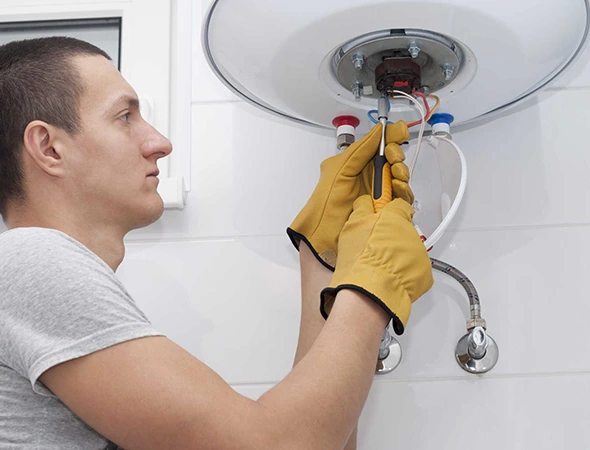
You turn on the shower and wait for the water to warm up. A minute passes, then another, and the water is still cold. Or maybe your washing machine has started making a strange noise, and you’re wondering whether it’s worth paying for another repair.
Appliance problems often lead to the same question: Should you fix what you have or buy something new?
Replacing a broken appliance might seem like the easiest answer, but it isn’t always the most practical one. Some problems come down to a worn component, a faulty thermostat, or a maintenance issue that a technician can correct.
Other problems point to more serious damage, especially when an appliance has reached the end of its useful life.
For homeowners in Meridian, understanding the difference can help avoid unnecessary replacement costs and repeated repairs.
This guide explains common water heater problems, what appliance restoration involves, and how to decide when repairing your equipment makes financial sense.
Why Household Appliances Stop Working Properly
Most household appliances contain mechanical, electrical, or electronic components that experience wear over time.
Water heaters rely on heating systems, controls, and safety devices. Washing machines use motors, pumps, and valves. Refrigerators depend on compressors, fans, and temperature controls.
When one component fails, the entire appliance may stop performing as expected.
Sometimes, the cause is relatively simple. A clogged filter can reduce performance, while a worn door gasket may allow air or water to escape.
Other failures involve expensive components or damage that affects several parts of the appliance.
Maintenance habits and operating conditions also influence how equipment ages.
For example, mineral deposits in water can affect water heaters and appliances that use household water.
Dust accumulation can interfere with refrigerator airflow, while overloaded washers may experience additional mechanical strain.
Recognizing these factors helps homeowners understand why repairs become necessary.
Common Water Heater Problems Homeowners Should Know
A malfunctioning water heater can disrupt showers, laundry, cleaning, and other everyday activities.
The symptoms often provide useful clues about what may be wrong.
Your water heater isn’t producing hot water
A complete loss of hot water can have several causes.
For electric water heaters, the problem may involve a heating element, thermostat, electrical supply, or safety control.
Gas water heaters can experience ignition, burner, gas supply, or control-related problems.
The correct diagnosis depends on the unit’s design.
If you suspect a gas leak, leave the area immediately and contact your gas utility or emergency services from a safe location.
Never attempt to repair gas connections or internal electrical components without appropriate qualifications.
Hot water runs out too quickly
If your household suddenly has less hot water than usual, the water heater may not be heating or storing water effectively.
Possible causes include a failed heating element, thermostat problems, sediment accumulation, or increased household demand.
The unit’s capacity also matters.
A water heater that worked well for two people may struggle after the household grows.
You hear rumbling or popping sounds
Unusual noises can sometimes develop when mineral deposits accumulate inside a storage tank.
As water heats, sediment may contribute to popping or rumbling sounds.
However, noise alone doesn’t confirm the cause.
A technician should assess the unit before recommending maintenance or repairs.
Water appears around the heater
Water near the tank deserves prompt attention.
The source might be a loose connection, a valve, condensation, or a leaking tank.
A leak from the tank itself often means replacement is necessary.
If water is reaching electrical equipment or creating an unsafe condition, avoid the area and seek qualified assistance.
How Meridian’s Water Conditions Can Affect Water Heaters
Water contains naturally occurring minerals, including calcium and magnesium.
The amount varies by water source and local supply conditions.
When mineral-rich water is heated, deposits can form inside storage tanks and on heating components.
Over time, sediment accumulation may contribute to reduced heating performance, unusual sounds, or additional maintenance needs.
However, not every water heater problem results from mineral buildup.
Electrical faults, aging components, pressure issues, and ordinary wear can produce similar symptoms.
Maintenance requirements also differ by water heater model.
Some manufacturers recommend periodic flushing or inspection, while others specify different procedures.
Homeowners should follow the manufacturer’s guidance rather than assume every tank needs the same treatment.
If you notice declining performance, professional Water Heater Repair Services in Meridian, ID can help identify whether the issue involves sediment, heating components, controls, or another problem.
What Happens During a Professional Water Heater Inspection?
A professional inspection begins with understanding the symptoms.
The technician may ask when the problem started, whether the water temperature changes unexpectedly, and whether you’ve noticed unusual sounds or leaks.
Next, the technician checks the components relevant to the complaint.
For an electric unit, this may involve testing heating elements, thermostats, and electrical controls.
For a gas model, diagnosis may involve examining ignition and burner operation, venting, and safety systems within the technician’s qualifications.
The technician may also inspect accessible connections and look for signs of corrosion or leakage.
Once the cause is identified, the homeowner should receive an explanation of the recommended repair.
A proper assessment helps distinguish between a replaceable component and damage that makes continued operation unsafe or uneconomical.
When Is Water Heater Repair Worth It?
Repair may make sense when the unit is otherwise in good condition and the problem involves a replaceable component.
For example, replacing a failed heating element or thermostat may restore normal operation without replacing the entire heater.
However, the decision becomes more complicated when the tank is corroded, leaking, or approaching the end of its expected service life.
The age of the unit matters, but it shouldn’t be the only deciding factor.
A relatively new water heater with severe damage may need replacement, while an older unit with a minor fault may still be repairable.
Consider the repair estimate, equipment condition, parts availability, and expected remaining service life.
A technician can help explain whether the proposed repair offers reasonable value.
What Is Appliance Restoration?
Appliance restoration involves repairing or renewing an existing appliance to improve its condition, functionality, or appearance.
The work may be more extensive than replacing a single failed part.
Depending on the appliance, restoration might involve repairing mechanical components, addressing electrical problems, replacing damaged seals, or correcting multiple performance issues.
Some restoration projects focus on keeping older equipment functional.
Others involve appliances that have experienced several years of wear but remain structurally sound.
Restoration doesn’t mean every component becomes new.
It also doesn’t guarantee that an older appliance will perform as efficiently as a modern replacement.
The goal is to determine whether the existing equipment can be returned to safe, reliable operation at a reasonable cost.
Which Appliances Are Good Candidates for Restoration?
Not every appliance is suitable for restoration.
The best candidates usually have a sound overall structure, available replacement parts, and repair needs that don’t exceed their practical value.
Washing machines
A washer may be worth restoring when problems involve a drain pump, water inlet valve, door seal, or another serviceable component.
However, major structural damage or extensive mechanical failure can make restoration less attractive.
Dryers
Dryers may benefit from repairs involving heating components, belts, rollers, or controls.
Airflow and venting conditions should also be evaluated.
A dryer with restricted exhaust airflow can present a fire hazard, so maintenance must address the underlying cause rather than simply replacing a failed part.
Refrigerators
Refrigerators sometimes experience problems involving fans, door seals, thermostats, or defrost components.
These repairs may be practical when the sealed refrigeration system remains in good condition.
Major sealed-system failures can be significantly more expensive.
Ovens and ranges
Heating elements, igniters, temperature sensors, and controls are among the components that may require replacement.
Gas and electrical safety requirements make professional diagnosis especially important.
Homeowners considering Appliance Restoration Services in Meridian, ID should ask for an assessment of the appliance’s overall condition before authorizing extensive work.
Appliance Repair vs. Restoration vs. Replacement
These terms describe different approaches to an equipment problem.
| Option | What it involves | When it makes sense |
| Repair | Fixing a specific fault | The appliance is otherwise functional |
| Restoration | Addressing several issues to improve overall condition | The equipment remains worth preserving |
| Replacement | Purchasing and installing a new unit | Damage is extensive or repairs offer poor value |
For example, replacing a broken refrigerator door gasket is a repair.
Correcting several mechanical and cosmetic problems on an older refrigerator may qualify as restoration.
Replacing the refrigerator becomes more reasonable when major failures, high repair costs, and poor energy performance outweigh the benefits of keeping it.
The right decision depends on the appliance, not simply its age.
Five Questions to Ask Before Replacing an Appliance
Before purchasing new equipment, consider these questions.
1. What exactly has failed?
A clear diagnosis matters more than a general statement that the appliance is broken.
Replacing an inexpensive component is different from rebuilding a major mechanical system.
2. How much will the repair cost?
Request an estimate that includes parts, labor, and any diagnostic charges.
Compare the total with the price of a suitable replacement, including delivery, installation, and removal costs.
3. How old is the appliance?
Age provides useful context, but service life varies by equipment type, maintenance history, and operating conditions.
An older appliance isn’t automatically beyond repair.
4. Has it needed frequent repairs?
Several expensive repairs within a short period may indicate broader deterioration.
Consider the total amount you’ve already spent and whether additional failures are likely.
5. Will a replacement offer meaningful benefits?
A newer appliance may offer improved efficiency, capacity, or functionality.
However, energy savings alone don’t always justify immediate replacement.
Evaluate the full cost and expected benefits.
How to Make Your Appliances Last Longer
Regular maintenance can help reduce preventable problems.
For water heaters, follow the manufacturer’s inspection and maintenance instructions. Pay attention to leaks, unusual noises, and changes in hot water performance.
For refrigerators, keep accessible condenser areas clean when recommended by the manufacturer.
For washing machines, avoid overloading the drum and inspect hoses for wear.
For dryers, clean the lint screen regularly and have the exhaust system inspected and cleaned as needed.
For dishwashers, remove debris from accessible filters and follow the recommended cleaning procedures.
These habits won’t prevent every breakdown, but they can help equipment operate under better conditions.
Choosing an Appliance Repair Company in Meridian
A reliable repair company should explain the problem before recommending expensive work.
Ask whether the technician has experience with your appliance type and brand.
You should also understand the diagnostic fee, estimated repair cost, parts availability, and applicable warranty terms.
For water heaters, confirm that the provider has the qualifications and any licensing required for the specific plumbing, gas, or electrical work involved.
Affordable Appliance is a local repair company serving homeowners in Meridian, Eagle, and Nampa, Idaho.
The company works with common household appliances, including refrigerators, washers, dryers, ovens, dishwashers, and water heaters.
It also offers appliance restoration and maintenance-related services.
Homeowners looking for Water Heater Repair Services in Meridian, ID can contact Affordable Appliance to discuss symptoms, equipment details, and service availability.
Those exploring Appliance Restoration Services in Meridian, ID can request an evaluation to determine whether repairing existing equipment is a practical alternative to replacement.
The company emphasizes diagnostic assessments and written repair estimates, helping customers understand the proposed work before proceeding.
Frequently Asked Questions
How long does a water heater usually last?
Traditional storage water heaters often last around 8 to 12 years, although actual service life varies with water quality, maintenance, installation, and equipment design. Some units fail earlier, while others remain functional longer. Age alone doesn’t determine whether replacement is necessary. A professional inspection can help assess the condition of an older unit.
Can a leaking water heater be repaired?
It depends on where the leak originates. Some leaks involve connections, valves, or other replaceable components. A leak caused by corrosion or failure of the storage tank itself generally requires replacement. Because water leaks can create electrical and property damage risks, homeowners should arrange prompt professional evaluation rather than attempting internal repairs.
Is restoring an old appliance cheaper than buying a new one?
Restoration may cost less when the appliance has a sound structure and its problems involve serviceable components. However, extensive repairs, difficult-to-find parts, or repeated failures can make replacement more economical. Compare the complete restoration estimate with the cost of a suitable new appliance, including installation and disposal expenses.
Can sediment buildup damage a water heater?
Sediment can accumulate in storage water heaters, particularly where water contains higher mineral concentrations. Depending on the unit, buildup may contribute to noise, reduced performance, or additional wear. However, not every heating problem is caused by sediment. Maintenance should follow the manufacturer’s instructions, and persistent symptoms deserve professional diagnosis.
When should I stop repairing an appliance?
Replacement becomes more attractive when repairs are expensive relative to the appliance’s value, major components have failed, or the equipment has ongoing reliability or safety problems. Frequent breakdowns and limited parts availability also matter. A qualified technician can help assess the current condition, but the final decision should account for your budget and expected future use.
Conclusion
A broken water heater or aging appliance doesn’t always need to be replaced.
Some problems involve individual components that can be repaired, while others require more extensive restoration. In certain situations, replacement remains the safer and more economical choice.
The important step is understanding what failed, how much the repair will cost, and whether the equipment has enough useful life remaining to justify the investment.
For Meridian homeowners, Affordable Appliance provides water heater repair, appliance restoration, and other household appliance services.
Getting a professional diagnosis before purchasing new equipment can help you make a more informed decision and avoid spending money on a replacement you may not need.