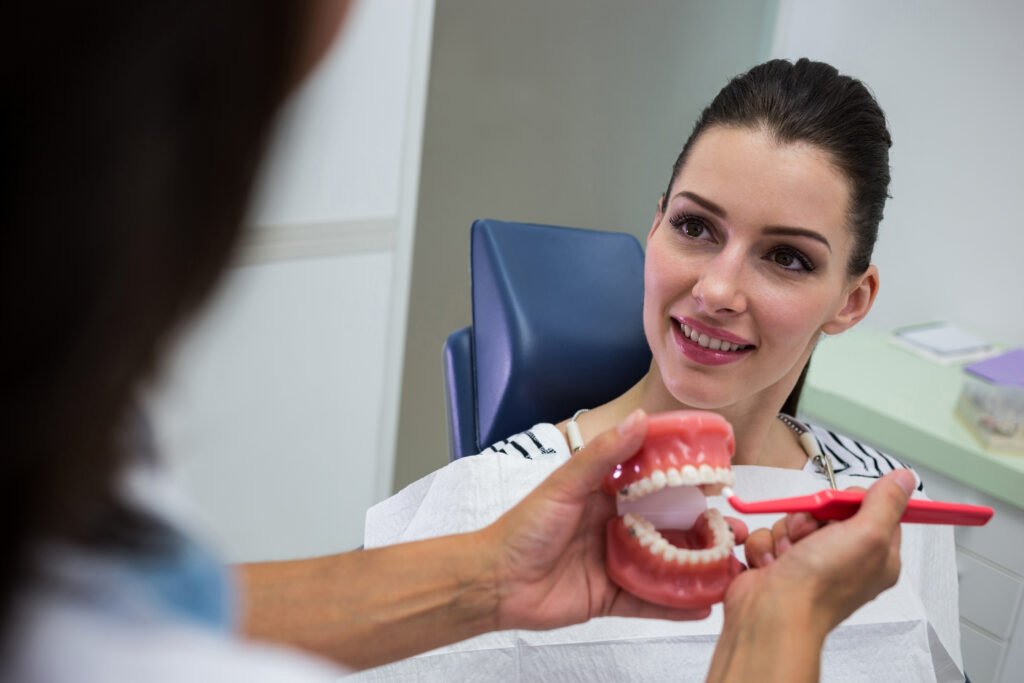
Dentist showing set of model teeth to the patient in the clinic
A missing tooth affects more than your smile. It changes how you chew, how you speak, and even how your jawbone holds its shape over time. A dental implant solves this by replacing the tooth root itself, not just the visible crown, so the bone underneath stays active and healthy. Unlike a bridge or denture that simply rests on the gum line, an implant becomes a working part of your jaw. That difference is why so many adults now see it as a lasting solution rather than a temporary patch.
Why Losing a Tooth Root Matters More Than the Crown
Most people worry about the gap a missing tooth leaves behind, but the real damage happens below the gum line. Once a tooth root is gone, the jawbone in that spot no longer receives the pressure it needs from chewing. Bone is living tissue, and without stimulation, it starts to shrink. Over several years, this can change the shape of your face and even shift the position of nearby teeth.
A dental implant addresses this problem at its source. The titanium post acts as an artificial root, giving the jawbone something to hold onto again. This is a big reason implants are recommended over other options when a patient’s long-term oral health is the priority, not just the short-term appearance.
What Happens to the Jaw If Nothing Is Done
Left untreated, an empty socket can lead to a sunken look in the cheeks and lips. Speech can become slightly slurred, and biting force on the remaining teeth increases unevenly. These changes happen slowly, which is why many people don’t connect them to a tooth they lost years earlier.
How the Dental Implant Procedure Actually Works
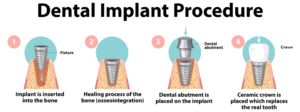
The process starts with a detailed exam, often including a 3D scan of the jaw to check bone density and map out nerve locations. Once your dentist confirms you’re a candidate, the implant post is surgically placed into the jawbone. This part sounds intimidating, but it’s typically done under local anesthesia and causes far less discomfort than people expect.
After placement, the site needs time to heal through a process called osseointegration, where the bone fuses directly to the implant surface. This usually takes two to six months, depending on individual healing rates and where in the mouth the implant sits. Once fusion is complete, an abutment and custom crown are attached, and the dental implant functions just like a natural tooth.
Healing Timeline and What to Expect
Mild swelling and tenderness for a few days is normal. Most patients return to work within 48 hours. Sticking to soft foods early on and avoiding pressure on the healing site helps the fusion process go smoothly and reduces the risk of complications later.
Who Makes a Good Candidate for a Dental Implant
Healthy gums and adequate jawbone density are the two biggest factors. Patients with gum disease or significant bone loss may need treatment first, such as a bone graft, before the implant can be placed successfully. Chronic conditions like uncontrolled diabetes or heavy smoking can also slow healing and affect long-term success rates.
Age alone rarely disqualifies someone. Many patients in their sixties and seventies get a dental implant with excellent results, as long as their overall health supports the healing process. A thorough consultation is the only real way to know for sure, since every mouth heals differently.
Caring for a Dental Implant for the Long Run
An implant doesn’t get cavities, but the gum and bone around it still need attention. Daily brushing, flossing around the crown, and routine cleanings keep the surrounding tissue healthy and prevent a condition called peri-implantitis, which can threaten the implant if ignored. With consistent care, a dental implant can easily last twenty years or longer.
Regular checkups matter just as much as home care. A family dentist in Osseo can monitor bone levels and catch early warning signs that are easy to miss on your own. Routine imaging every few years helps confirm the implant is still fully integrated and functioning as it should.
Local Care Makes a Difference
Choosing ongoing care close to home isn’t just about convenience. A family dentist in Osseo who has followed your treatment from the start understands your bite, your bone structure, and your healing history. That kind of continuity often catches small issues before they turn into bigger, costlier problems. Working with a trusted family dentist in Osseo also makes it easier to schedule the periodic checkups that keep an implant performing well for decades.
The Real Takeaway
A replaced tooth root does more than fill a gap. It protects the jawbone, preserves facial structure, and restores the kind of bite strength that lets you eat and speak without a second thought. Think of it less as a repair and more as an investment in how your mouth will function twenty years from now, not just next year.