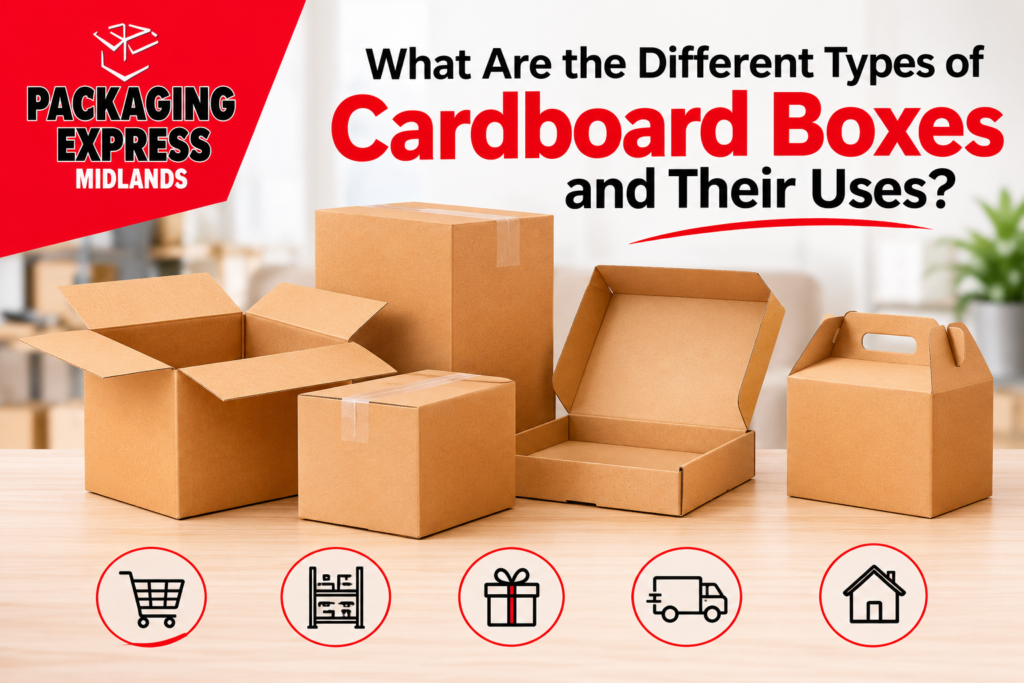
Choosing the wrong box rarely feels like a big deal until a parcel arrives damaged or a pallet collapses in storage. We see this often, and it usually comes down to one thing: the box did not match the product. Cardboard is not a single material. It comes in different wall thicknesses, flute profiles, and styles, each built for a specific job. In this guide, we explain the main types of cardboard boxes, where each one works best, and how different industries use them. By the end, you will know how to match your products to the right packaging, protect your goods in transit, avoid paying for strength you don’t need, and keep shipping costs under control.
Quick Summary
- Single wall boxes suit light, everyday products
- Double wall boxes handle heavy or fragile loads
- Made-to-measure sizes cut waste and reduce damage
- Food, electronics, and retail each need different protection
- Pair your box with the right cushioning
What Makes One Cardboard Box Different from Another?
Strength comes from the corrugated layer between the outer liners, known as the flute. The more layers a box has, the more weight and impact it can handle. Flute size matters too: finer flutes print better, and larger flutes cushion better.
| Construction | Layers | Strength | Best For |
| Single Wall | 3 | Light to medium | Clothing, books, small retail items |
| Double Wall | 5 | Medium to heavy | Appliances, glassware, machine parts |
| Triple Wall | 7 | Very heavy | Bulk goods, export pallets |
Which Types of Cardboard Boxes Can You Choose From?
Each type below has a clear purpose, so match it to your product rather than defaulting to the largest option.
Single Wall Boxes
These are the everyday workhorses of packaging. If you are looking for cardboard boxes in the West Midlands for lighter goods, single wall is usually the sensible starting point because it keeps weight and cost down without sacrificing basic protection.
- Ideal for clothing, stationery and small retail items
- Easy to stack, store and recycle
Double Wall Cardboard Boxes
When your products are heavy or breakable, double wall cardboard boxes add a second layer of corrugation that resists crushing and puncture. They also cope far better with long journeys and rough handling.
- Suited to ceramics, tools and small appliances
- Safer for stacking on pallets over long periods
Bespoke Cardboard Boxes
Standard sizes leave gaps, and gaps cause movement. Bespoke cardboard boxes are cut to your product’s exact dimensions, reducing void fill, lowering shipping volume, and creating a tidier unboxing experience.
- Printed designs support branding for retail and gifting
- Custom inserts hold delicate parts securely
Postal and Mailer Boxes
Online sellers rely on these flat-packed, self-locking designs because they assemble quickly and fit courier size limits. For fragile items, we recommend lining the box with a large roll of bubble wrap, so you can cut the exact length you need.
- Popular with ecommerce, cosmetics and subscription brands
- Lightweight, which helps keep postage costs down
Storage and Moving Boxes
These have reinforced corners and handle holes, so you can carry them repeatedly without tearing. Offices, removal firms and archives use them daily.
- Available in sizes for books, files, and household goods
- Often reusable, which reduces long-term packaging waste
How Do Different Industries Use Cardboard Boxes?
The same box rarely works everywhere. Here is how common sectors tend to match packaging to their needs.
| Industry | Common Box Type | Why It Works |
| Food and Catering | Single wall with food-safe liners | Hygienic and lightweight |
| Electronics | Double wall with inserts | Protects against impact |
| Automotive | Double or triple wall | Holds heavy metal parts |
| Ecommerce Retail | Mailer or made-to-measure | Fits courier limits and carries branding |
| Healthcare | Single wall, clearly labelled | Clean and easy to identify |
For example, a manufacturer shipping brake components needs rigid walls and a tight fit, while a bakery needs clean, lightweight boxes that stay food-safe.
How Do You Choose the Right Box for Your Products?
A few quick checks will save you money and reduce returns:
- Weigh your product and add a safety margin
- Measure length, width, and height, then allow room for padding
- Consider how far and how often the parcel will travel
- Check whether the box needs to stack on a pallet
If you are ever unsure, ask your supplier to test a sample before you place a bulk order. A short trial costs little and can prevent far larger losses later.
Conclusion
Cardboard boxes may look simple, but the right choice protects your products, your budget, and your reputation. Single wall suits lighter goods, double wall handles heavier loads, and made-to-measure designs remove waste. Match the box to your industry, test when in doubt, and your packaging will work harder for you.
FAQs
What is the strongest type of cardboard box?
Triple wall boxes are the strongest, with seven layers built for very heavy or bulk goods.
How do I know if I need a single or double wall box?
Choose double wall for heavy, fragile, or long-distance shipments, and single wall for lighter items.
Are cardboard boxes recyclable?
Yes, most corrugated boxes are widely recyclable, as long as they’re clean and not heavily contaminated.
Can I get boxes made to a specific size?
Yes, we can cut boxes to your exact measurements, which is useful for unusual products.
How much cushioning do I need inside a box?
Allow roughly two to three centimetres of padding around fragile items so they cannot touch the walls.