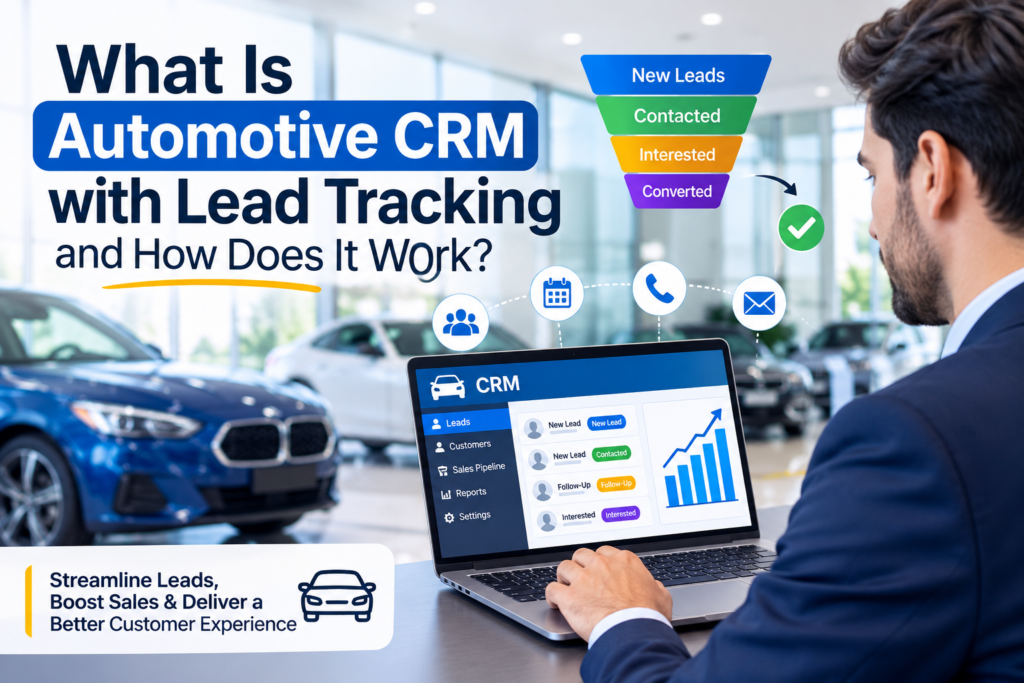
What Is Automotive CRM with Lead Tracking and How Does It Work?
The automotive industry has become increasingly competitive, and car dealerships need efficient ways to manage customer inquiries, follow up with potential buyers, and convert leads into successful sales. With customers exploring multiple dealerships and comparing vehicle options online, managing leads manually can become challenging. This is where automotive CRM with lead tracking plays an important role. It helps dealerships organize customer information, monitor sales opportunities, automate follow-ups, and improve communication throughout the buying journey.
An automotive CRM system provides dealerships with a centralized platform to manage customer relationships and sales activities. Its lead tracking capabilities allow sales teams to monitor every potential customer, from the initial inquiry to the final vehicle purchase. Understanding how this technology works can help dealerships improve their sales processes, deliver better customer experiences, and build long-term relationships.
What Is Automotive CRM with Lead Tracking?
Automotive CRM (Customer Relationship Management) is a software solution designed specifically for car dealerships and automotive businesses to manage customer interactions, sales activities, and marketing efforts.
When combined with lead tracking, an automotive CRM allows dealerships to capture, organize, assign, and monitor potential customers across different communication channels. These leads may come from dealership websites, social media platforms, online vehicle marketplaces, phone calls, walk-in inquiries, and advertising campaigns.
Instead of keeping customer information in spreadsheets or separate systems, dealerships can manage everything from one centralized dashboard.
For example, when someone submits an inquiry about a vehicle through a dealership website, the CRM can automatically record the customer’s contact details, vehicle preferences, and inquiry information. The system can then assign the lead to a salesperson, who can follow up and update its status as the sales process progresses.
How Does Automotive CRM with Lead Tracking Work?
An automotive CRM with lead tracking works through several connected processes that help dealerships manage potential customers efficiently. Each stage provides sales teams with better visibility into customer interactions and sales opportunities.
1. Lead Capture from Multiple Sources
The first step is collecting customer inquiries from different sources. Modern dealerships receive leads through several online and offline channels.
An automotive CRM can collect leads from:
- Dealership websites and contact forms
- Facebook and Instagram advertising campaigns
- WhatsApp inquiries
- Online vehicle marketplaces
- Phone calls and email inquiries
- Walk-in showroom visits
Once a potential customer submits an inquiry, the CRM records the available information in its database. This reduces manual data entry and helps dealerships avoid missing valuable sales opportunities.
2. Lead Assignment to Sales Representatives
After capturing a lead, the CRM helps dealerships distribute inquiries among their sales representatives.
Depending on the system, leads can be assigned automatically based on predefined rules, such as salesperson availability, vehicle category, location, or workload.
For instance, a customer interested in purchasing an SUV can be assigned to a representative responsible for SUV sales. This approach helps ensure that inquiries reach the appropriate team member without unnecessary delays.
3. Lead Tracking and Status Management
Lead tracking is one of the most important features of automotive CRM software. It allows sales teams to monitor where each customer stands in the buying process.
Dealerships can create different lead stages, including:
- New Lead
- Contacted
- Follow-Up Required
- Interested
- Test Drive Scheduled
- Negotiation
- Converted
- Lost
Sales representatives can update lead statuses after every interaction. Managers can also monitor the progress of individual leads and identify opportunities that require additional attention.
This structured process helps dealerships understand which leads are progressing and which ones need further follow-up.
4. Automated Follow-Ups and Reminders
Following up with potential customers at the right time is essential for improving dealership sales. However, managing multiple inquiries manually can result in missed calls, delayed responses, and forgotten appointments.
An automotive CRM helps solve this problem through automated reminders and follow-up scheduling.
For example, if a customer requests vehicle pricing but does not make an immediate purchase decision, the salesperson can schedule a follow-up reminder for the next day. Depending on the CRM’s capabilities, the system may also support automated email or WhatsApp communication.
These features help sales representatives maintain consistent communication without relying entirely on manual reminders.
5. Customer Interaction History
Every interaction with a potential buyer provides useful information about their purchasing preferences and requirements.
An automotive CRM maintains customer interaction records, including previous calls, emails, messages, appointments, and sales discussions.
When a salesperson contacts a customer again, they can review the previous conversation and understand what the buyer is looking for.
For example, if someone previously asked about financing options, the salesperson can continue the discussion without asking the customer to repeat the same information.
This creates a smoother communication experience and helps dealerships provide more relevant assistance.
6. Lead Conversion and Sales Reporting
The final stage involves converting qualified leads into actual vehicle sales.
Automotive CRM software helps sales managers monitor conversion rates, track team performance, and evaluate the effectiveness of different lead sources.
Reports can provide insights into:
- Total leads received during a specific period
- Number of leads assigned to each salesperson
- Follow-up activities completed
- Test drives scheduled
- Converted and lost leads
- Lead-to-sale conversion rates
- Sales team performance
By analyzing these reports, dealership managers can identify successful sales strategies and improve areas where potential customers are being lost.
Key Features of Automotive CRM with Lead Tracking
A reliable automotive CRM includes several features that help dealerships manage their daily sales operations more effectively.
Centralized Lead Management
Centralized lead management allows dealerships to store customer inquiries from different sources in one place. Sales teams can access contact information, vehicle preferences, inquiry details, and lead statuses without switching between multiple platforms.
Lead Source Tracking
Lead source tracking identifies where potential customers are coming from. Dealerships can determine whether inquiries are generated through Google Ads, social media, websites, referrals, or third-party marketplaces.
This information helps businesses understand which marketing channels generate the most valuable leads.
Sales Pipeline Management
A visual sales pipeline allows dealership managers to monitor leads at different stages of the buying journey. It provides a clear overview of ongoing opportunities and helps sales representatives prioritize their activities.
Communication Management
CRM systems can support different communication channels, including phone calls, emails, and messaging platforms. Keeping communication records organized helps sales teams maintain consistent customer engagement.
Task and Follow-Up Management
Task management features allow sales representatives to schedule calls, meetings, test drives, and follow-up activities. Automated reminders help ensure that important sales activities are completed on time.
Performance Analytics and Reporting
Reporting tools provide insights into lead generation, customer engagement, conversion rates, and salesperson performance. Managers can use these insights to make informed business decisions.
Benefits of Using Automotive CRM for Lead Tracking
Implementing automotive CRM software can improve several aspects of dealership operations.
Better Lead Organization
Managing inquiries through spreadsheets or separate communication channels can create confusion. An automotive CRM organizes customer information in one centralized system, making it easier for sales representatives to access and manage leads.
Faster Response Times
Responding quickly to customer inquiries can improve the chances of converting potential buyers. Automated lead capture and assignment help dealerships reduce delays and ensure that inquiries reach the appropriate salesperson.
Improved Sales Productivity
Sales representatives can manage their daily activities more efficiently with automated reminders, lead prioritization, and organized customer records. Instead of spending time searching for information, they can focus on communicating with potential buyers.
Higher Lead Conversion Opportunities
Consistent follow-ups and better lead visibility help dealerships identify interested customers and maintain communication throughout the buying journey. This can reduce missed opportunities and support better conversion rates.
Better Customer Experience
Customers expect timely responses and personalized assistance when purchasing a vehicle. By maintaining customer interaction histories and preferences, dealerships can provide more relevant recommendations and a smoother buying experience.
More Effective Marketing Decisions
Lead source tracking and performance reports help dealerships understand which marketing campaigns generate inquiries and actual sales. Businesses can use this information to allocate their marketing budgets more effectively.
How to Choose the Right Automotive CRM with Lead Tracking
Selecting the right CRM is an important decision for any dealership. Different businesses have different operational requirements, so it is essential to evaluate available solutions before making a choice.
Here are some factors to consider:
1. Lead Capture Integration: Choose a CRM that can collect inquiries from your website, social media, WhatsApp, and other relevant lead sources.
2. Easy-to-Use Dashboard: The software should provide a simple interface that allows sales representatives and managers to access important information without unnecessary complexity.
3. Automated Follow-Up Features: Look for scheduling, reminders, and communication automation to support consistent customer engagement.
4. Sales Pipeline Visibility: The system should allow dealerships to create and monitor lead stages according to their sales processes.
5. Reporting and Analytics: Choose a platform that provides useful reports about lead sources, sales performance, and conversion rates.
6. Scalability: The CRM should support business growth, additional users, multiple branches, and increasing lead volumes.
7. Integration Capabilities: Consider whether the CRM can connect with other dealership systems, such as Dealer Management Systems (DMS), marketing platforms, and communication tools.
Common Challenges Automotive CRM Helps Solve
Car dealerships often face operational challenges when managing customer inquiries and sales activities without a centralized system.
One common issue is losing track of potential buyers because inquiries arrive through multiple channels. Another challenge is inconsistent follow-ups, where sales representatives forget to contact interested customers at the right time.
Dealerships may also struggle to measure employee performance or determine which marketing campaigns are generating quality leads.
An automotive CRM with lead tracking addresses these challenges by organizing inquiries, maintaining communication records, automating reminders, and providing performance reports.
However, implementing CRM software alone does not guarantee better sales results. Dealerships should also establish clear lead management procedures, train employees, and regularly review their sales performance.
The Future of Automotive CRM and Lead Tracking
As automotive businesses continue adopting digital technologies, CRM systems are becoming more advanced. Artificial intelligence, automation, and data analytics are creating new opportunities for dealerships to improve customer management.
AI-powered features can help identify promising leads, analyze customer behavior, and suggest suitable follow-up actions. Advanced reporting tools can also help managers recognize sales patterns and make more informed decisions.
Mobile CRM access is another important development, allowing sales representatives to manage inquiries, update customer information, and check follow-up tasks while working outside the office.
These developments are making automotive CRM software an increasingly valuable tool for dealerships that want to improve operational efficiency and deliver better customer experiences.
Conclusion
Automotive CRM with lead tracking provides car dealerships with an organized approach to managing potential customers, monitoring sales opportunities, and improving communication. From capturing inquiries and assigning leads to scheduling follow-ups and analyzing sales performance, it supports the entire customer journey.
By choosing the right CRM solution and establishing an effective lead management process, dealerships can reduce missed opportunities, improve sales team productivity, and build stronger customer relationships. As the automotive industry becomes more digitally focused, adopting an efficient CRM system can help dealerships remain competitive and manage their sales operations more effectively.
Frequently Asked Questions (FAQs)
1. What is automotive CRM with lead tracking?
Automotive CRM with lead tracking is software that helps car dealerships capture, organize, assign, and monitor potential customers throughout the vehicle purchasing process.
2. How does lead tracking work in automotive CRM?
Lead tracking records customer inquiries, assigns them to sales representatives, monitors their progress through different sales stages, and helps schedule follow-ups until the lead is converted or closed.
3. Why do car dealerships need lead tracking software?
Dealerships use lead tracking software to organize customer inquiries, improve response times, manage follow-ups, monitor salesperson performance, and reduce missed sales opportunities.
4. Can automotive CRM track leads from multiple sources?
Yes. Many automotive CRM solutions can collect and track leads from websites, social media, online marketplaces, phone calls, emails, and messaging platforms.
5. Does automotive CRM improve lead conversion rates?
Automotive CRM can support better conversion opportunities by helping dealerships respond faster, maintain consistent follow-ups, organize customer information, and identify promising sales opportunities.
6. What features should an automotive CRM include?
Important features include lead capture, lead assignment, sales pipeline management, automated reminders, customer interaction history, communication management, and performance reporting.