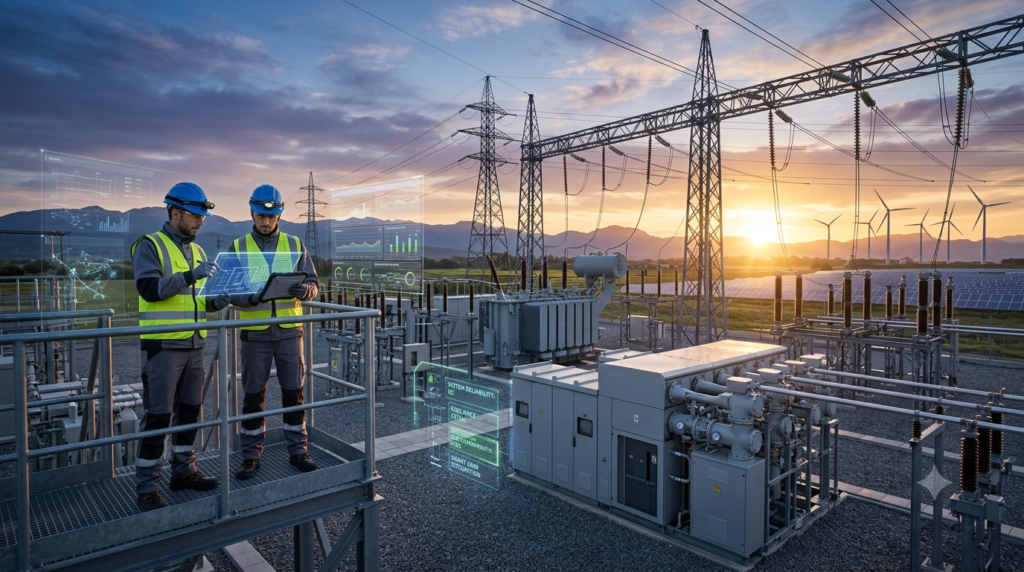
Electricity powers nearly every aspect of modern life, from homes and hospitals to manufacturing plants, transportation systems, and data centers. Behind this reliable flow of electricity lies an extensive network of power generation, transmission, and distribution assets. Among the most critical components of this network are high voltage substations, which ensure electricity can be transmitted safely, efficiently, and reliably across vast distances.
As power grids become more advanced and renewable energy continues to expand, utilities require increasingly sophisticated infrastructure to manage growing electricity demand. A modern high-voltage electrical substation serves as more than just a connection point—it becomes an intelligent hub that protects equipment, controls power flow, and improves overall grid resilience.
In this article, we’ll explore how high voltage substations support today’s power infrastructure, their major components, and why investing in professional engineering is essential for long-term reliability.
What Are High Voltage Substations?
A high voltage substation is a facility where electrical voltage is transformed, controlled, switched, and protected before electricity continues through the transmission or distribution network. Electricity generated at power plants travels through high-voltage transmission lines because higher voltages significantly reduce energy losses over long distances. Before reaching industrial facilities, businesses, or residential communities, that electricity must be safely managed through substations. Depending on system requirements, substations may:- Increase voltage for efficient long-distance transmission
- Reduce voltage for local distribution
- Route power between transmission networks
- Protect equipment from electrical faults
- Monitor and automate grid operations
The Role of a High Voltage Switchyard
One of the most important sections of a transmission facility is the high voltage switchyard. This outdoor area contains the equipment responsible for directing electrical power between transmission lines, transformers, and substations. Key switchyard components include:- Circuit breakers
- Disconnect switches
- Busbars
- Instrument transformers
- Surge arresters
- Protective relays
- Control systems
Supporting Grid Reliability and Stability
Reliability remains one of the primary objectives of every utility company. Modern electrical grids must deliver uninterrupted power despite storms, equipment failures, fluctuating demand, and renewable energy variability. Professionally engineered high voltage substations contribute to grid stability by:- Detecting electrical faults within milliseconds
- Isolating damaged equipment before failures spread
- Balancing power across multiple transmission lines
- Supporting voltage regulation
- Maintaining system frequency
- Providing redundancy during maintenance or emergencies
Enabling Renewable Energy Integration
Renewable energy continues to reshape the global power industry. Solar farms, wind farms, hydroelectric facilities, and battery energy storage systems all require reliable interconnection with existing transmission networks. A modern high-voltage electrical substation plays a central role in connecting renewable generation safely to the grid. Engineering teams design substations capable of:- Handling variable power output
- Managing bidirectional power flow
- Supporting battery storage integration
- Protecting sensitive inverter equipment
- Maintaining transmission stability
Improving Safety Through Advanced Protection Systems
Electrical systems operating at transmission voltages require extremely high safety standards. Even minor equipment failures can lead to widespread outages or significant equipment damage if not properly managed. Modern substations incorporate multiple layers of protection, including:- Protective relays
- Differential protection
- Distance protection
- Arc flash mitigation
- Ground fault detection
- Remote monitoring
- Automated isolation systems
Why Professional Engineering Matters
Designing a reliable high voltage switchyard or transmission substation requires expertise across multiple engineering disciplines. Professional engineering teams evaluate numerous factors before construction begins, including:- Load forecasting
- Short-circuit analysis
- Grounding system design
- Protection coordination
- Equipment ratings
- Environmental conditions
- Future system expansion
- Regulatory compliance
The Future of High Voltage Substations
The next generation of substations is becoming smarter, more connected, and increasingly automated. Digital technologies are transforming how utilities monitor and manage electrical infrastructure. Emerging trends include:- Digital substations
- IEC 61850 communication systems
- AI-assisted condition monitoring
- Predictive maintenance
- Remote asset management
- Cybersecurity enhancements
- Advanced SCADA integration
- Intelligent sensor networks