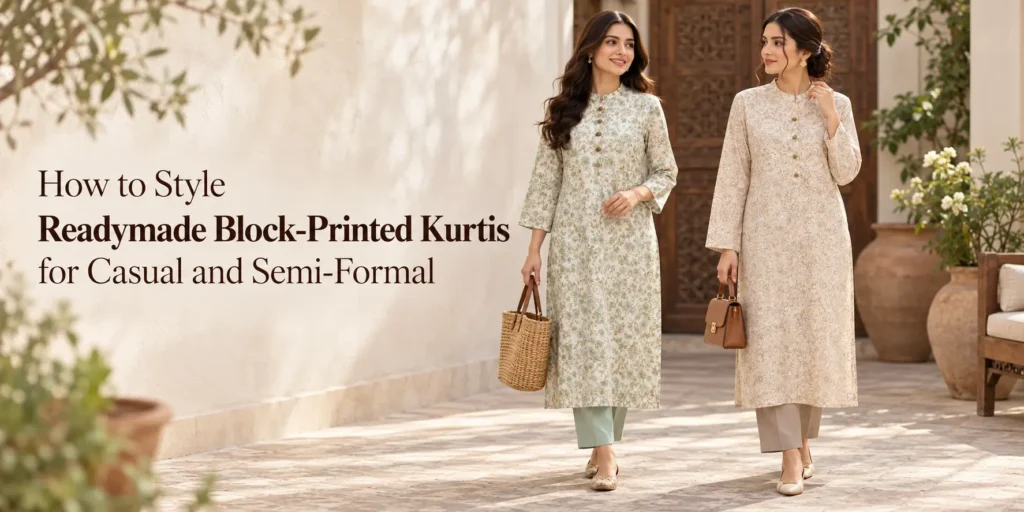
Online shopping for ethnic wear is a bit of a gamble. Size charts differ by brand. Photos get touched up. And a good chunk of “block print” listings are just digital patterns printed onto polyester, no wooden block involved anywhere. That’s not what you want in something meant to last.
So here’s what actually matters: how to tell a real block print kurti from a copy, what fabric weight holds up in Pakistani summers, and why a good kurti for women earns its price back over years, not months.
Decoding Regional Heritage Techniques
Block print is a sum of multiple things, at least three, and they look nothing alike once you know what to look for. Sanganeri, from Rajasthan, sticks to delicate floral motifs on a light or white base.
Bagru goes darker, built on indigo and madder root, often deepened with dabu mud-resist work. Ajrakh comes out of Sindh and Gujarat and leans toward geometric, dense patterns that have quietly taken over street style in the last couple of years.
None of this is trivia. A recognizable Ajrakh or Bagru print tells you something real about how the piece was made. That’s why more shoppers now search these names directly instead of trusting whatever a listing decides to call “traditional print.”
Here’s the tell: slightly uneven color, a block edge that doesn’t quite line up. That’s not a flaw. That’s a person, not a machine.
Fabric Science and GSM Ratings
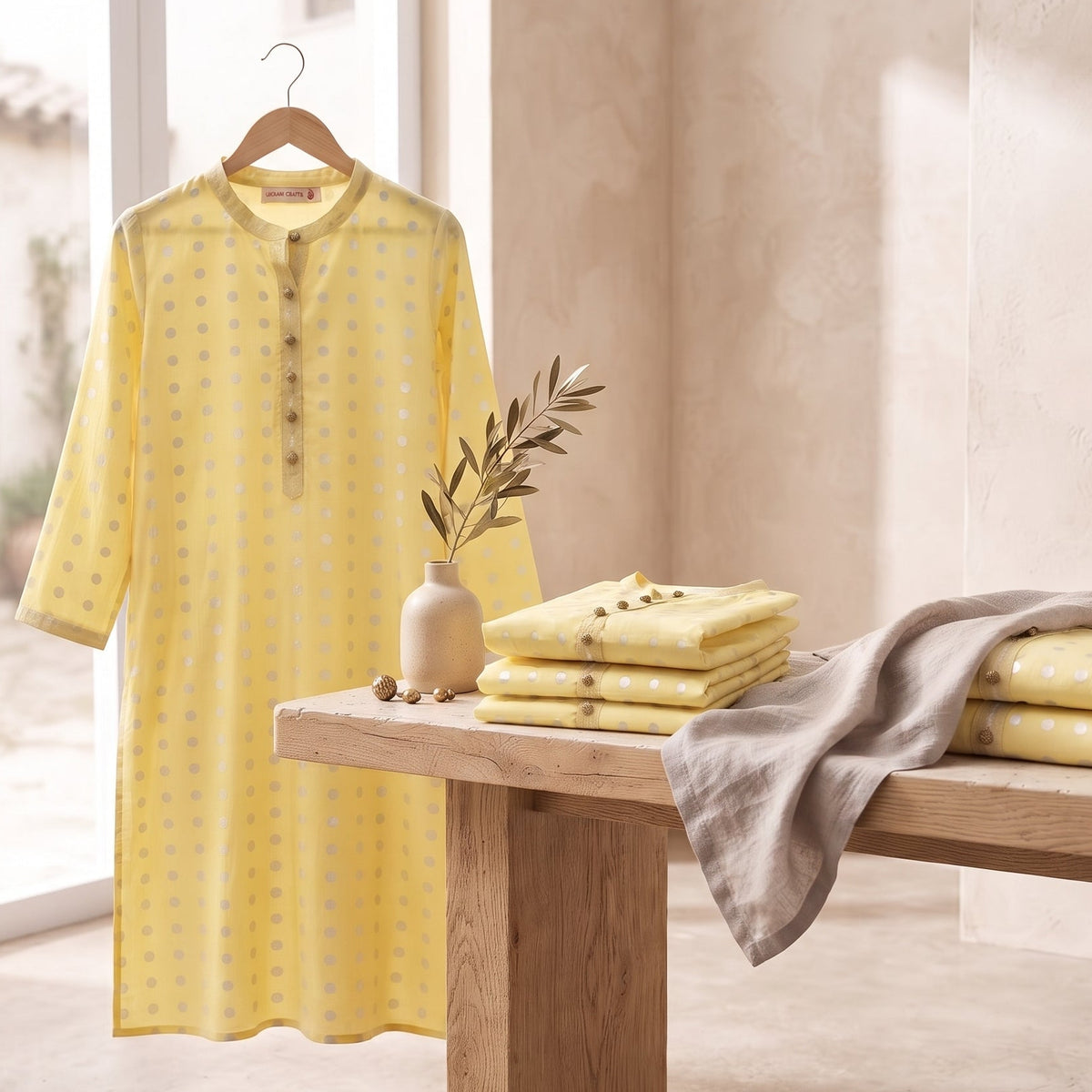
Weave density matters more than the word “cotton” printed on a tag. A solid cotton kurta for women usually sits between 120 and 180 GSM. Go lighter and it can turn see-through under bright sun. Go heavier and it stops breathing the way you’d want in June.
Cotton pulls sweat away from skin and lets it evaporate slowly. Polyester does the opposite, it holds heat in, which is exactly why a cheap synthetic kurti feels clammy by 2 p.m. even when it’s technically “lightweight.”
Vegetable dye sinks into the fiber instead of sitting on top of it. Less stiff, less plasticky, and honestly just more comfortable against the skin for a full day.
| Fabric Type | Typical GSM | Best Used For |
|---|---|---|
| Mul Cotton | 80-100 GSM | Casual summer tunics, relaxed A-line cuts |
| Lawn / Cambric | 120-150 GSM | Daily wear, structured office kurtis |
| Khaddar | 180+ GSM | Winter wear, heavier straight-cut silhouettes |
Trending Silhouettes and Lengths
People use “kurti” and “kurta” like they mean the same thing. They don’t. A long kurta for women is the more formal option, usually worn with a shalwar. A stitched kurti is shorter, fitted, and made to pair with jeans or straight pants. Somewhere in between sits the angrakha wrap-neck style, which borrows a bit from both.
Hemlines this season sit past the knee. A long kurti design with a mandarin collar and deep side slits gets you a longer line without restricting movement, which matters if you’re wearing it to an actual job and not just a photo.
For lazy weekends, an A-line cut in mul cotton is hard to beat. It’s forgiving on the hips and doesn’t need much thought to style.
But none of that matters if the tailoring’s off. A readymade kurti with sloppy shoulder seams will look tired within a month, no matter how good the print is underneath it.
The Styling Playbook
One kurti, three occasions, if the palette’s right. Earthy dye tones move from a desk to a dinner table with barely any wardrobe change, just different accessories.
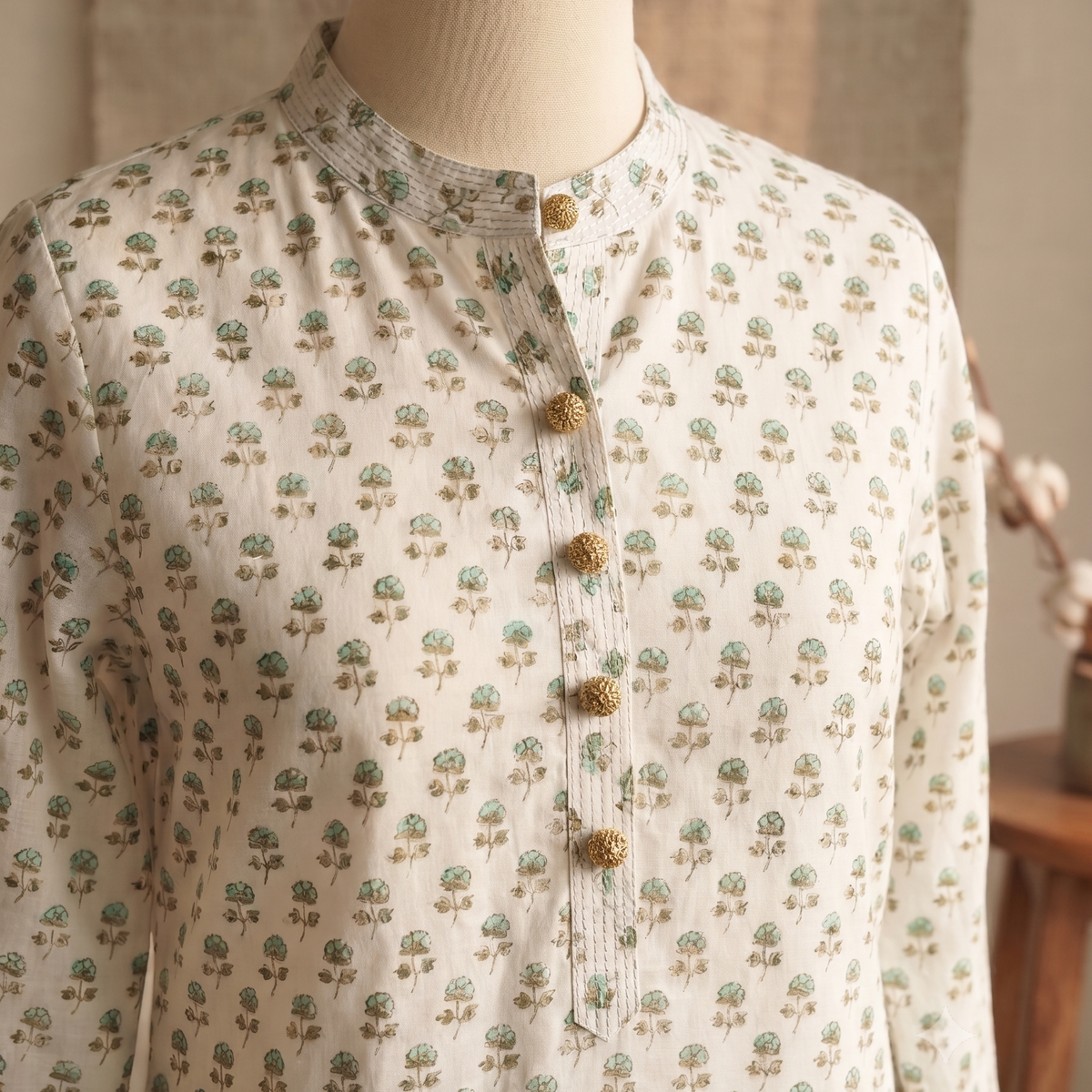
Add a silk dupatta or a pair of jhumkas and you’ve gone from office to evening in under five minutes. That’s the whole case for why a ready to wear kurta is worth the price.
- Office: subtle Sanganeri print, tailored trousers, gold studs. Keep it minimal.
- A short Bagru tunic over distressed denim and white sneakers works for pretty much any weekend plan.
- Festive calls for bolder choices: Ajrakh print, wide palazzos, metallic footwear.
- Traveling? Grab khaddar. It survives a suitcase without looking it.
Navigating the Digital Boutique
Sizing is where most online orders go wrong. Retail letters don’t mean the same thing across brands, so measure yourself and check it against the seller’s actual chart before buying an online pakistani kurti. Skip this step and you’re probably mailing something back.
Photos can lie, though not always on purpose. Zoom in on the fabric texture before trusting a listing for a ladies pakistani kurta. If it just says “soft fabric” instead of naming lawn or cambric outright, that’s worth a second look.
Reviews tell you what photos won’t. Shrinkage after the first wash, dye that bled onto other clothes, these show up in reviews long before they show up on your end.
Precision Fabric Care
New block-printed pieces need a bit of patience before they join your regular wash. The dye hasn’t fully settled yet, so wash a new kurta for women on its own for the first two or three cycles.
Water temperature decides how long the print lasts. Stay under 30°C and the cotton holds its shape. Go hotter and you’re actively washing the color out, sometimes within a handful of washes.
- Wash alone for the first three cycles. Dye bleed is normal early on.
- Under 30°C, always. Hot water shrinks cotton and fades pigment fast.
- Skip the dryer entirely. Shade-dry to keep indigo and madder tones from washing out in the sun.
Conclusion
A wardrobe that lasts isn’t built on low prices. It’s built on pieces with something real behind them. A handcrafted kurta for women carries that in every print, and it stays comfortable long after the trend has moved on.
Fast fashion will always be the easier choice. An authentic block-printed piece just happens to be the better one, season after season.