Airline flying depends on more than technical flying ability. Pilots must communicate clearly, share duties, and make decisions as a team. A multi crew cooperation course helps pilots develop these skills before entering a multi-crew cockpit. The training combines theory with practical exercises that reflect common airline working conditions. It also helps pilots understand how their role changes when another pilot shares responsibility.
Learning to Work as Part of a Flight Crew
Multi-crew flying requires both pilots to understand their duties and support each other during every phase. One pilot may control the aircraft, while the other monitors systems and checks progress.
A multi-crew cooperation course teaches pilots how to share tasks, communicate decisions, and manage workload together. CASA requires approved MCC training for pilots who intend to operate in multi-crew environments. The aim is not to copy one airline. Instead, the training develops skills that apply across many professional cockpit settings.
Practising Realistic Cockpit Roles
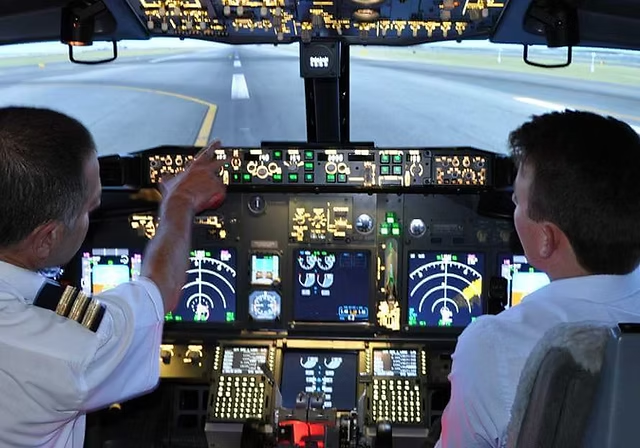
Simulator sessions allow pilots to practise working as a crew without relying only on classroom theory. These sessions focus on how two pilots work together under normal operating demands. Practical exercises may involve:
- Sharing cockpit duties between both pilots.
- Monitoring another pilot’s actions and decisions.
- Communicating changes clearly and at the right time.
- Managing workload during different phases of flight.
This approach helps pilots understand how teamwork supports safe, efficient cockpit operations.
Building Communication and Decision-Making Skills
Clear communication is essential when two pilots share responsibility for the same flight. Each person needs to understand what is happening and what comes next. MCC training develops situational awareness, decision-making, and threat management in a team environment. Pilots learn to speak up when something needs attention. They also learn to listen, confirm information, and support the other crew members. These habits reflect the way professional flight crews work together.
Using Simulation to Create Operational Pressure
Simulation gives pilots a controlled place to practise crew coordination during changing situations. It allows them to apply theory while managing several tasks at once.
Pilots can practise communication, monitoring, workload sharing, and decision-making without needing a real airline flight.
This helps build confidence before entering more demanding professional environments. CASA requires practical MCC training to use a suitable flight simulation training device. The focus stays on crew skills rather than aircraft-type-specific training.
Connecting MCC Skills With Wider Pilot Training
MCC usually comes after pilots have already developed core handling and technical skills through earlier training. It adds the teamwork skills needed for shared cockpit operations. FTA includes multi-crew cooperation within its broader professional pilot training pathways.
These pathways may also include theory, individual flying, and other career-focused training stages. This means flight training develops both individual ability and the crew-based skills needed later in professional aviation.
Conclusion
MCC flight training helps pilots move from individual flying towards working effectively as part of a cockpit team. It develops communication, monitoring, decision-making, and workload management through theory and simulator practice.
These skills reflect the working demands of multi-crew aviation. By practising shared responsibilities before airline operations, pilots can better understand how professional crews communicate, support each other, and manage the flight together.