Chhath Puja is one of the most sacred Hindu festivals dedicated to Lord Surya (the Sun God) and Chhathi Maiya. The Chhath Puja 2026 Vrat Katha explains the religious significance of this festival, the importance of fasting, and the devotion behind offering prayers to the rising and setting Sun. It teaches devotees about faith, gratitude, purity, discipline, and the blessings of nature.
Celebrated mainly in Bihar, Jharkhand, Uttar Pradesh, and other parts of India, Chhath Puja brings families and communities together through traditional rituals. At Sadhana Shop, devotees can explore spiritual content and devotional resources that help them understand Hindu festivals, vrat traditions, and religious practices.
In this article, we will explore the Chhath Puja Vrat Katha, its traditional stories, spiritual meaning, important rituals, and the significance of observing the festival in 2026.
By Sadhana Shop Editorial Team | Published: November 15, 2026 | Last Updated: November 15, 2026
What Is Chhath Puja 2026 Vrat Katha and Why Is It Important?
Chhath Puja 2026 Vrat Katha refers to the traditional religious stories associated with the worship of Lord Surya and Chhathi Maiya during the four-day Chhath Puja 2026 festival. These stories explain why devotees observe strict fasting, offer Arghya to the Sun, and pray for the health, happiness, prosperity, and long life of their families.
The Vrat Katha is an important part of the festival because it connects religious traditions with spiritual values. Devotees listen to or recite these stories to understand the significance of Chhath Puja and strengthen their faith.
Why Do Devotees Worship Lord Surya and Chhathi Maiya?
Lord Surya represents energy, light, life, and positive power. Every living being depends on sunlight for survival, making the Sun an important symbol of creation and nourishment in Hindu traditions.
Chhathi Maiya is worshipped as a protective divine mother who blesses devotees and their families. During Chhath Puja, people pray to both divine powers with devotion and gratitude.
What Is the Meaning of Chhath Puja Vrat Katha?
The central meaning of the Vrat Katha is devotion, self-discipline, gratitude, and purity. The stories encourage devotees to remain patient, respect nature, fulfil their responsibilities, and maintain faith during difficult situations.
The festival also reminds people that the Sun provides energy without discrimination. Offering prayers during sunrise and sunset represents respect for the natural forces that sustain life.
What Is the Traditional Story Behind Chhath Puja?
There are several traditional stories associated with Chhath Puja. Two popular narratives explain the importance of the vrat and the blessings associated with Surya Dev and Chhathi Maiya.
1. The Story of King Priyavrata and Queen Malini
According to a popular Chhath Vrat Katha, King Priyavrata and Queen Malini were deeply troubled because they had no children. They performed religious rituals and sought blessings for a child. However, their difficulties continued.
After receiving guidance from a divine sage, the royal couple performed a religious observance dedicated to Chhathi Maiya. Pleased with their devotion, the goddess blessed them with happiness and the joy of parenthood.
This story is remembered as a symbol of hope, faith, and the blessings of Chhathi Maiya.
2. The Connection Between the Mahabharata and Chhath Puja
Another popular belief connects Chhath Puja with Karna, the son of Surya Dev in the Mahabharata. Karna was known for his devotion to the Sun God. He regularly offered prayers while standing in water and presented Arghya to Surya Dev.
His devotion, discipline, and generosity are remembered in traditions associated with Sun worship. This story highlights the importance of gratitude, dedication, and spiritual strength.
These narratives are traditional religious accounts, and their details may vary across regional versions of the Chhath Vrat Katha.
What Are the Four Main Rituals of Chhath Puja 2026?
Chhath Puja is observed over four days, with every day having a special religious meaning. The rituals gradually prepare devotees for the main Sun worship ceremonies.
According to the 2026 calendar for New Delhi, the festival runs from November 13 to November 16.
Drikpanchang+1
1. Nahay Khay – November 13, 2026
Nahay Khay marks the beginning of Chhath Puja. Devotees take a holy bath, clean their homes, and prepare traditional satvik food. The food is prepared with cleanliness and devotion.
This ritual represents physical and spiritual purification before beginning the vrat.
2. Kharna – November 14, 2026
Kharna is the second day of the festival. Devotees observe a fast throughout the day and break it after sunset following prayers and offerings.
Traditional prasad often includes rice kheer, chapati, and fruits. After Kharna, many devotees begin the rigorous nirjala fast, which continues until the final morning rituals.
3. Sandhya Arghya – November 15, 2026
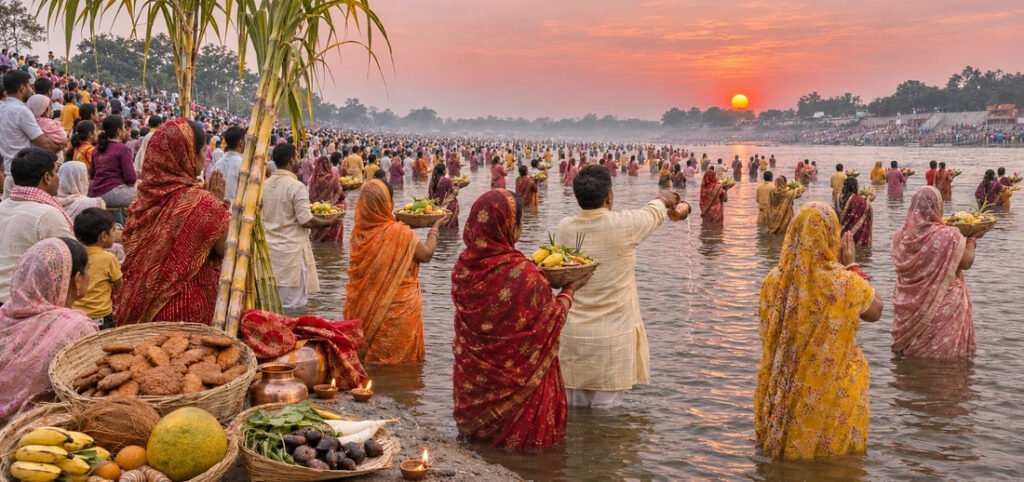
Sandhya Arghya is one of the most important rituals of Chhath Puja. Devotees gather near rivers, ponds, or other water bodies to offer Arghya to the setting Sun.
They carry fruits, thekua, sugarcane, and other traditional offerings in bamboo baskets. Families gather together to pray for prosperity, happiness, and good health.
4. Usha Arghya – November 16, 2026
Usha Arghya marks the final day of Chhath Puja. Devotees gather early in the morning and offer water and prayers to the rising Sun.
After completing the ritual, devotees perform Parana, which marks the end of their fast. The festival concludes with the distribution of prasad among family members, friends, and neighbours.
Drikpanchang+2
What Is the Spiritual Meaning of Chhath Puja?
The spiritual meaning of Chhath Puja goes beyond fasting and traditional rituals. It teaches people to respect nature, appreciate the energy of the Sun, and maintain discipline in everyday life.
Why Is the Setting Sun Worshipped During Chhath?
Chhath Puja is special because devotees offer prayers to both the setting and rising Sun. Worshipping the setting Sun represents gratitude for the energy and blessings received throughout life.
It also teaches an important lesson: every phase of life deserves respect, including endings and new beginnings.
What Does Fasting Symbolise During Chhath Puja?
Fasting represents self-control, dedication, and purification. Devotees follow strict food practices and maintain cleanliness throughout the festival.
The vrat encourages people to control their desires, develop patience, and focus their minds on prayer and devotion. However, fasting practices should be followed according to individual health and family traditions.
What Is the Importance of Chhathi Maiya?
Chhathi Maiya is worshipped as a divine mother who protects children and blesses families with happiness and prosperity. Devotees seek her blessings for the well-being of their children and loved ones.
Her worship represents motherhood, protection, compassion, and family unity.
How to Observe Chhath Puja 2026 Vrat at Home?
Devotees who cannot visit a riverbank can observe Chhath Puja at home according to their family traditions. The important aspects are cleanliness, sincere prayers, traditional offerings, and devotion to Surya Dev and Chhathi Maiya.
What Items Are Required for Chhath Puja?
The following items are commonly used during the festival:
-
Bamboo soop and daura for arranging offerings.
-
Thekua and rice laddoo as traditional prasad.
-
Banana, coconut, sugarcane, and seasonal fruits.
-
Flowers, diya, and incense sticks.
-
Milk and clean water for offering Arghya.
-
A clean cloth and other puja essentials.
These offerings represent nature’s abundance, gratitude, purity, and devotion.
How to Perform Chhath Puja Step by Step
Devotees can follow these traditional steps while observing the vrat:
-
Clean the home and puja area: Maintain cleanliness before beginning the festival.
-
Observe Nahay Khay: Take a bath and prepare traditional satvik food.
-
Perform Kharna Puja: Observe the daytime fast and offer traditional prasad in the evening.
-
Prepare the offerings: Arrange fruits, thekua, sugarcane, and other puja samagri.
-
Offer Sandhya Arghya: Pray to the setting Sun with water and traditional offerings.
-
Perform Usha Arghya: Offer prayers to the rising Sun on the final morning and complete the vrat with Parana.
Sadhana Shop can be explored for devotional reading and spiritual resources that complement the family’s regular puja practices.
What Is the Difference Between Chhath Puja and Dev Uthani Ekadashi?
Chhath Puja and Dev Uthani Ekadashi are two important Hindu observances celebrated during the Kartik month. Both festivals encourage devotion, fasting, prayer, and spiritual discipline, but they have different religious purposes.
Chhath Puja: Worship of Surya Dev
Chhath Puja is dedicated to Lord Surya and Chhathi Maiya. Devotees observe a four-day festival and offer Arghya to the setting and rising Sun.
The main purpose is to express gratitude towards nature and seek blessings for family happiness, prosperity, and well-being.
Dev Uthani Ekadashi: The Awakening of Lord Vishnu
Dev Uthani Ekadashi, also known as Prabodhini Ekadashi, celebrates the traditional awakening of Lord Vishnu after his four-month period of divine sleep, known as Yoga Nidra.
In 2026, Dev Uthani Ekadashi is observed on November 20 in the New Delhi calendar. Some Vaishnava traditions observe the Gauna Ekadashi on November 21. It also marks the traditional end of Chaturmas, after which many auspicious ceremonies resume.
Drikpanchang+1
How Are These Two Festivals Connected?
Both festivals fall in the sacred Kartik period and hold great importance in Hindu traditions. Chhath Puja focuses on Sun worship, while Dev Uthani Ekadashi focuses on Lord Vishnu.
Together, they remind devotees of the importance of faith, gratitude, spiritual discipline, and devotion in everyday life.
Why Is Shiv Chalisa Important During Hindu Festivals?
The Shiv Chalisa is a devotional prayer dedicated to Lord Shiva. It consists of forty verses praising Lord Shiva’s divine qualities, kindness, strength, and protective nature.
Although Chhath Puja is primarily dedicated to Surya Dev and Chhathi Maiya, devotees may also recite the Shiv Chalisa as part of their personal daily prayers.
What Are the Benefits of Reading Shiv Chalisa?
Many devotees believe that regular recitation of Shiv Chalisa helps develop mental peace, concentration, positivity, and spiritual devotion.
It is commonly recited on Mondays, during Sawan, Mahashivratri, and other religious occasions. The verses remind devotees to follow truth, practise kindness, overcome negative thoughts, and maintain faith.
Can You Read Shiv Chalisa During Chhath Puja?
Yes, devotees may read Shiv Chalisa during Chhath Puja as an additional personal prayer. However, the central rituals of Chhath should remain focused on Surya Dev and Chhathi Maiya.
People can also include prayers to Lord Shiva in their regular worship according to their family traditions.
How Can Families Keep the Spirit of Chhath Puja Alive?
Chhath Puja is not only a religious festival but also an important cultural tradition that connects families and communities. Its values can be followed throughout the year.
Teach Children About the Importance of the Festival
Parents and grandparents can explain the Chhath Vrat Katha to children so that they understand the stories, traditions, and spiritual values associated with the festival.
Maintain Cleanliness and Respect Nature
One of the most meaningful lessons of Chhath Puja is respect for natural resources. Keeping rivers, ponds, and surroundings clean reflects the spirit of the festival.
Share Prasad and Happiness
Distributing prasad among relatives, neighbours, and people in need represents generosity and togetherness. It also strengthens relationships within the community.
Continue Daily Spiritual Practices
Reading devotional texts, listening to religious stories, and offering daily prayers can help families remain connected with their spiritual traditions. Resources such as Shiv Chalisa and other devotional literature can support these practices.
Conclusion
The Chhath Puja 2026 Vrat Katha teaches the importance of devotion, gratitude, purity, patience, and respect for nature. The stories of King Priyavrata, Chhathi Maiya, and Karna remind devotees that sincere faith and dedication hold an important place in Hindu traditions.
The four-day celebration of Chhath Puja brings families together through fasting, prayers, traditional offerings, and worship of the rising and setting Sun. Festivals such as Dev Uthani Ekadashi and devotional practices like reading Shiv Chalisa further strengthen the spiritual connection with Hindu traditions.
Key takeaways from this guide:
-
Chhath Puja is dedicated to Surya Dev and Chhathi Maiya.
-
The Vrat Katha represents faith, devotion, and family well-being.
-
The festival is observed through four main rituals over four days.
-
Dev Uthani Ekadashi and Shiv Chalisa have their own spiritual significance.
Explore Sadhana Shop for devotional resources and spiritual reading materials to stay connected with India’s rich religious traditions.
Frequently Asked Questions (FAQs)
1. What Is the Main Story of Chhath Puja Vrat Katha?
The popular Chhath Puja Vrat Katha describes King Priyavrata and Queen Malini’s devotion to Goddess Shashthi, also worshipped as Chhathi Maiya. Another popular tradition connects the festival with Karna’s devotion to Surya Dev. These stories represent faith, blessings, and dedication.
2. When Is Chhath Puja 2026 Celebrated?
Chhath Puja 2026 is celebrated from November 13 to November 16. Nahay Khay falls on November 13, Kharna on November 14, Sandhya Arghya on November 15, and Usha Arghya on November 16. Local sunrise and sunset timings may vary.
Drikpanchang+1
3. Why Do Devotees Offer Arghya to the Setting and Rising Sun?
Devotees offer Arghya to both the setting and rising Sun as an expression of gratitude and devotion. The setting Sun represents appreciation for life’s blessings, while the rising Sun symbolises hope, renewal, and new beginnings.
4. How Does Sadhana Shop Help Devotees With Spiritual Practices?
Sadhana Shop provides a platform for exploring devotional and spiritual resources. Readers interested in Hindu festivals, religious traditions, and devotional literature can explore its offerings to deepen their understanding of traditional worship and spiritual practices.
5. Can Chhath Puja Vrat Katha Be Read at Home?
Yes, devotees can read or listen to the Chhath Puja Vrat Katha at home. Many families recite the story during the festival while performing their traditional rituals. Maintaining cleanliness, devotion, and sincerity is considered important during the observance.
6. What Is the Connection Between Chhath Puja and Dev Uthani Ekadashi?
Both festivals are observed during the Kartik period but honour different deities. Chhath Puja is dedicated to Surya Dev and Chhathi Maiya, whereas Dev Uthani Ekadashi celebrates the awakening of Lord Vishnu and the end of Chaturmas.
7. Can Shiv Chalisa Be Recited During Chhath Puja?
Yes, devotees can recite Shiv Chalisa as part of their personal prayers during Chhath Puja. It is a devotional prayer dedicated to Lord Shiva. However, the main Chhath rituals remain centred on worshipping Surya Dev and Chhathi Maiya.
About the Author
Sadhana Shop Editorial Team creates informative content about Hindu festivals, vrat kathas, puja rituals, devotional literature, and spiritual traditions. The team aims to help readers understand the cultural and religious significance of important Hindu celebrations.