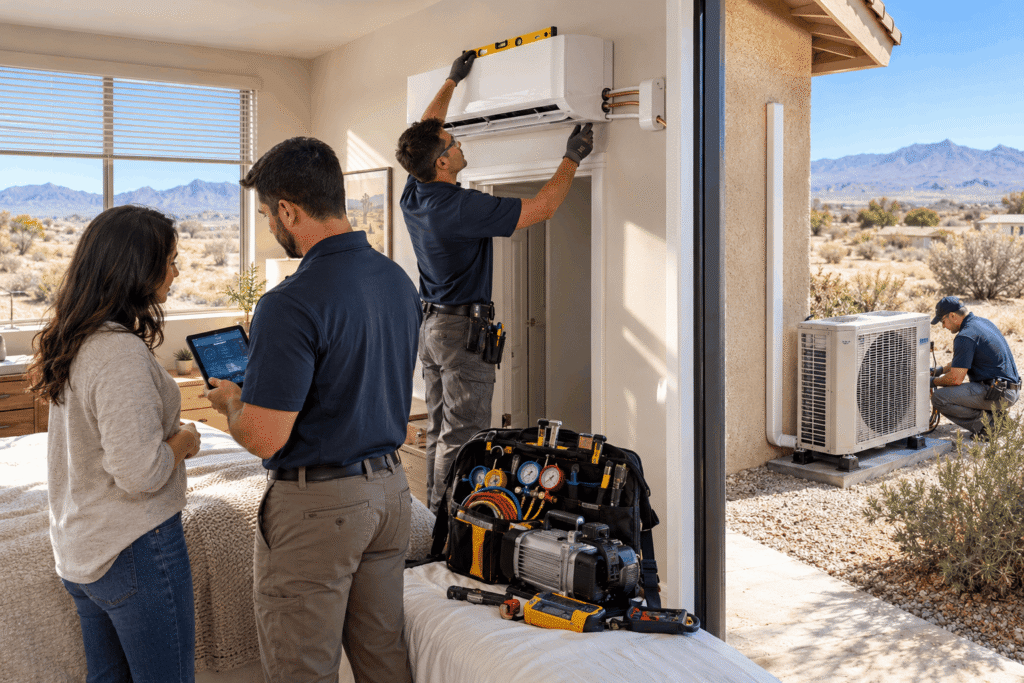
A summer afternoon in the High Desert can turn a back bedroom into an oven. Many homeowners know the feeling. The central air runs nonstop, yet one room stays stuffy while another feels like a refrigerator.
That uneven comfort is a big reason more people are searching for a ductless system installation company in Victorville, CA. Ductless systems, often called mini splits, have gone from a niche option to a common choice for homes across the region.
This guide explains how they work, why they suit desert living, and what to think about before a single hole is drilled.
What a Ductless System Actually Is
A ductless system does the same job as traditional central air, just without the ductwork. It has two main parts: an outdoor unit, called a condenser, and one or more indoor units mounted on walls or ceilings.
A small bundle of lines connects the two. This bundle carries refrigerant, power, and a drain line through a hole in the wall only about three inches wide. There’s no need to tear into attics or crawl spaces.
Each indoor unit controls its own space. That’s the key difference. Instead of cooling the whole house to one temperature, each room or “zone” can be set on its own.
Most modern mini splits are also heat pumps. They cool in summer and heat in winter, which matters in a place where July can hit 105 degrees and January nights can dip near freezing.
Why Desert Homes Are a Natural Fit
The High Desert climate is tough on HVAC equipment. Long stretches of extreme heat, big daily temperature swings, and wind-driven dust all add strain.
Traditional ducts make that worse. Ducts running through a hot attic can lose a large share of their cooling before the air ever reaches a vent. Leaky seams and loose joints add to the waste.
Ductless systems skip that problem entirely. The cooled air is made right inside the room, so far less energy is lost along the way. For homes in Victorville, CA, where cooling season runs long, that difference can show up on monthly utility bills.
Many newer units also use inverter-driven compressors. Rather than switching fully on and off, they speed up or slow down to match demand. The result is steadier temperatures and less wear on the system.
The Benefits Beyond Lower Bills
Energy savings get most of the attention, but they aren’t the only advantage. Zoning is often the feature people end up loving most.
Picture a household where one person works from home all day while the rest of the family is out. With a ductless setup, only the home office needs cooling during work hours. The rest of the house can rest at a higher temperature.
Indoor air quality is another quiet perk. Ducts collect dust, pet hair, and allergens over time. Mini splits use washable filters inside each unit, which can help in a region known for blowing dust and seasonal pollen.
Noise is also a factor. The loud part of the system, the compressor, sits outside. Indoor units usually run at a low hum, often quieter than a typical conversation.
Installation itself tends to be less disruptive, too. A single-zone system can often be installed in a day, with minimal mess compared to adding or replacing ductwork.
Real-World Situations Where Ductless Makes Sense
Older homes are a common case. Many houses built decades ago were designed around swamp coolers or wall heaters and never had ducts. Adding a full duct network can be costly and invasive, while a mini split slides right in.
Garage conversions and room additions are another. Extending existing ducts to a new space often overloads the original system. A separate ductless unit handles the new room without stealing air from the rest of the house.
Accessory dwelling units, or ADUs, have also driven demand. As more California homeowners build backyard units for family or rental income, compact ductless systems have become a go-to option for those smaller spaces.
The trend isn’t limited to one city. Requests for mini split installation in Adelanto, CA have grown alongside new housing and remodeling in the area, as homeowners look for flexible ways to cool individual rooms.
Even homes with working central air sometimes add a single mini split. A sun-facing bedroom or an upstairs loft that never quite cools down is a classic example.
What to Look for in an Installer
The equipment matters, but installation quality often matters more. A well-made unit that’s sized or placed poorly can underperform for years.
Proper sizing starts with a load calculation. This looks at room size, insulation, window exposure, and ceiling height. Guessing based on square footage alone can lead to a unit that’s too weak or one that cycles too often.
Placement is just as important. Indoor heads need good airflow and should sit away from direct sun and obstructions. The outdoor unit needs clearance and, in a windy area, a stable mounting surface.
Licensing is another must. In California, HVAC contractors should hold a C-20 license, and anyone handling refrigerant needs EPA certification. Permits are typically required, and new systems must meet state energy standards.
Local experience helps, too. Contractors who work in the High Desert understand how heat, dust, and wind affect equipment. Teams like B2F Heating and Air, for instance, regularly deal with these regional conditions when planning ductless layouts.
When comparing options for a ductless system installation company in Victorville, CA, it’s worth asking about warranty coverage, brand experience, and how the installer handles follow-up maintenance.
Keeping a Ductless System Running Well
Mini splits are fairly low-maintenance, but they aren’t maintenance-free. The filters in each indoor unit should be rinsed every few weeks during heavy use, especially in dusty months.
The outdoor unit should stay clear of tumbleweeds, sand buildup, and debris. A yearly professional check can catch refrigerant issues, clogged drain lines, or worn parts before they become costly repairs.
With good care, many ductless systems last 15 to 20 years. That long lifespan is part of what makes the upfront investment worthwhile for many homeowners.
Frequently Asked Questions
How much does ductless system installation cost?
Costs vary by the number of zones, unit size, and home layout. A single-zone system often runs a few thousand dollars installed, while multi-zone setups can cost significantly more.
Can a mini split heat a home in winter?
Yes. Most mini splits are heat pumps that provide both heating and cooling. Many newer models work efficiently even when outdoor temperatures drop well below freezing.
How long does it take to install a ductless system?
A single-zone installation is often completed in one day. Multi-zone systems may take two to three days, depending on the number of indoor units and wiring needs.
Are ductless systems more efficient than central air?
In many cases, yes. Ductless systems avoid the energy lost through ductwork and allow zoned cooling, which can lower overall energy use compared to older central systems.
Do mini splits need a permit in California?
Typically, yes. Most California cities require a mechanical permit for new HVAC installations, and systems must meet state energy code requirements.