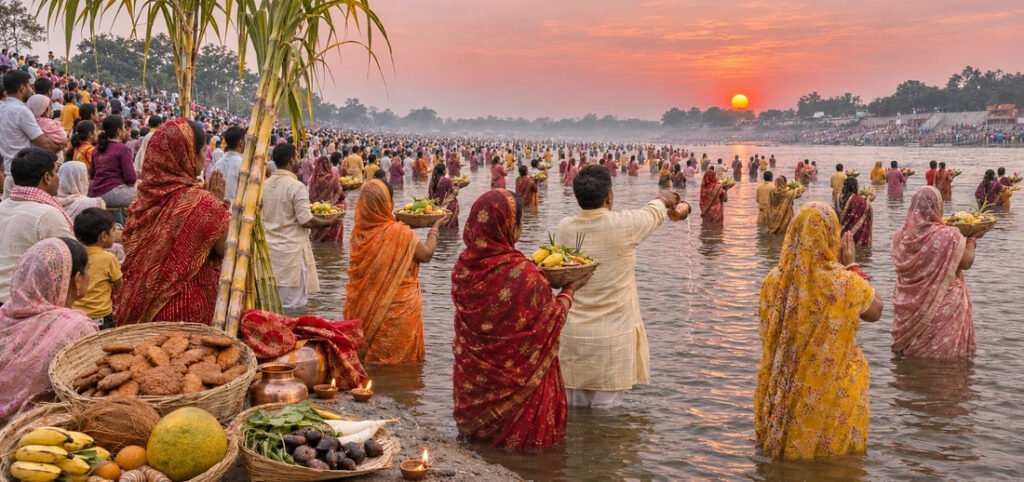
Chhath Puja is one of the most sacred Hindu festivals dedicated to Lord Surya (the Sun God) and Chhathi Maiya. Offering milk and water Arghya during chhath puja 2026 is an important part of the traditional worship, symbolising gratitude, purity, devotion and prayers for family prosperity. Devotees perform Arghya during sunset and sunrise while standing in a river, pond or another suitable water source.
The ritual is performed with discipline and faith, following family traditions and regional customs. Sadhana Shop recognises the importance of devotional practices and traditional worship items in helping devotees prepare for this auspicious occasion.
In this guide, you will learn how to offer milk and water Arghya, what items are required, the correct worship procedure and important things to remember during Chhath Puja.
By Sadhana Shop Editorial Team
What Is Milk and Water Arghya on Chhath Puja 2026?
Milk and water Arghya is a traditional offering made to Lord Surya during Chhath Puja 2026. Devotees offer water and, according to their family traditions, milk as a symbol of respect, gratitude and devotion towards the Sun God.
Chhath Puja is celebrated over four days, including Nahay Khay, Kharna, Sandhya Arghya and Usha Arghya. The evening and morning offerings are particularly significant because devotees worship the setting and rising Sun.
Why Do Devotees Offer Milk and Water to the Sun God?
Water represents purity, life and devotion, while milk is traditionally associated with nourishment and auspiciousness. Offering these substances expresses gratitude for the natural energy and resources that sustain life.
The ritual also reminds devotees to maintain humility, discipline and respect for nature.
Milk Arghya vs Water Arghya: What Is the Difference?
Both offerings have religious significance, but their preparation and use may differ according to regional and family traditions.
- Water Arghya: Water is offered to the Sun God using a lota or another traditional vessel.
- Milk Arghya: Milk may be offered separately or incorporated into the traditional offering according to family customs.
- Combined offering: Some families follow customs involving milk and water together.
Devotees should follow their household traditions rather than assuming that every Chhath Puja ritual must be performed identically.
What Items Are Required for Chhath Puja Arghya?
Preparing the required puja materials in advance helps devotees perform the ritual peacefully. Most items are traditional household or worship essentials.
Essential Items for Milk and Water Arghya
The following items are commonly used:
- Clean water for offering Arghya.
- Fresh milk, according to family tradition.
- A copper, brass or other suitable traditional lota.
- Bamboo soop or traditional offering basket.
- Fruits such as bananas, coconuts and seasonal fruits.
- Thekua and other traditional Chhath Prasad.
- Flowers, diya and other customary puja materials.
How to Prepare the Arghya Offering?
First, clean the utensils and arrange the required materials before leaving for the Chhath Ghat. Keep milk and water in separate clean vessels if that is how your family performs the ritual.
Arrange the fruits and Prasad in the soop. Make sure all the offerings are prepared hygienically and respectfully.
Sadhana Shop encourages devotees to prepare their traditional worship essentials beforehand so that they can focus on prayer and devotion during the festival.
How to Offer Milk and Water Arghya During Chhath Puja 2026?
Offering Arghya requires devotion, cleanliness and attention to family traditions. The following steps explain a commonly followed approach.
Step 1: Take a Bath and Wear Clean Clothes
Before performing the ritual, devotees take a bath and wear clean traditional clothes. Maintaining personal cleanliness is an important part of Chhath Puja preparations.
Step 2: Reach the Chhath Ghat Before Sunset
For Sandhya Arghya, devotees visit a riverbank, pond or designated worship area before sunset. Families arrange their baskets and offerings at the Ghat.
Step 3: Prepare Milk and Water Separately
Pour clean water and fresh milk into separate vessels. Follow the traditional method practised by your family regarding whether milk is offered separately or combined with water.
Step 4: Offer Water to the Setting Sun
Stand in the water or at the designated worship area, according to local arrangements. Slowly offer water towards the Sun while praying for family happiness, health and prosperity.
Step 5: Offer Milk According to Your Tradition
Offer milk using a clean vessel and follow your family’s customary method. Maintain devotion and avoid wasting the offerings.
Step 6: Perform Morning Arghya
On the following morning, devotees gather before sunrise to offer Usha Arghya to the rising Sun. This marks an important concluding stage of the Chhath Puja celebrations.
What Is the Importance of Sandhya Arghya and Usha Arghya?
The two main Arghya rituals represent devotion towards the setting and rising Sun. Both have special importance in Chhath traditions.
Sandhya Arghya: Offering to the Setting Sun
Sandhya Arghya is performed on the third day of Chhath Puja. Devotees gather near water bodies during sunset and offer prayers to the setting Sun.
This ritual represents gratitude, dedication and respect for the natural cycle of life.
Usha Arghya: Offering to the Rising Sun
Usha Arghya is performed early on the fourth day. Devotees wait for sunrise and offer water and other traditional offerings to Lord Surya.
Why Is Morning Arghya Important?
The rising Sun represents new beginnings, hope and positive energy. Devotees pray for the well-being of their families and express gratitude for the blessings of nature.
How Are Dev Uthani Ekadashi and Shiv Chalisa Connected to Hindu Devotion?
The Hindu calendar includes several important festivals and devotional practices throughout the year. Dev Uthani Ekadashi and Shiv Chalisa are also meaningful parts of Hindu religious traditions, although they are different from the rituals of Chhath Puja.
Dev Uthani Ekadashi and Its Religious Significance
Dev Uthani Ekadashi, also known as Prabodhini Ekadashi, is dedicated to Lord Vishnu. It marks the traditional awakening of Lord Vishnu after the period of Chaturmas.
Devotees observe fasting, perform prayers and participate in religious activities. It is also considered an auspicious occasion for beginning certain religious and ceremonial activities.
Why Do Devotees Recite Shiv Chalisa?
Shiv Chalisa is a devotional prayer dedicated to Lord Shiva. It consists of forty verses praising Lord Shiva’s qualities, divine powers and blessings.
Many devotees recite Shiv Chalisa to express faith, seek spiritual strength and develop a deeper connection with Lord Shiva. Although it is not a compulsory part of Chhath Puja, devotees may include personal prayers in their daily spiritual routine.
Important Things to Remember While Offering Arghya
A few simple precautions can help maintain the cleanliness and traditional significance of the ritual.
- Use clean utensils for milk and water offerings.
- Keep the worship area clean.
- Prepare fresh and hygienic Prasad.
- Avoid wasting milk, water and food.
- Follow your family’s traditional method of offering Arghya.
- Respect local arrangements and safety instructions at the Chhath Ghat.
- Complete the rituals with patience, faith and devotion.
Conclusion
Offering milk and water Arghya during chhath puja 2026 is a beautiful expression of gratitude and devotion towards Lord Surya. From preparing the traditional offerings to performing Sandhya Arghya and Usha Arghya, every stage of the festival carries deep spiritual significance.
Sadhana Shop encourages devotees to celebrate Chhath Puja and Shiv Chalisa with devotion while respecting their family traditions and religious customs. Prepare your puja essentials in advance and welcome the festival with faith and positivity.
Frequently Asked Questions (FAQs)
1. Why is milk offered during Chhath Puja?
Milk is traditionally associated with purity, nourishment and auspiciousness. Devotees offer it to Lord Surya as an expression of gratitude and devotion, following their family and regional customs.
2. Can we offer only water during Chhath Puja?
Yes. Water Arghya is an important traditional offering during Chhath Puja. The use of milk and its method of offering may vary according to family traditions.
3. When should devotees offer Sandhya Arghya in 2026?
Sandhya Arghya is performed on the evening of the third day of Chhath Puja, around sunset. Devotees should follow the locally observed festival timings.
4. When is Usha Arghya performed?
Usha Arghya is performed early in the morning on the fourth day of Chhath Puja, around sunrise. Devotees offer prayers to the rising Sun before completing the festival rituals.
5. Which utensils are suitable for offering milk and water?
Copper and brass lotas are traditionally used for Arghya. Clean stainless-steel vessels may also be used according to household customs.
6. Is Dev Uthani Ekadashi the same as Chhath Puja?
No. Dev Uthani Ekadashi is dedicated to Lord Vishnu and marks his traditional awakening after Chaturmas. Chhath Puja is dedicated primarily to Lord Surya and Chhathi Maiya.
7. Can we recite Shiv Chalisa during Chhath Puja?
Yes. Devotees may recite Shiv Chalisa as part of their personal devotional prayers. However, it is not a compulsory ritual of Chhath Puja.