A summer afternoon in the Sonoran Desert can push indoor temperatures to uncomfortable levels within an hour of an air conditioner failing. A homeowner who comes back to a stuffy house in July learns quickly how much daily life depends on a working system. Air heating & cooling services in Tucson, AZ exist to prevent that situation and to fix it fast when it happens.
Climate control in the desert is not only about summer, though. Winter nights can dip close to freezing, and the monsoon season brings humidity, dust, and sudden storms. Each of these puts a different kind of stress on home equipment.
This guide explains how local heating and cooling work is different, what homeowners should know about installation and maintenance, and how a few common scenarios usually play out.
Why Desert Climates Change the HVAC Conversation
Most HVAC advice is written for moderate climates. In Southern Arizona, the usual rules need some adjusting.
Air conditioners in the region often run for many hours a day from May through September. A system that might last 15 years in a milder state can wear out sooner when it runs almost nonstop for five months a year.
The Role of Extreme Heat
When outdoor temperatures pass 105 degrees, an AC unit has to work much harder to release heat outside. Parts like capacitors, compressors, and fan motors take most of that strain.
This is why capacitor failures are one of the most common summer repair calls in desert cities. The part is small and fairly cheap, but heat breaks it down over time.
Monsoon Season and Dust
Between roughly mid-June and September, monsoon storms bring wind, dust, and power surges. Dust clogs air filters and outdoor coils faster than in most regions.
Humidity during this period also changes how well certain systems perform. Evaporative coolers, often called swamp coolers, work best in dry air. Once humidity rises, they lose much of their cooling power, and many households switch to refrigerated air.
Cool Winters Still Matter
Heating gets less attention, but it still matters. Many homes in the area use heat pumps, which handle both cooling and heating in one system.
Since heat pumps run all year, they need regular care in both seasons. A unit that struggled all summer may show problems the first cold morning in December.
In short: Desert heat, dust, and seasonal swings mean local systems work harder and need more frequent attention than average.
What Heating and Cooling Services Usually Include
Heating and cooling services cover more than emergency repairs. Most professional work falls into a few broad categories.
Routine Maintenance
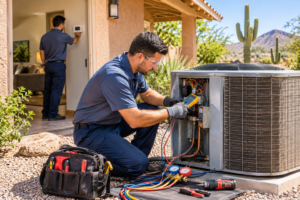
Seasonal tune-ups are the backbone of system care. A technician typically checks refrigerant levels, cleans coils, tests electrical parts, inspects the blower, and checks the thermostat.
Many technicians suggest two visits per year: one in spring before cooling season and one in fall before heating season. This timing helps catch worn parts before the busiest months.
Repairs and Diagnostics
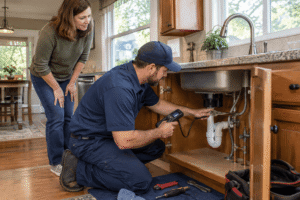
Repair work ranges from simple fixes, like replacing a contactor, to more involved jobs, like finding a refrigerant leak. Good diagnostics matter here, because the symptom a homeowner notices is often not the real cause.
For example, a system blowing warm air could have a dirty filter, a frozen evaporator coil, low refrigerant, or a failed compressor. Each one leads to a very different repair.
New System Installation
Installation is where long-term comfort and energy costs get decided. AC installation services in Tucson, AZ usually start with a load calculation, often called a Manual J, which looks at home size, insulation, window placement, and sun exposure.
A system that is too large cycles on and off too often. One that is too small runs constantly and never quite cools the home. Either mistake raises energy bills and shortens equipment life.
Key Points Homeowners Should Understand
Knowing a few industry basics helps people make better decisions and ask better questions.
Efficiency Ratings Have Changed
In 2023, federal efficiency standards moved to the SEER2 rating system, which tests units under conditions closer to real-world use. The Southwest has its own regional minimums for new air conditioners.
Higher-rated systems cost more upfront but often use less electricity. In a region with long cooling seasons, those savings can add up faster than they would in a cooler state.
Refrigerants Are in Transition
The industry is moving away from older refrigerants like R-410A toward options with lower environmental impact, such as R-454B and R-32. Equipment built for newer refrigerants is now standard in most new installations.
This shift matters for homeowners with older systems. Repair costs can climb as older refrigerants become less common, which sometimes tips the decision toward replacement.
Ductwork Is Often Overlooked
Even a new, efficient unit can underperform if the ducts leak. Many older desert homes have ductwork in hot attics, where gaps and poor insulation waste cooled air.
Duct sealing and insulation are not exciting upgrades. Still, they often deliver some of the biggest comfort gains for the money.
Air Quality Matters Too
Dust, pollen, and seasonal wildfire smoke can affect indoor air. Better filters, regular coil cleaning, and in some cases air purification add-ons help keep the air in a home cleaner.
In other words: Efficiency, refrigerant type, ducts, and air quality all shape how well a system performs, not just the unit itself.
Real-World Scenarios
Some situations come up again and again in desert homes. These examples show how heating and cooling decisions usually unfold.
The Midsummer Breakdown
A family notices their AC is running nonstop, but the house stays at 84 degrees. A technician finds a failing capacitor and a dirty outdoor coil packed with dust from recent storms.
The fix takes about an hour. The technician also points out that the unit is 16 years old and may need replacement within a few years, giving the family time to plan instead of rushing.
The Swamp Cooler Switch
A retired couple has relied on an evaporative cooler for years. Each monsoon season, their home feels sticky and warm for weeks at a time.
After comparing costs, they decide to add a refrigerated system. They keep the swamp cooler for dry spring months, when it uses far less energy, and switch to AC when humidity rises.
The Undersized Replacement
A homeowner buys a house with a recently replaced AC unit, yet the back bedrooms never cool down. An inspection shows the previous owner chose a unit based on price alone, without a load calculation.
Ductwork changes and a properly sized system solve the problem. This kind of case shows why sizing matters as much as brand or efficiency rating.
The First Cold Morning
In early December, a heat pump starts blowing cool air on a 38-degree morning. The problem turns out to be a faulty reversing valve, a part that rarely gets tested during summer-only checkups.
Local companies such as Superior Air Heating & Cooling LLC, along with many other regional providers, often recommend fall inspections for exactly this reason. Problems with heating functions are easier to catch before the first cold snap.
How to Evaluate Service Providers
The area has many HVAC contractors, from small family businesses to larger regional firms. A few common checks help homeowners compare their options.
Licensing is a good starting point. Arizona requires HVAC contractors to hold a license through the Registrar of Contractors, and homeowners can look up license status online.
Clear, written estimates are another good sign. Reputable technicians explain what they found, why a repair is needed, and what other options exist. When it comes to AC installation services in Tucson, AZ, it helps to ask whether a load calculation will be done before any equipment is recommended.
Warranty terms, response times during peak season, and reviews from nearby homeowners also give useful insight into what to expect.
Final Thoughts
Heating and cooling in the desert takes more planning than in milder climates. Long summers, dusty monsoons, and chilly winter nights all put real demands on home systems.
Regular maintenance, careful sizing during installation, and attention to ducts and air quality tend to matter more than any single piece of equipment. Homeowners who understand these basics can ask sharper questions and avoid costly surprises.
A good next step for any household is simple: note the age of the current system, check when it was last serviced, and schedule a seasonal inspection before the next big temperature swing.
FAQs
How often should an AC system be serviced in Tucson, AZ?
Most technicians recommend servicing twice a year, once in spring and once in fall. Homes with heavy dust exposure may also need more frequent filter changes, sometimes monthly in summer.
How long does an air conditioner usually last in a desert climate?
Many units last around 10 to 15 years in hot regions. Long run times and extreme heat can shorten that range, while regular maintenance helps extend it.
Is a heat pump a good option for desert homes?
Heat pumps are popular in Southern Arizona because winters are mild. They handle both cooling and heating efficiently, though they need care in both seasons.
Why does a swamp cooler stop working well during monsoon season?
Evaporative coolers rely on dry air to cool effectively. When humidity rises during monsoon months, they cool much less, which is why many homes also have refrigerated air.
What size AC unit does a home need?
The right size depends on square footage, insulation, windows, sun exposure, and ductwork. A professional load calculation gives the most accurate answer and helps prevent sizing mistakes.