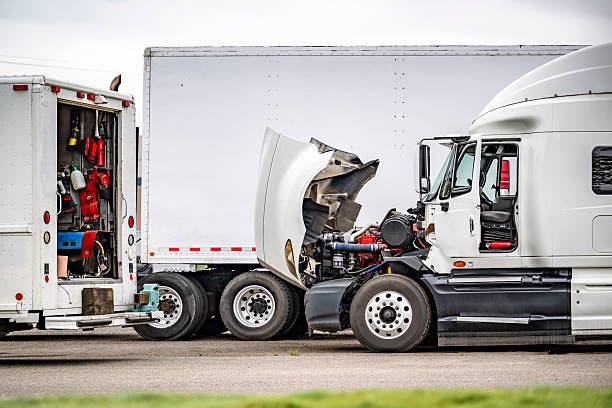
Broken white big rig semi truck tractor with open hood performs maintenance and routine repairs standing on the industrial parking lot making repair and maintenance by mobile technician specialist
Every hauler knows the sinking feeling of a trailer problem showing up on a loaded run with a delivery window closing fast. Whether it is a dragging brake, a flickering light bar, or a tire that looks a little too soft, small issues turn into expensive roadside calls when they are ignored. Fleet owners around the Southwest increasingly lean on mobile crews such as All H.E.A.R.T Fleet Services LLC – Mobile Diesel Semi Truck/Trailer Repair to get units back on the road without a tow. This blog shares what experienced drivers and mechanics have learned about trailer repair in Albuquerque NM, from spotting early trouble to choosing the right help.
Why Trailers Fail Sooner Than Drivers Expect
A trailer works quietly behind the tractor, so it rarely gets the attention the engine does. Yet it carries the full weight of the cargo, takes every pothole, and sits through the summer heat and sudden monsoon downpours that New Mexico is known for. After years of watching fleets in this region, I can say that most breakdowns trace back to wear that was visible weeks earlier. Dry brake chambers, cracked air lines, and worn bearings do not fail overnight. They whisper first.
Common Trailer Problems and What They Signal
The table below sums up the issues that show up most often during inspections and what they usually mean for your schedule and budget.
| Component | Early warning sign | Risk if ignored |
|---|---|---|
| Brakes | Pulling, squealing, or uneven lining wear | Longer stopping distance and out of service orders |
| Tires and wheel ends | Heat, uneven tread, grease leaks | Blowouts and hub failure under load |
| Air system | Hissing, slow pressure build | Brake lockups or loss of braking |
| Lights and wiring | Flickering or dead marker lights | Roadside citations and night time hazards |
| Suspension | Sagging ride height, worn bushings | Tire damage and cargo shifting |
| Doors and floor | Rust, soft spots, sticking latches | Cargo loss and water damage |
Brakes and Wheel Ends Deserve Your First Look
Reading Brake Wear Before It Gets Costly
Check slack adjusters and measure pushrod stroke at every pre-trip when you can. Drums with heat checking or linings worn close to the rivets should be handled before the next load, not after it. Mobile technicians can swap shoes and chambers right in your yard, which saves a tow and a day of lost revenue.
Bearings, Seals, and Hubs
A wet seal or a hub that runs noticeably hotter than its neighbors is telling you something. Catching a leaking seal early is a modest repair, while a seized bearing can take out the axle end and strand the whole combination.
Tires, Air Lines, and Lighting
Tire pressure is the cheapest maintenance task and the one most often skipped. Underinflation builds heat, and heat is what ends casings on a long Interstate 40 stretch. Walk the unit with a gauge, listen for air leaks at glad hands and fittings, and test every marker and brake light before leaving the lot. Many roadside inspections start with a burned out bulb, so it pays to treat lighting as seriously as brakes.
Suspension, Frame, and Body Work
Spotting Suspension Trouble
Walk around the trailer on level ground. If one side sits lower, springs or air bags may be failing. Worn hangers and cracked equalizers can also cause uneven tire wear that looks like an alignment problem.
Floors, Doors, and Roofs
Reefer and dry van owners should check for rust, delamination, and leaks along seams. A small patch done now is much cheaper than replacing a floor section after water soaks the cargo.
Welding and Structural Fixes
Frame cracks and damaged crossmembers are not shop talk to be postponed. Certified welders can reinforce or replace the affected section so the trailer keeps its rating.
How Local Conditions Change Your Maintenance Plan
High Desert Heat and Dust
Albuquerque sits at roughly 5,000 feet, and the dry air, intense sun, and fine dust accelerate wear on rubber, seals, and wiring insulation. Inspect hoses and tires more often during summer, and keep wheel ends clean so you can spot leaks.
Monsoon Season and Winter Roads
Sudden storms and winter road treatments invite corrosion on electrical connectors and brake components. A quick rinse and dielectric grease on plug connections can prevent many night time lighting failures.
Choosing a Shop You Can Trust
Ask whether the technicians are experienced with your equipment type, whether they carry common parts on the truck, and how they document the work. Honest shops show you the worn part, explain the repair, and give you a clear estimate before turning a wrench. When you search for dependable trailer repair in Albuquerque NM, response time matters as much as price, because every hour a trailer sits is an hour of lost freight.
Frequently Asked Questions
How often should a trailer be inspected?
A quick walkaround should happen before every trip, and a full inspection of brakes, wheel ends, and suspension is wise every few months. Heavy haulers or units running rough roads should be checked more often. Regular records also help when a roadside inspector asks for proof of maintenance.
Can trailer problems be fixed without towing?
Yes, many repairs such as brake work, tire changes, light fixes, and air line replacement can be done on site by a mobile crew. That saves towing costs and keeps the unit close to your yard. Larger structural jobs may still need a shop with heavier equipment.
What does trailer repair in Albuquerque NM usually cost?
Costs vary with the part, the labor involved, and how urgent the call is. Simple lighting or air line fixes are modest, while axle or floor repairs climb quickly. Asking for a written estimate before work begins keeps the final bill predictable and fair.
What are the signs a trailer should not be hauled?
Weak or uneven braking, visibly damaged tires, cracked frame members, and leaking air systems are all reasons to stop. Pulling a unit with these problems risks injuries and out of service orders. When in doubt, have a qualified technician look at it first.
Final Thoughts
Good maintenance is quiet, steady work that keeps surprises off the road. Inspect often, fix small things early, and lean on technicians who explain what they find. If your fleet needs dependable Trailer Repair in Albuquerque NM, pick a crew that shows up prepared and treats your uptime as seriously as you do.