Alopecia is a general term for hair loss that can affect the scalp, eyebrows, beard, eyelashes, and other areas of the body. Hair loss can develop gradually or appear suddenly, depending on its underlying cause. Understanding the common Types of Alopecia can help individuals recognize changes early and seek appropriate professional advice.
What Is Alopecia?
Alopecia refers to hair loss that is greater than normal shedding or results in visible thinning or bald patches. Different forms of alopecia have different causes, patterns, and treatment approaches.
Some types are temporary and may improve after the underlying trigger is addressed, while others can cause progressive or permanent hair loss.
Common Types of Alopecia
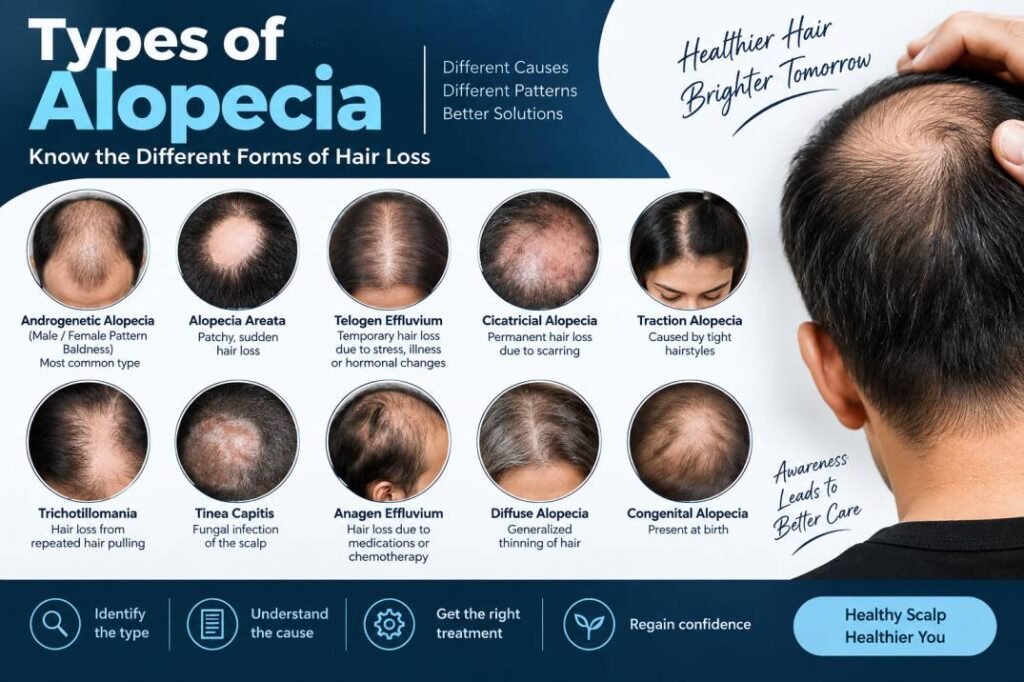
There are several Types of Alopecia, and each condition can affect hair growth differently. The most commonly recognized forms include androgenetic alopecia, alopecia areata, telogen effluvium, traction alopecia, and scarring alopecia.
Androgenetic Alopecia
Androgenetic alopecia is also known as pattern hair loss. It is strongly influenced by genetic factors and hormonal sensitivity and can affect both men and women.
Common Symptoms
Signs may include:
- Gradual hair thinning
- Receding hairline
- Thinning around the crown
- Widening hair part
- Reduced overall hair density
Treatment depends on the individual’s condition and may include medically appropriate treatments or hair restoration procedures.
Alopecia Areata
Alopecia areata is an autoimmune-related condition that can cause sudden, clearly defined areas of hair loss. It may affect the scalp as well as eyebrows, beard, eyelashes, and other body hair.
Common Symptoms
People may notice:
- Round or oval bald patches
- Sudden localized hair loss
- New patches appearing over time
- Short broken hairs around affected areas
Treatment varies depending on the severity and activity of the condition. A dermatologist can recommend suitable therapies following an evaluation.
Telogen Effluvium
Telogen effluvium is generally associated with increased shedding throughout the scalp rather than isolated bald patches. It may occur after significant physical or emotional stress, illness, hormonal changes, nutritional problems, or certain medications.
Common Symptoms
Typical signs include:
- Increased hair shedding
- More hair on pillows or during washing
- Overall reduction in hair volume
- Diffuse thinning across the scalp
Identifying and addressing the underlying trigger is an important part of management.
Read also: Understanding Real Estate Services in Whitby and Across Durham Region
Traction Alopecia
Traction alopecia develops when hair follicles are repeatedly exposed to pulling or tension. Tight hairstyles, braids, extensions, and ponytails can contribute to this condition.
Common Symptoms
Hair loss often begins around areas that experience the most tension, particularly the temples and hairline. Tenderness or scalp irritation may also occur.
Reducing tension and changing damaging hairstyling habits can help prevent further follicle stress.
Scarring Alopecia
Scarring alopecia includes a group of conditions in which inflammation damages hair follicles. Once a follicle is permanently destroyed, hair may not grow back from that area.
Common Symptoms
Possible signs include:
- Persistent scalp redness
- Scaling or inflammation
- Itching or discomfort
- Smooth or shiny patches
- Permanent hair loss in affected areas
Early evaluation is important because treatment may focus on controlling inflammation and preventing further follicle damage.
How Are Types of Alopecia Diagnosed?
An accurate diagnosis is essential for choosing appropriate treatment. A dermatologist or qualified hair specialist may examine the scalp and hair pattern and review medical history, medications, lifestyle factors, and recent health changes.
In some cases, blood tests, dermoscopic examination, or other diagnostic procedures may be recommended to identify the underlying cause.
Treatment Options for Alopecia
Treatment depends on the specific type, severity, duration, and underlying cause of hair loss.
Medical Treatments
Depending on the diagnosis, a specialist may recommend topical or oral medications, anti-inflammatory treatments, or other clinically appropriate therapies.
Hair Transplantation
Hair transplantation may be considered for selected individuals with stable, permanent hair loss and an adequate donor area. Techniques such as FUE can move healthy follicular units to areas with reduced hair coverage.
Supportive Hair Care
Gentle hair care can complement professional treatment. Avoiding excessive heat, harsh chemicals, tight hairstyles, and unnecessary mechanical stress can help protect existing hair.
When Should You Consult a Specialist?
Professional evaluation is recommended when hair loss is sudden, persistent, rapidly progressing, or accompanied by scalp inflammation or clearly defined bald patches.
Early assessment can help determine which of the Types of Alopecia may be responsible and whether an underlying medical condition requires attention.
Conclusion
Knowing the common Types of Alopecia can help you recognize changes in hair growth and understand when professional advice may be necessary. Androgenetic alopecia, alopecia areata, telogen effluvium, traction alopecia, and scarring alopecia have different causes and require different approaches.
If you are experiencing persistent or unusual hair loss, consult a qualified dermatologist or hair restoration specialist for an accurate diagnosis and a personalized treatment plan.