If you’re planning to upgrade your boiler, you might expect the process to be simple: choose a system, book an installer, and get it fitted. Then you hear about surveys, assessments, and inspections, and things start to feel less straightforward.
So, do you actually need a home energy survey before upgrading your boiler? The honest answer is: sometimes yes, sometimes no. It depends on how you’re upgrading, what system you’re installing, and whether you’re using a grant or scheme.
Understanding when a survey is required and why can save you time and prevent delays.
What Is a Home Energy Survey?
Before getting into requirements, it helps to clarify what a survey involves.
A home energy survey looks at how your property uses and loses heat. It typically assesses:
- Insulation levels (loft, walls, floors)
- Windows and draughts
- Current heating system efficiency
- Overall energy performance
The outcome is often an Energy Performance Certificate (EPC) or a more detailed report. This helps installers recommend suitable systems rather than guessing.
When a Survey Is Not Strictly Required
If you’re replacing a boiler like-for-like, say, swapping an old combi for a new combi, you may not need a full energy survey.
In these cases:
- The existing system setup is already known
- Pipework and radiators are usually compatible
- Installation is relatively straightforward
An installer will still inspect your system, but this is more of a technical check than a full energy assessment.
That said, skipping a detailed survey can mean missing opportunities to improve efficiency elsewhere.
When a Survey Becomes Necessary
Things change when the upgrade is more than a simple replacement.
1. Applying for Grants or Schemes
If you’re using a government-backed scheme, a survey is almost always required.
This is because funding bodies need to confirm:
- Your home’s current energy rating
- Whether the upgrade will improve efficiency
- If the property meets the eligibility criteria
Without this information, they can’t justify the funding.
2. Switching to a Different Heating System
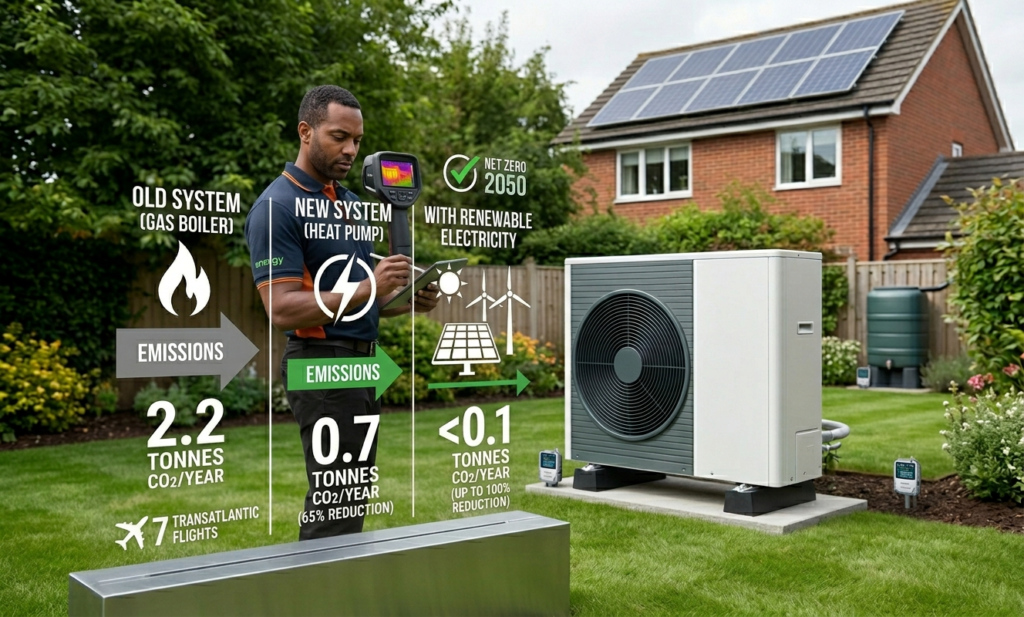
Moving from a gas boiler to a heat pump or another low-carbon system usually requires a detailed assessment.
Why? Because these systems work differently. They depend on:
- Good insulation
- Proper heat distribution
- Suitable radiator sizes
A survey helps determine whether your home can support the new system or needs upgrades first.
3. Older or Unusual Properties
If your home is older or has been modified over time, assumptions don’t always hold true.
For example:
- Pipework may not match modern standards
- Heat loss may be higher than expected
- Room layouts may affect heating performance
In these cases, a survey helps avoid installing a system that doesn’t perform as intended.
Why Surveys Matter More Than People Think
Some homeowners see surveys as an extra step or even an inconvenience. In reality, they serve a practical purpose.
They Prevent Mismatched Systems
Installing the wrong size or type of boiler can lead to poor heating and higher bills. A survey helps match the system to your home’s needs.
They Highlight Hidden Problems
Issues like poor insulation or draughts often go unnoticed. Fixing these can improve comfort more than the boiler upgrade itself.
They Support Long-Term Efficiency
A well-planned system uses less energy over time. That saves money and reduces environmental impact.
Are There Any Downsides to a Survey?
There are a few, but they’re usually manageable.
Time
A survey adds an extra step, which can delay installation slightly. However, this often prevents bigger delays later.
Cost
Some surveys are free, especially through schemes. Others may come with a fee, particularly for detailed assessments.
Unexpected Findings
Occasionally, a survey reveals that additional work is needed. While this can increase costs, it also avoids installing a system that won’t perform properly.
What Happens During the Survey Process?
The process is usually straightforward.
- Initial Visit: An assessor or installer visits your home to review the current setup.
- Measurements and Checks: They examine insulation, radiators, and heat loss areas.
- System Evaluation: Your existing boiler and controls are assessed.
- Recommendations: You receive advice on suitable systems and any improvements needed.
This information forms the basis for your installation plan.
Can You Refuse a Survey?
In some cases, yes, but it may limit your options.
If you’re paying privately for a simple replacement, you can often proceed without a formal energy survey. However, most reputable installers will still carry out some level of assessment.
If you’re applying for funding or switching systems, refusing a survey usually means the upgrade cannot go ahead under those terms.
Practical Advice Before You Start
If you’re unsure whether you need a survey, a few steps can help clarify things:
- Check your EPC rating – This gives a basic overview of your home’s efficiency
- Ask your installer early – They can tell you what level of assessment is needed
- Consider your long-term plans – If you may switch systems later, a full survey now can be useful
- Prepare your home – Make sure access to key areas like the boiler, loft, and radiators is clear
Taking these steps makes the process smoother and avoids last-minute surprises.
Final Thoughts
Boiler upgrades don’t always require a full home energy survey, but in many situations, they do. The more complex the upgrade or the more support you’re seeking, the more likely a survey becomes essential, especially when comparing options like are oil filled radiators cheap to run, against a full central heating upgrade.
Rather than seeing it as an obstacle, it helps to think of it as a safeguard. It ensures your new system fits your home properly, performs efficiently, and avoids costly mistakes.
In the end, a short delay for a proper assessment often leads to a better outcome. And when it comes to something as important as heating your home, that extra step is usually worth it.