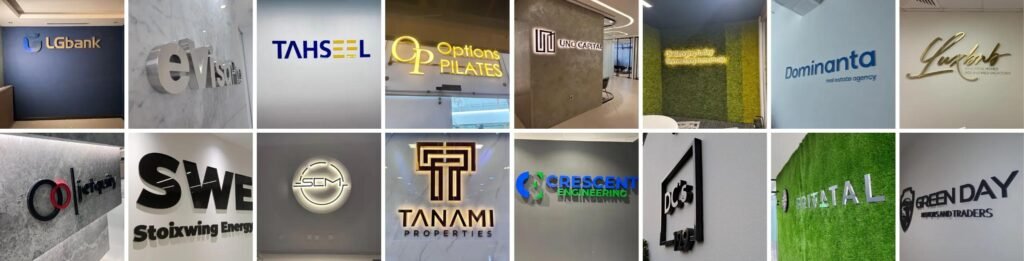
Event backdrops are widely used for exhibitions, conferences, product launches, corporate events, photo areas, promotional campaigns, and business presentations. They can create a defined visual space while displaying a company name, event message, sponsor logos, or branded graphics.
For businesses planning an event in Dubai, choosing the right event backdrop printing and display solution involves more than selecting a printed graphic. The stand structure, material, size, location, transport requirements, and intended period of use can all affect which format makes sense.
Understanding the main types of event backdrops makes it easier to compare options before placing an order.
What Is an Event Backdrop?
An event backdrop is a printed or branded display positioned behind a presentation area, exhibition space, reception point, stage, photo area, or promotional setup.
The graphic can contain a simple logo pattern or a more detailed design featuring photographs, product information, sponsors, or event messaging.
Backdrops are often used to create a clear visual background without requiring permanent signage. Depending on the format, they can also be assembled, transported, stored, and reused for different events.
Common Event Backdrop Formats
Different display formats suit different spaces and event requirements.
Banner Backdrops
A banner is one of the straightforward options for temporary event branding. It can be produced in different sizes and displayed using an appropriate support system.
Banner printing can be suitable for promotional areas, exhibitions, presentations, retail activations, and temporary business displays.
Before selecting a banner, consider the installation area and viewing distance. Text that looks readable on a computer screen may be difficult to read when printed at a larger scale or viewed from several metres away.
Pop-Up Backdrops
Pop-up displays are designed around a collapsible frame that expands into a display structure. They can be useful for companies attending multiple exhibitions or events because the frame can be assembled and packed away.
Pop-up banners are commonly considered when portability and relatively quick setup are important.
The graphic should be designed according to the frame dimensions so that important logos or messages do not fall across awkward areas of the structure.
Roll-Up Banners
Roll-up displays use a graphic that retracts into a base for storage and transportation. This makes them particularly useful where space is limited or where displays need to be moved regularly.
Roll-up banner printing can work well for entrances, reception areas, exhibitions, presentations, and promotional points.
A roll-up display is generally more suitable for focused messaging than a large wall-style backdrop. A short headline, logo, image, and contact information can often communicate the message without making the design crowded.
Fabric Backdrops
Fabric is another popular material for event displays. Fabric graphics can provide a softer appearance and can be used for exhibition walls, photo areas, stage backgrounds, and branded event spaces.
Fabric backdrops can be considered when the design needs to cover a larger display area while maintaining a relatively lightweight format.
Fabric also needs to be handled correctly during transportation and storage. Folding, packaging, and installation should be planned to reduce visible creases and maintain the intended appearance.
X-Stand Displays
An X-stand uses a lightweight frame that supports a printed graphic at the corners. Its relatively simple structure can make it useful for temporary promotional displays.
X-standee displays can be suitable for entrances, retail promotions, presentations, and event areas where a compact display is required.
Because the graphic is supported by a lightweight structure, placement should take account of indoor conditions and potential movement caused by air circulation or accidental contact.
Specialized Event Displays
Not every backdrop is intended for a general exhibition.
Real Estate Displays
Property companies often need displays for launches, sales events, exhibitions, and property presentations. The display may need to accommodate project imagery, development names, contact details, or property information.
Real estate stands can be planned around the information that visitors need to see rather than simply filling the available space with branding.
Readable property images and concise information are particularly important because visitors may only spend a short time looking at the display.
Promotion Tables
A backdrop or display can also be combined with a branded counter or table. This creates a practical point where staff can interact with visitors, distribute samples, collect information, or answer questions.
Promotion tables can complement larger event displays by providing a functional area within the branded setup.
The height, storage capacity, transport method, and available branding area should be considered before choosing a particular format.
How to Choose the Right Backdrop
The best format depends on the circumstances rather than simply the appearance of the display.
Consider the Event Location
Indoor exhibitions, outdoor promotions, hotel conferences, retail activations, and corporate presentations can have very different requirements.
Measure the available space before ordering. A display that is too large can restrict movement, while one that is too small may not provide enough visual impact.
Think About Viewing Distance
The farther away the audience is, the more important font size and visual simplicity become.
For large backdrops, a short headline and recognizable branding are generally easier to understand than paragraphs of detailed text.
Consider Transportation
Businesses attending several events should think about how the display will be transported between locations.
Collapsible frames and compact storage systems can be useful when displays need to travel regularly. Larger structures may require additional transportation and storage planning.
Plan the Artwork Carefully
Artwork should be prepared according to the exact dimensions and specifications of the chosen display.
Important information should not be placed too close to edges, frame sections, or areas where the graphic may fold or curve. High-resolution images and suitable logo files should also be prepared before production.
Event Backdrops in Dubai
Dubai hosts exhibitions, conferences, trade events, product launches, corporate gatherings, and promotional activities throughout the year. This creates demand for display systems that can be adapted to different venues and event formats.
Businesses should consider the venue’s dimensions, installation rules, event schedule, transportation access, and expected audience before finalizing a backdrop.
Local printing businesses such as Zahrat Al Madina Printing can be included when researching event display options in Dubai. Comparing the available formats against the actual requirements of an event is more useful than selecting a display based only on its appearance.
Common Mistakes to Avoid
Several simple mistakes can affect the final result:
- Ordering before measuring the available space
- Using text that is too small for the viewing distance
- Placing important information where a frame may cover it
- Ignoring transportation and storage requirements
- Using low-resolution artwork
- Choosing a format without considering the event environment
- Adding too many messages to one display
A simple design with a clear visual hierarchy is often easier for visitors to understand than a crowded backdrop.
Conclusion
Event backdrops come in many formats, from traditional banners and fabric displays to pop-up systems, roll-up banners, X-stands, real estate displays, and branded promotion tables. Each option has different strengths in terms of portability, size, setup, appearance, and practical use.
The right choice should start with the event location, available space, viewing distance, message, transportation requirements, and expected frequency of use. By considering these factors before production, businesses can select an event backdrop that fits the space and communicates its intended message clearly.