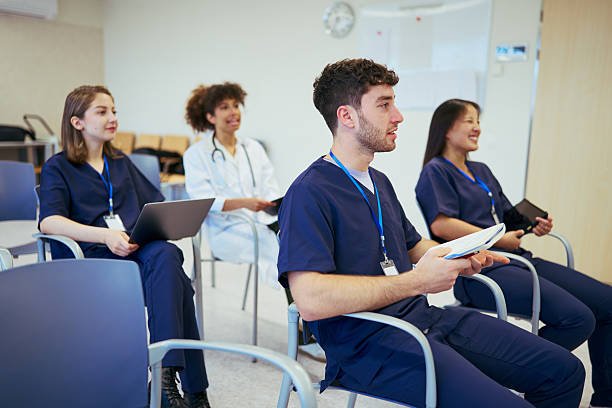
A fast way to get through nursing school. Nursing is an intense program, and students who plan to work immediately after graduation want to complete their program as fast as possible. In many cases, the shortest time to become a practical nurse would be through a fast track lpn program, but students should not expect to breeze through the program. Clinical readiness is one of those things you can’t speed up. Students need to demonstrate that they can work with patients, respond to the patient’s needs, and follow safety protocols when the time is right. It’s one thing to make a good grade on a written test and quite another to provide quality care to a real patient. Those are the two items that schools must evaluate before moving students into the clinical phase of training.
In School Exams Aren’t the End All To Everything
Most of the practical nursing program is to make sure the students are familiar with the “nuts and bolts” of patient care. This can include things such as anatomy, physiology, drug use, infection control, and general nursing procedures. Written assessments can be useful for teachers to see if students are able to recall information as well as apply it to various situations. For instance, it might be used to determine if a student is able to recognize certain signs and symptoms that can indicate the worsening of a condition, or if they can determine why a certain medication requires special handling and precautions. Tests must matter in these ways, as decisions that are made in practice should be based on information, not guessing. Still, just because a person receives an excellent score on a test does not indicate that they are prepared to work with real people in a practical setting. Teachers will also want to evaluate their thought process and whether they are able to explain their rationale. If they do not understand the importance of some of the primary safety protocols, they may need to study a bit more before moving on.
Skills Labs Demonstrate Real-World Abilities of Students
Skills labs allow learners to experience simulated nursing tasks outside of the clinical environment. The instructor might check vital signs, practice handwashing, wound dressing, helping with transfers, starting IVs, assisting with basics like dressing and bed changing, and many other fundamental practices for safe patient care. If the course is wide-ranging enough, the student may even be allowed to perform patient care from “gross motor” or clinical courses, such as medication administration. Each activity has several safety-related steps. One may read the procedure and remember the instructions, and then not have the same level of focus when they actually perform the task and omit or deviate from an important step. If they breeze through handwashing and forget to do an alcohol swab before a shot, this becomes a serious issue once they’re actually in the clinical environment. The instructor will give feedback, safety checks, and request that the student repeat the skill. The goal is to instill proper methodology rather than make students nervous in front of their peers.
Simulation Tests Decision-Making Under Stress
Another key way that nursing schools assess preparedness is through clinical simulation. Students practice real-world scenarios on mannequins, equipment, or simulated patients. Perhaps it’s an abnormal vital sign, an issue with medication, a fall risk, or a new symptom that needs immediate assessment. They learn how students respond, what questions they ask, and whether or not they noticed the red flags. Communication also plays a part here; a student who recognizes a problem but can’t relay it to the nurse needs more work. Simulation can also help determine where a student’s priorities lie, and their ability to prioritize can be tested through various scenarios. For example, a few things might be slightly off; which one do you prioritize? There may not be enough time to remember from chapter to chapter in a textbook; you have to analyze and follow your protocols, and don’t be afraid to ask for help. Errors on simulation stations are valuable, and the student needs to learn from them.
Communication and Professional Behavior Matter
Client safety isn’t just hands-on skills. As a student, it’s essential to work in a trusting, respectful manner with those around you. You might talk to patients and their families, other RNs, physicians, or professionals in a medical or clinical setting. You must respect people’s privacy, know how to chart accurately, and be familiar with workplace policies. An instructor might observe your behaviour in a role-play situation, a simulated environment, or the clinical setting. Perhaps you charted a procedure accurately, but didn’t fully inform the patient ahead of time. It’s a minor concern, but it still points to a problem: Patients have a right to be told what you’re doing to them. Be professional, be punctual, take criticism well, and keep your boundaries. We all start at the beginning, but a student who can take instructions and respond appropriately is a student who’ll succeed. If you frequently take shortcuts or ignore suggestions and still make the grade, that may be a red flag.
Supervised Clinical Placements Put Skills to the Test
At some point in your education, you will need to put all your training into practice by gaining work experience in a healthcare setting. Students will undertake supervised placements in a hospital, long-term care, a rehabilitation centre, or other approved facility. Students will observe patient care and provide care themselves while clinical instructors or other supervisors observe. Students are assessed on, but not limited to, the following: observation of the patient, hygiene and basic needs, communication skills, documentation of patient observations, infection control, protocol following, and adherence to care plans. Depending on the program, the student’s stage of training, and the nature of the placement, your responsibilities will vary. You are not expected to perform as a registered nurse during your placement. You should provide care according to the scope of your training and seek help or reassurance when necessary. Your instructor will take into account your ability to relate your classroom education to your patient’s needs, your ability to follow instructions, and your ability to identify areas where you might need to seek advice. A positive placement is not judged by how many tasks you complete, but rather by the consistency with which you can perform them.
Feedback, Remedial Work and Repeats
Some students aren’t able to show they are clinically competent the first time they try, and need a process to help them fill gaps. Instructors can use things like competency checklists, written reports, observation during the clinical session, and then follow-up discussion to assess areas where students may need to be given extra opportunities to demonstrate competency. For instance, a student who is having trouble with medication calculations might be given additional problems and a subsequent test before being allowed to perform the task with patients. A student who’s having trouble with communication may be given additional practice in that skill while being watched more closely. The bottom line is that struggling with a skill in a simulation does not necessarily preclude a student from mastering it, and how the person is remedied can be critical–but there are some safety issues where a student may not move forward until the basic standard is achieved. Programs need to ensure safe care for the patient while providing reasonable opportunities to get it right, and students should explore remediation policies with their programs early on before a missed competency becomes a stumbling block.
Select a Program That Prioritizes Clinical Readiness
When comparing schools for practical nursing, students shouldn’t just ask which school has the earliest graduation date, and they should go beyond the school’s marketing materials. How are clinical skills tested, and when are students assigned a clinical site with a nurse preceptor? What are the consequences if the student doesn’t perform well on the clinical skills test? How much hands-on assistance does the teacher provide? This can be checked through the education board or department of the state’s department of education or health service, if applicable. Not all programs are created equal; each school will have slightly different prerequisites, education hours, faculty requirements, and clinical hours. Students can look at program requirements and compare nursing schools in the USA to see if each program admits students with the same requirements, clinical placement schedules, and pass/fail rates.
In Conclusion: Safe Practice Demonstrates Readiness
Clinical readiness is measured through classroom tests, skills demonstrations, simulation, behavioral evaluations, and supervised patient care. All these elements assess the different skills a practical nurse needs to provide safe care. Some students understand the theory but need more practice with procedures, while others are confident in their skills but need to improve communication and recognize when a patient requires immediate attention. When comparing colleges in USA for nursing, students should look for programs that identify skill gaps before graduation and provide a clear path to improvement. A practical nursing fast track LPN program can help students enter the workforce sooner, but it must maintain high clinical standards. For future nurses and the patients they serve, quality training is worth prioritizing over a faster timetable alone.