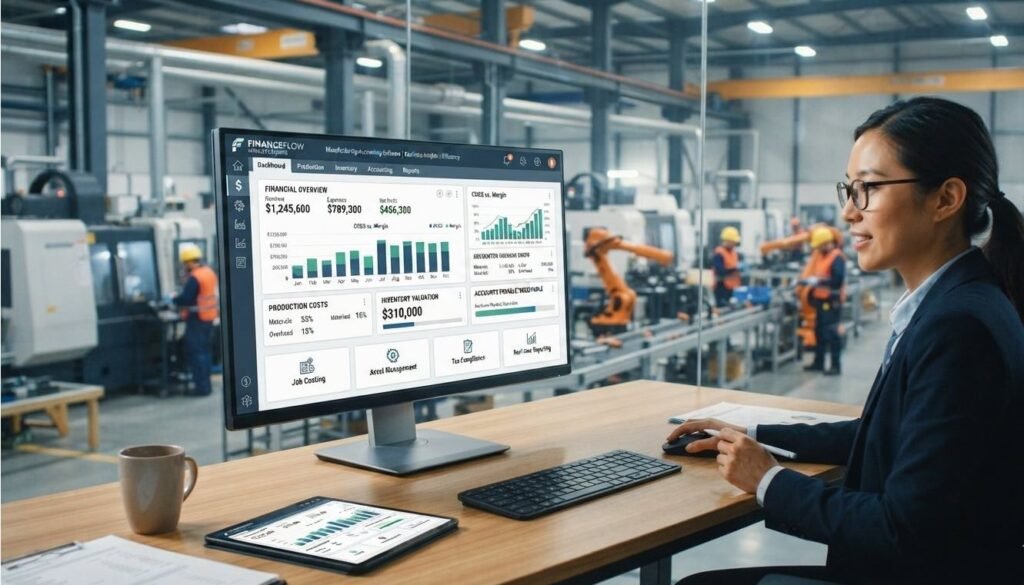
Manufacturing Accounting Software
Running a manufacturing business involves much more than producing goods and selling them. Manufacturers need to manage raw materials, production costs, inventory, labor, purchasing, sales, taxes, and cash flow at the same time. When these processes are handled through spreadsheets or disconnected systems, even a small error can affect financial reporting and profitability. That is where manufacturing accounting software can make a significant difference. It brings accounting and manufacturing operations together, helping businesses track financial data alongside production and inventory activities. Instead of switching between multiple systems, manufacturers can manage important financial information from a centralized platform.
For small businesses as well as growing manufacturing companies, the right accounting system can improve visibility, reduce manual work, and support better financial decisions.
What Is Manufacturing Accounting Software?
Manufacturing accounting software is an accounting solution designed to address the financial requirements of manufacturing businesses. It typically combines standard accounting functions with features such as inventory management, production costing, purchasing, sales, and bill of materials.
Traditional accounting software may record revenue, expenses, receivables, and payables effectively, but manufacturing businesses often need much more detailed information. They need to understand how much it costs to produce a particular item and how raw materials, labor, overhead, and inventory movements affect profitability.
A manufacturing-focused accounting system connects these activities so financial information reflects what is actually happening on the production floor.
Why Manufacturers Need Specialized Accounting Software
Manufacturing businesses deal with complex transactions that ordinary accounting systems may not handle efficiently.
For example, a company may purchase raw materials, move them into production, consume some materials during manufacturing, add labor and overhead costs, and eventually transfer finished goods into inventory. Every stage can have a financial impact.
Better Production Cost Tracking
Manufacturers need accurate information about the cost of producing goods. Manufacturing costing software can help calculate costs associated with materials, labor, machinery, and other production expenses.
This gives management a clearer understanding of product profitability and helps identify areas where production costs may be increasing.
Accurate Inventory Accounting
Inventory is one of the most important assets for a manufacturing company. Businesses may have raw materials, work-in-progress items, finished products, spare parts, and other stock.
Manufacturing inventory accounting software helps connect inventory movements with financial records, reducing the need for repetitive manual entries.
Improved Financial Visibility
When accounting and manufacturing information exists in separate systems, management may struggle to see the complete financial picture. An integrated manufacturing accounting system can provide centralized information for sales, purchases, expenses, inventory, and production.
Key Features of Manufacturing Accounting Software
The exact features vary between platforms, but a strong solution should cover both accounting and manufacturing requirements.
General Accounting
Core accounting features may include:
- General ledger
- Accounts payable
- Accounts receivable
- Expense management
- Bank reconciliation
- Tax management
- Financial reporting
- Cash-flow tracking
These functions provide the financial foundation of the system.
Inventory Management
Manufacturers need to know what materials are available, what has been consumed, and what finished products are ready for sale.
A suitable system can help track:
- Raw materials
- Work-in-progress inventory
- Finished goods
- Stock transfers
- Inventory adjustments
- Purchase receipts
- Stock valuation
This is particularly useful for businesses handling large product catalogs or multiple warehouses.
Production Management
Modern manufacturing ERP software can connect production activities with accounting and inventory records.
Depending on the system, manufacturers may manage bills of materials, production orders, material consumption, work-in-progress, and finished-goods transfers.
Manufacturing Costing
Understanding production costs is essential for pricing and profitability. Production accounting software can help manufacturers monitor the financial impact of manufacturing activities.
Cost information can be analyzed by product, production order, department, project, or other business dimensions, depending on the software.
Manufacturing ERP Software With Accounting
Some manufacturers require more than accounting functionality. They need an integrated platform that connects finance with purchasing, inventory, sales, production, and business operations.
This is where manufacturing ERP software with accounting becomes useful.
An ERP system can create a shared flow of information between departments. For example, a purchase order for raw materials can affect purchasing and inventory records, while production consumption can update stock and eventually influence product costs.
This integration can reduce duplicate data entry and provide management with more consistent information.
Manufacturing Accounting Software for Small Business
Small manufacturers often assume that specialized software is only suitable for large enterprises. That is not necessarily the case.
Manufacturing accounting software for small business can be designed around the needs of companies with limited staff, smaller production volumes, and simpler organizational structures.
For a small manufacturer, useful features may include:
- Simple invoicing
- Expense tracking
- Inventory management
- Production costing
- Purchase management
- Financial reports
- Customer and supplier management
- Basic production planning
The key is to choose software that matches the company’s current requirements while allowing room for future growth.
Benefits of Accounting Software for Manufacturing Companies
Implementing accounting software for manufacturing companies can provide several operational and financial benefits.
Reduces Manual Data Entry
Entering the same information into multiple spreadsheets and systems increases workload and creates opportunities for mistakes. An integrated system can automate many routine transactions.
Helps Control Manufacturing Costs
Businesses can monitor material, labor, and overhead expenses more effectively. This can help management investigate unexpected cost increases and improve budgeting.
Supports Better Pricing Decisions
Accurate product costs give manufacturers a stronger foundation for setting prices. Instead of relying entirely on estimates, businesses can use current financial and production information.
Improves Reporting
Management needs timely information to make business decisions. Reports covering sales, expenses, inventory, production costs, and profitability can provide a clearer view of company performance.
Supports Business Growth
As a manufacturer expands, spreadsheets can become increasingly difficult to manage. Accounting software for manufacturers can provide a structured system that grows alongside the business.
Cloud Manufacturing Accounting Software
Cloud technology has changed how businesses access accounting and ERP applications. Cloud manufacturing accounting software allows authorized users to access business information through an internet connection, depending on the provider’s architecture and security controls.
Cloud solutions can be particularly useful for businesses with multiple locations or employees who need access to financial information outside the main office.
Potential advantages include:
- Remote access
- Centralized data
- Easier software updates
- Scalable infrastructure
- Reduced dependence on local hardware
However, manufacturers should evaluate security, backups, user permissions, integration capabilities, support, and data ownership before selecting a cloud platform.
How to Choose the Right Manufacturing Accounting System
Choosing software should begin with business requirements rather than a list of features.
Identify Your Manufacturing Needs
Determine whether you need basic accounting, inventory management, production planning, costing, warehouse management, or a complete ERP platform.
Check Integration Capabilities
If your company already uses CRM, e-commerce, payroll, banking, or other systems, check whether the new platform can integrate with them.
Evaluate Reporting
Look for reporting tools that provide useful information about revenue, expenses, inventory valuation, production costs, margins, and cash flow.
Consider Scalability
Your requirements today may be different from those in three or five years. Select a solution that can support additional users, products, warehouses, locations, and transactions as the business expands.
Review Security and Support
Financial and manufacturing information is sensitive. Evaluate access controls, authentication, backups, audit trails, data protection, and customer support before implementation.
Manufacturing Software With Accounting: What to Expect
The strongest systems are not simply accounting applications with a few manufacturing features added. A well-integrated manufacturing software with accounting solution should connect financial transactions with operational activities.
For example, when raw materials are purchased, inventory and accounts payable can be updated. When materials are consumed during production, inventory values can change. When finished goods are completed, stock records and production costs can be updated.
This connection creates a more complete financial picture of manufacturing operations.
The Role of Manufacturing Finance Software
Manufacturing finance software can help finance teams move beyond basic bookkeeping and focus on financial analysis.
Instead of only asking how much the company sold, managers can examine questions such as:
- Which products generate the strongest margins?
- Which materials are increasing production costs?
- How much capital is tied up in inventory?
- Are production expenses within budget?
- Which customers or product categories are most profitable?
These insights can support budgeting, cost control, and long-term planning.
Final Thoughts
Manufacturing businesses need financial systems that understand the relationship between accounting, inventory, production, and costs. Manufacturing accounting software can bring these areas together and reduce the complexity created by disconnected spreadsheets and applications.
Before choosing a solution, define your accounting and production requirements, compare integration options, evaluate reporting capabilities, and consider future growth. Whether you run a small factory or a growing manufacturing operation, the right system should make financial information easier to manage and production costs easier to understand.
The goal is not simply to automate bookkeeping. It is to create a reliable flow of financial and operational information that helps your business control costs, manage inventory, improve reporting, and make informed decisions.
Frequently Asked Questions
What is manufacturing accounting software?
Manufacturing accounting software is designed to manage accounting alongside manufacturing activities such as inventory, production costs, purchasing, and finished-goods management.
Is manufacturing accounting software suitable for small businesses?
Yes. Manufacturing accounting software for small business can help smaller manufacturers manage accounting, inventory, costing, purchasing, and financial reporting without relying heavily on spreadsheets.
What is the difference between accounting software and manufacturing ERP software?
Accounting software primarily focuses on financial activities, while manufacturing ERP software can connect accounting with production, inventory, purchasing, sales, and other business processes.
Can manufacturing accounting software track production costs?
Yes. Many manufacturing-focused systems can track material, labor, overhead, and other production-related costs. The exact costing methods depend on the software.
What is manufacturing inventory accounting software?
It is software that connects inventory management with accounting. It can help businesses monitor stock quantities, inventory values, purchases, consumption, and related financial transactions.
Is cloud manufacturing accounting software secure?
Security depends on the provider and its implementation. Businesses should review authentication, permissions, encryption, backups, audit logs, compliance practices, and data protection before selecting a cloud solution.
Can manufacturing software with accounting improve profitability?
It can provide better visibility into product costs, inventory, expenses, and margins. However, profitability also depends on pricing, production efficiency, market conditions, sales, and other business factors.