A hairline crack shows up near a window frame. A few months later, it has grown longer, and a faint brown stain appears beneath it after the first winter rain. This is how many exterior problems start, quietly and easy to ignore.
For homeowners facing this kind of damage, a Skilled Stucco & Plastering Contractor in Oakland, CA can make the difference between a lasting repair and a patch that fails within a season. The local climate, the age of the housing stock, and the region’s seismic activity all shape how exterior finishing should be done.
Why Exterior Finishing Is Different in the East Bay
Stucco has been a popular siding choice in Northern California for more than a century. It holds up well in mild weather, resists fire, and gives homes a clean, timeless look. Still, it is not a “set it and forget it” material.
The East Bay sees cool, foggy mornings, dry summers, and short bursts of heavy rain in winter. That cycle of moisture and drying puts steady stress on cement-based finishes. Over time, small gaps open, water gets behind the surface, and the wall underneath begins to suffer.
Then there are earthquakes. Even minor tremors can shift a building’s frame slightly. Rigid stucco doesn’t flex much, so it tends to crack along stress points like corners, doors, and windows.
What Good Stucco and Plaster Work Involves
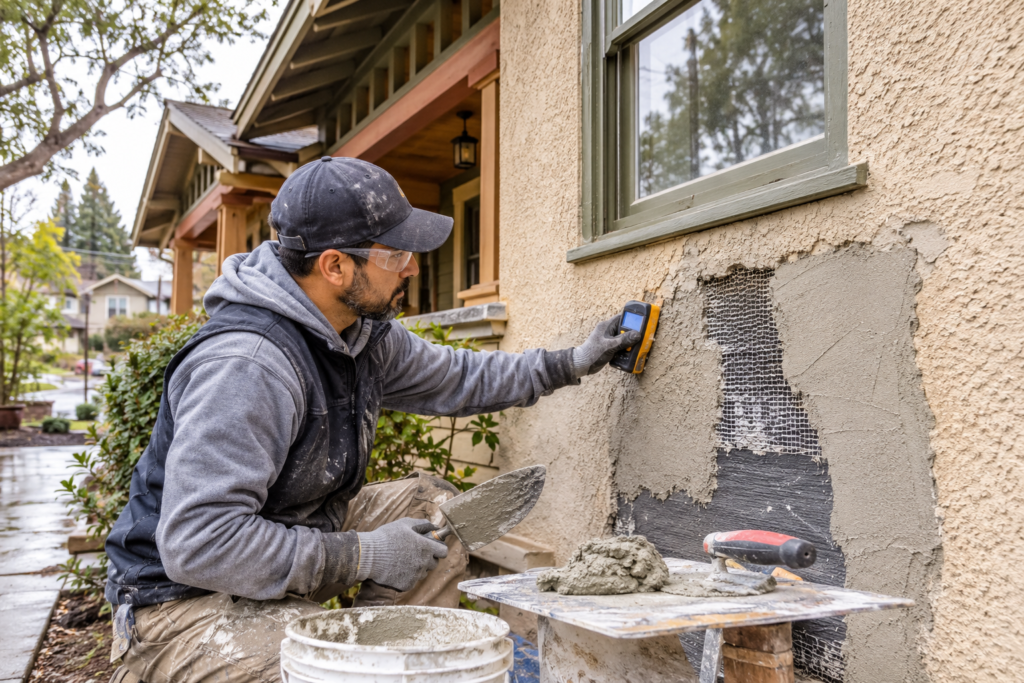
Traditional exterior stucco is usually applied in three coats. First comes the scratch coat, pressed into metal lath and scored so the next layer can grip. Then the brown coat builds thickness and evens out the wall. The final color coat adds texture and finish.
Each layer needs time to cure properly. Rushing this process is one of the most common reasons stucco fails early. Experienced tradespeople know how weather affects curing and often mist walls to keep them from drying too quickly on warm days.
Interior plaster is its own craft. Many older homes in neighborhoods like Rockridge, Temescal, and the Lower Hills still have original lath-and-plaster walls. Repairing them takes patience and a feel for matching old textures, which modern drywall crews may not have.
The Role of Concrete Walls
Hillside properties bring a different challenge. Sloped lots often need retaining walls to hold back soil, prevent erosion, and create usable yard space. In these cases, Professional Concrete Wall Installation in Oakland, CA goes beyond appearance. It plays a direct role in safety.
A poorly built retaining wall can lean, crack, or collapse after a wet winter. Proper drainage behind the wall, solid footings, and correct steel reinforcement all matter. Many of these projects also require permits and engineering review, especially when walls exceed certain heights.
Concrete walls are also common for garden borders, privacy screens, and modern home designs. A smooth concrete wall finished with a stucco or plaster coat can tie a landscape and a house together visually.
Benefits That Go Beyond Looks
A well-applied stucco exterior does more than make a home look fresh. It creates a durable shell that can last 50 years or more with basic care. That long lifespan often makes it a cost-effective choice over time.
Fire resistance is another major factor. After the 1991 Oakland Hills firestorm, many residents became more aware of how siding materials affect a home’s risk. Cement-based stucco is noncombustible, which is one reason it remains a common choice in wildfire-prone areas.
Stucco also adds a layer of insulation and sound dampening. Homes near busy streets or freeways often feel quieter with thick exterior plaster. And because it can be tinted in almost any color, homeowners have plenty of design freedom without the upkeep of frequent repainting.
Real-World Situations Homeowners Face
Consider a couple who buys a 1920s Spanish-style home. The stucco looks charming from the street, but up close, they find patched sections in mismatched colors and soft spots near the foundation. A careful contractor would test for moisture damage before simply covering the problem.
Another common case involves a hillside property where the old timber retaining wall has started to rot. The owner wants something stronger and longer lasting. Replacing it with reinforced concrete, followed by a smooth finish coat, solves both the structural and visual issues.
Then there’s the renovation scenario. A family remodels their kitchen and opens up a wall, only to discover crumbling plaster in the next room. Matching that historic finish takes a tradesperson with real plastering experience, not just general construction skills.
What Sets Experienced Contractors Apart
Hiring a Skilled Stucco & Plastering Contractor in Oakland, CA usually comes down to experience with local conditions. Contractors who work in the area regularly understand soil movement, coastal moisture, and building code requirements for fire zones.
Good contractors also take time to diagnose problems. A crack might be cosmetic, or it might point to a drainage issue or framing movement. Fixing the surface without addressing the cause tends to lead to repeat repairs.
Local firms such as One Stop Plastering Inc are among the many businesses in the region that handle this type of work. When comparing options, homeowners often look at licensing, past project photos, references, and how clearly a contractor explains the process.
Planning a Project the Smart Way
Before starting any exterior work, it helps to understand the scope. Is the job a small patch, a full re-stucco, or part of a larger project that also involves Professional Concrete Wall Installation in Oakland, CA? Knowing this upfront makes it easier to get accurate estimates.
Timing matters too. Late spring through early fall usually offers the best conditions for curing stucco and pouring concrete. Wet winter months can delay work or affect the finish if precautions aren’t taken.
Finally, ask about warranties and maintenance. Even the best stucco benefits from occasional inspections, sealing small cracks early, and keeping sprinklers and soil away from the base of walls.
FAQs
How long does stucco last on a house?
With proper installation and basic maintenance, traditional cement stucco can last 50 to 80 years. Regular inspections and quick crack repairs help extend its lifespan.
Is it normal for stucco to crack?
Small hairline cracks are common and often cosmetic. Wider cracks, stair-step patterns, or cracks with staining may signal moisture or structural issues that need a closer look.
Do retaining walls need a permit in California?
Many cities require permits for retaining walls over a certain height, often around 3 to 4 feet, or those supporting extra loads. Local building departments set the exact rules.
Can old plaster walls be repaired instead of replaced?
Yes. Skilled plasterers can often repair lath-and-plaster walls by reattaching loose sections and matching the original texture, which helps preserve a home’s character.
What is the best time of year to apply stucco?
Mild, dry weather is ideal, typically late spring through early fall. Extreme heat or heavy rain can affect how the material cures and bonds.