In modern wellness spaces, what staff wear matters more than many people realize. Spa uniforms are not just about appearance. They influence comfort during long shifts, affect hygiene standards, and even shape how clients perceive professionalism. In Australia’s growing wellness and beauty industry, choosing the right attire has become a practical decision rather than a purely aesthetic one.
From boutique day spas to large wellness retreats, professionals are now paying closer attention to fabric quality, fit, and functionality. This article breaks down what truly defines effective spa and beauty workwear, helping both business owners and therapists make informed choices.
Why Spa Uniforms Matter in Daily Operations
A typical workday in a Spa Uniforms involves constant movement. Therapists bend, stretch, and maintain physical contact with clients for extended periods. Clothing that restricts movement or causes discomfort quickly becomes a problem.
Well-designed spa uniforms support:
- Ease of movement during treatments like massages or facials
- Breathability in warm, humid environments
- Professional presentation that builds trust with clients
In Australia, where climates can vary from humid coastal regions to dry inland areas, breathable materials and lightweight construction are especially important. A uniform that works in Melbourne may not feel the same in Brisbane’s humidity.
At the same time, presentation cannot be overlooked. Clients often associate clean, well-fitted attire with hygiene and professionalism. Even subtle details like wrinkle resistance or colour consistency can influence perception.
Fabric Choices and Their Practical Impact
Fabric selection is one of the most critical aspects of any beauty or spa workwear. It directly affects comfort, durability, and maintenance.
Common materials used in beauty uniforms include:
- Cotton blends – Soft and breathable, suitable for long hours
- Polyester blends – Durable and wrinkle-resistant
- Stretch fabrics – Provide flexibility during physical tasks
In recent years, many Australian businesses have shifted toward blended fabrics that balance softness with durability. Pure cotton, while comfortable, may wrinkle easily and require more maintenance. On the other hand, fully synthetic materials can feel less breathable.
A growing trend is the use of wash-and-wear fabrics, which reduce the need for ironing and maintain their structure after repeated washing. Brands like Wash N Wear have contributed to this shift by focusing on practical, low-maintenance options that suit busy work environments without compromising on appearance.
Design Features That Improve Functionality
Beyond fabric, design plays a major role in how effective a uniform is in real-world settings. Small design elements can significantly impact usability throughout the day.
Key features professionals often look for include:
- Stretch panels or flexible seams for unrestricted movement
- Pockets for carrying small tools or personal items
- Short sleeves or adjustable lengths for temperature control
- Simple closures that are easy to manage during quick changes
In high-paced spa environments, practicality often outweighs decorative elements. Clean lines and minimal detailing are preferred because they are easier to maintain and align with hygiene standards.
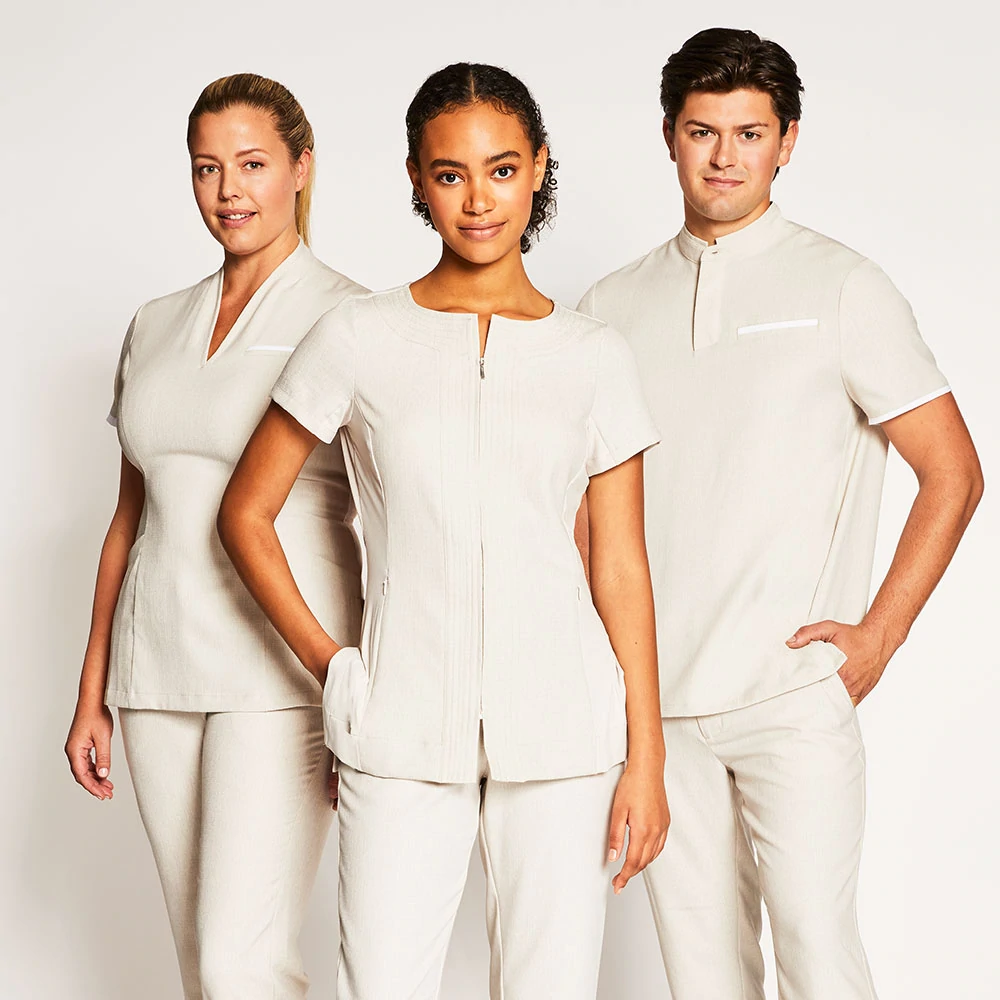
Australian spas, particularly those focusing on holistic or minimalist aesthetics, tend to favour neutral tones such as white, beige, grey, or soft pastels. These colours create a calm atmosphere while also reflecting cleanliness.
Hygiene, Maintenance, and Industry Standards
Hygiene is a core requirement in any spa or beauty setting. Uniforms must withstand frequent washing without losing shape, colour, or texture.
Best practices include:
- Daily washing to maintain cleanliness
- Choosing fabrics that resist staining from oils and creams
- Avoiding heavy embellishments that trap dirt or bacteria
In Australia, health and safety guidelines for personal care services emphasize cleanliness and infection control. While there may not be strict uniform regulations, maintaining hygienic attire is considered part of professional responsibility.
Low-maintenance garments also help reduce operational workload. For small businesses, time spent on ironing or special care can quickly add up. This is why many professionals now prioritize garments that are easy to wash, quick to dry, and ready to wear again without extra effort.
Evolving Trends in Beauty Uniforms
The concept of beauty uniforms has evolved significantly over the past decade. What was once purely functional has now become a blend of style and practicality.
Some noticeable trends include:
- Modern tailoring that offers a better fit without being restrictive
- Gender-neutral designs that suit diverse teams
- Sustainable materials as eco-consciousness grows
- Soft, calming colour palettes aligned with wellness branding
In Australia’s competitive spa industry, branding extends beyond logos and interiors. Uniforms are part of the overall experience. A cohesive look can enhance a spa’s identity and leave a lasting impression on clients.
However, the focus remains balanced. While aesthetics are important, they should never compromise comfort or functionality. Professionals increasingly prefer clothing that supports their work rather than distracts from it.
Choosing the Right Uniform for Your Role
Different roles within a spa may require slightly different uniform features. For example:
- Massage therapists need maximum flexibility and breathable fabrics
- Facial specialists may prioritize lightweight, stain-resistant materials
- Reception staff often wear more structured attire for a polished look
Understanding these role-specific needs helps businesses create a consistent yet practical dress code. Instead of a one-size-fits-all approach, many Australian spas now offer variations within a unified style.
Fit is another crucial factor. Ill-fitting uniforms can cause discomfort and affect posture during long treatments. A well-fitted garment not only improves comfort but also enhances professional appearance.
Climate Considerations Across Australia
Australia’s diverse climate plays a unique role in uniform selection. What works in one region may not be suitable in another.
For example:
- Tropical areas benefit from lightweight, moisture-wicking fabrics
- Cooler regions may require slightly thicker materials or layering options
- Urban environments often prioritise wrinkle resistance for a polished look throughout the day
This regional variation means businesses need to think beyond standard designs. Flexibility in fabric choice and garment style can make a noticeable difference in day-to-day comfort.
Conclusion
Choosing the right Beauty Uniforms is not simply about appearance. It involves understanding the demands of the job, the expectations of clients, and the realities of the working environment. In Australia’s evolving wellness industry, professionals are moving toward practical, comfortable, and easy-care solutions that support both performance and presentation.
From fabric selection to design details, every element contributes to how effectively a uniform serves its purpose. As the industry continues to grow, the emphasis will likely remain on balance—combining functionality, hygiene, and understated style in a way that aligns with modern spa environments.