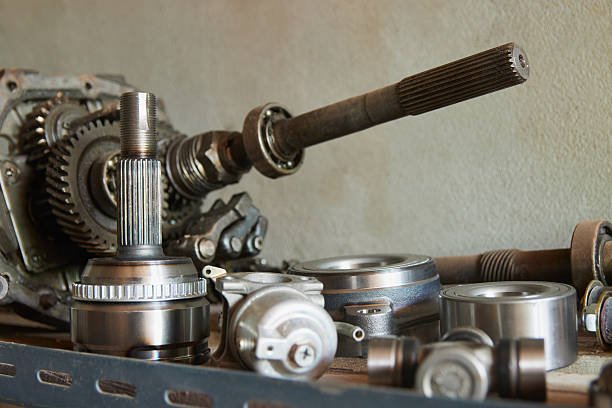
Front View Mechanical Engineering or Industry Concept by Old CV Joint Drive Shaft and Auto Part and Ball Bearing, Universal Joint, Transmission Gear or Cog on Shelf
A vibration that starts as a faint hum at highway speed can grow into a serious drivetrain problem if you ignore it. The driveshaft carries power from the transmission to the wheels, so any imbalance or worn part affects the whole vehicle. Drivers who gather a few simple details before the visit usually get faster and more accurate service. Knight Motor Company has found that well-prepared customers save time and money on every repair. This guide explains how to get ready for a trip to a driveshaft shop in Provo UT.
Recognize the Early Warning Signs
Driveshaft trouble rarely appears without hints. The most common sign is vibration that grows stronger as speed increases, often felt through the seat or floor. A clunk when shifting from park to drive or when accelerating from a stop can point to worn universal joints. Squeaking or chirping at low speeds suggests dry joints, while clicking during turns may come from a worn constant velocity joint. Grease spots under the vehicle and a shudder during acceleration are also worth noting. The sooner you act, the less likely a minor wear issue becomes a damaged transmission or differential.
Check What You Can Before the Visit
Look for Visible Damage
With the vehicle parked on level ground and the engine off, inspect the driveshaft if you can safely see it. Look for dents, missing balance weights, torn rubber boots, and rust around the joints. Try to rotate the shaft gently by hand, and notice any looseness or play. Never crawl under a vehicle supported only by a jack.
Listen and Feel During a Short Drive
Take a calm drive on a smooth road and pay attention to when the symptoms appear. Does the vibration start at a certain speed and fade at another? Does it change when you accelerate or coast? These details help a technician narrow down the cause quickly, instead of guessing.
Note Details to Share
Write down the vehicle year, model, drivetrain type, and any recent changes such as a lift kit, new tires, or towing loads. Utah drivers who head into canyons or off-road trails should mention that use as well. Sharing this history with a trusted driveshaft shop in Provo UT helps them test the right components first.
Get the Repair Done Right
Inspection and Balancing
A good technician will remove the shaft and check it for straightness and runout. Spinning the shaft on a balancing machine reveals even small imbalances that cause vibration. Balance weights are then added or adjusted to bring the shaft within specification.
Joint and Bearing Replacement
Worn universal joints, center support bearings, and slip yokes are replaced with quality parts. Proper phasing and correct angles matter during installation, because a small error can bring the vibration back. Ask which parts are being used and whether they are covered by a warranty.
Road Test and Final Check
After reassembly, the vehicle should be road tested at the speeds where the problem occurred. This confirms that the vibration is gone and that nothing else was disturbed. Ask the shop to explain what they found, and request that worn parts be shown to you.
Keep the Driveshaft Healthy Afterward
Routine care extends the life of a repaired driveline. Grease the joints that have fittings at the intervals recommended for your vehicle, and have the boots checked during oil changes. Avoid aggressive launches, heavy towing beyond the rated limit, and driving with a known vibration. If you change tire size or suspension height, have the driveline angles reviewed. Small habits like these protect your investment and keep the vehicle quiet and smooth on the road.
Final Thoughts
Preparation helps you describe the problem clearly, avoid unnecessary work, and get a lasting fix. Notice the signs, gather your details, and ask questions during the repair. When you need a dependable Driveshaft shop in Provo UT, choose one that explains the work and stands behind it.
Frequently Asked Questions
Can I keep driving with a vibrating driveshaft?
It is best to avoid long drives until it has been inspected. Continued use can damage bearings, joints, and nearby components. A short visit to a shop is cheaper than a major repair.
How long does a driveshaft repair usually take?
Simple joint replacements and balancing can often be done in a day. Custom parts or hard-to-find components may take longer. Ask for an estimated timeline when you drop off the vehicle.
Why does my truck vibrate after a lift kit?
Lifting changes the driveline angles, which can cause vibration at certain speeds. Corrections may include spacers, a new shaft, or a double cardan setup. A technician can measure the angles and recommend the right fix.
Is balancing really necessary after repair?
Yes, because even a small imbalance can cause noticeable shaking at speed. Balancing ensures the shaft spins smoothly and reduces wear on joints. It is a key step for a lasting repair.