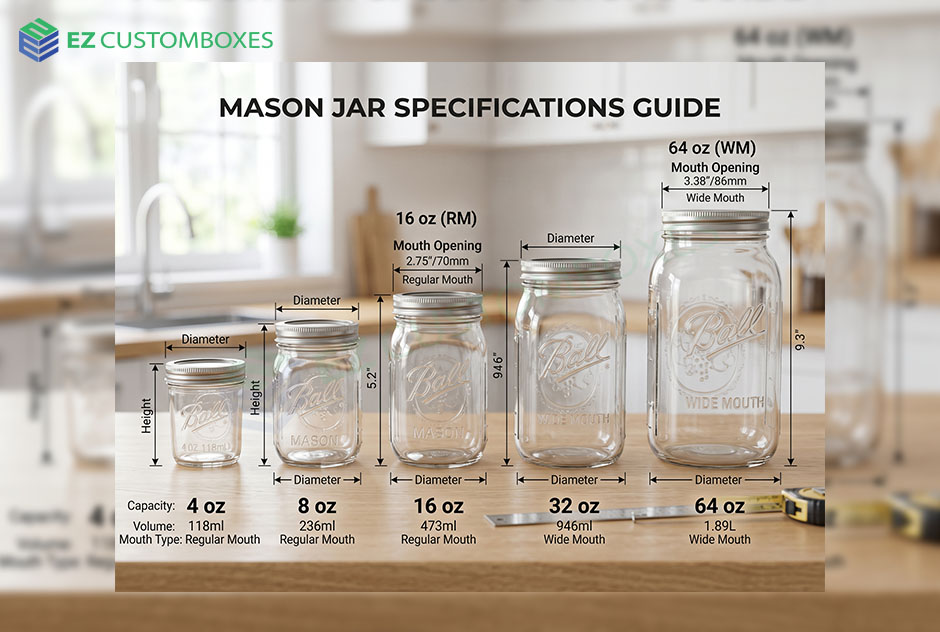
Mason jars are among the most versatile containers available today. Whether you’re preserving food, storing pantry items, creating DIY crafts, or packaging products, understanding mason jar specifications helps you select the right jar for the job.
From jar dimensions and capacity to material quality and lid compatibility, each specification plays a vital role in performance and usability. This guide explains everything you need to know about mason jar specifications so you can make informed purchasing decisions.
Why Mason Jar Specifications Matter
Understanding mason jar specifications is important because different jars serve different purposes. Choosing the wrong size or material can affect storage efficiency, food preservation, and product presentation.
Key benefits of knowing mason jar specifications include:
- Selecting the right capacity for your needs
- Ensuring compatibility with lids and accessories
- Improving food preservation results
- Enhancing product packaging appearance
- Maximizing storage space
What Are Mason Jar Specifications?
Mason jar specifications refer to the technical details that define a jar’s size, capacity, material, dimensions, and functionality.
These specifications typically include:
- Capacity
- Height
- Diameter
- Mouth opening size
- Material composition
- Lid type
- Weight
- Heat resistance
Understanding these factors helps consumers and businesses choose the most suitable mason jar.
Mason Jar Sizes and Capacities
One of the most important specifications is capacity. Mason jars are available in several standard sizes.
Common Mason Jar Capacities
| Size | Capacity | Common Uses |
|---|---|---|
| Half Pint | 8 oz | Jams, sauces, spices |
| Pint | 16 oz | Food storage, beverages |
| Quart | 32 oz | Canning vegetables and fruits |
| Half Gallon | 64 oz | Bulk storage and fermentation |
How to Choose the Right Mason Jar Size
Consider:
- Intended use
- Storage space
- Product quantity
- Shelf presentation
- Preservation requirements
Smaller jars work well for samples and condiments, while larger jars are ideal for bulk storage.
Understanding Mason Jar Dimensions
Dimensions directly affect storage, transportation, and shelf placement.
Standard Mason Jar Measurements
Most mason jars include:
- Height
- Diameter
- Opening width
- Neck size
Dimension specifications help ensure compatibility with:
- Canning equipment
- Storage racks
- Packaging inserts
- Custom labels
Always verify dimensions before purchasing jars for commercial applications.
Wide Mouth vs. Regular Mouth Mason Jars
Mason jars generally come in two opening styles.
Wide Mouth Mason Jars
Advantages include:
- Easy filling
- Easy cleaning
- Better for larger foods
- Convenient food removal
Common opening size:
- Approximately 3 inches
Regular Mouth Mason Jars
Benefits include:
- Better pouring control
- Ideal for liquids
- Traditional appearance
- Space-efficient storage
Common opening size:
- Approximately 2.75 inches
The choice depends on your intended application.
Mason Jar Materials and Construction
Most mason jars are manufactured using durable soda-lime glass designed to withstand temperature changes during food preservation.
Key Material Features
Quality mason jars offer:
- BPA-free construction
- Food-safe materials
- Heat resistance
- Scratch resistance
- Durability for repeated use
Premium jars often provide enhanced strength for long-term storage applications.
Mason Jar Lid Specifications
Lid compatibility is another critical specification.
Most mason jars use a two-piece sealing system:
- Flat metal sealing lid
- Screw band ring
Important Lid Features
Look for:
- Airtight sealing capability
- Rust resistance
- Food-grade coatings
- Reusable designs
Proper lid selection ensures effective food preservation and leak prevention.
How Mason Jar Specifications Affect Food Preservation
Choosing the correct jar specifications improves preservation success.
Factors that impact preservation include:
- Jar capacity
- Glass thickness
- Lid seal quality
- Mouth size
- Heat resistance
Using canning jars designed specifically for canning helps maintain food safety and shelf life.
Mason Jar Specifications for Product Packaging
Many businesses use mason jars for packaging products because they provide an attractive and sustainable presentation.
Popular packaging applications include:
- Candles
- Honey
- Spices
- Bath salts
- Coffee beans
- Homemade foods
When selecting jars for packaging, consider:
- Branding requirements
- Label placement area
- Product weight
- Shipping durability
Proper specifications help create a professional customer experience.
How to Read Mason Jar Product Specifications
Before purchasing mason jars, review the product details carefully.
Check:
- Capacity
- Dimensions
- Mouth type
- Material
- Lid inclusion
- Heat tolerance
- Weight
- Packaging quantity
Comparing these specifications helps you find the best jar for your intended use.
Conclusion
Understanding mason jar sizes helps you choose the right jar for food preservation, storage, crafts, and product packaging. By evaluating factors such as capacity, dimensions, mouth size, materials, and lid compatibility, you can ensure better performance and long-term value.
Whether you’re a home canner, DIY enthusiast, or business owner, taking the time to review mason jar specifications will help you make smarter purchasing decisions.
Ready to choose the perfect mason jar? Compare specifications carefully and select a jar that matches your storage, preservation, or packaging goals.