It usually starts small. A faint green tint shows up along the steps, or the water looks a little cloudy after a hot weekend. A few days later, the pool that seemed fine now needs real attention. For many homeowners, this is the moment they start looking into pool service San Diego CA options and asking what regular care actually involves.
Southern California’s sunny climate makes pool ownership feel like an easy choice. That same weather, though, creates conditions that keep pools busy all year. Knowing how professional care works helps owners make better decisions, whether they handle some tasks themselves or hand everything off.
Why Pools in This Region Need Steady Attention
In colder parts of the country, owners close their pools for winter. Coastal Southern California rarely gets that break. Pools here often stay open year-round, which means the filter, pump, and chemical balance never really rest.
Sunlight is one of the biggest factors. UV rays break down chlorine quickly, so a pool that was balanced on Monday can lose much of its sanitizer by midweek. In July and August, that process speeds up even more.
Then there’s the water itself. Much of the region relies on hard water with high calcium content. Over time, hard water leaves white scale on tile lines, clogs heater parts, and makes chemical balance harder to hold. Many owners don’t notice the buildup until it becomes a stubborn crust.
Wind also plays a role. Santa Ana winds carry dust, leaves, and pollen straight into backyard pools. A single windy afternoon can undo a week of careful cleaning.
What Regular Pool Service Usually Includes
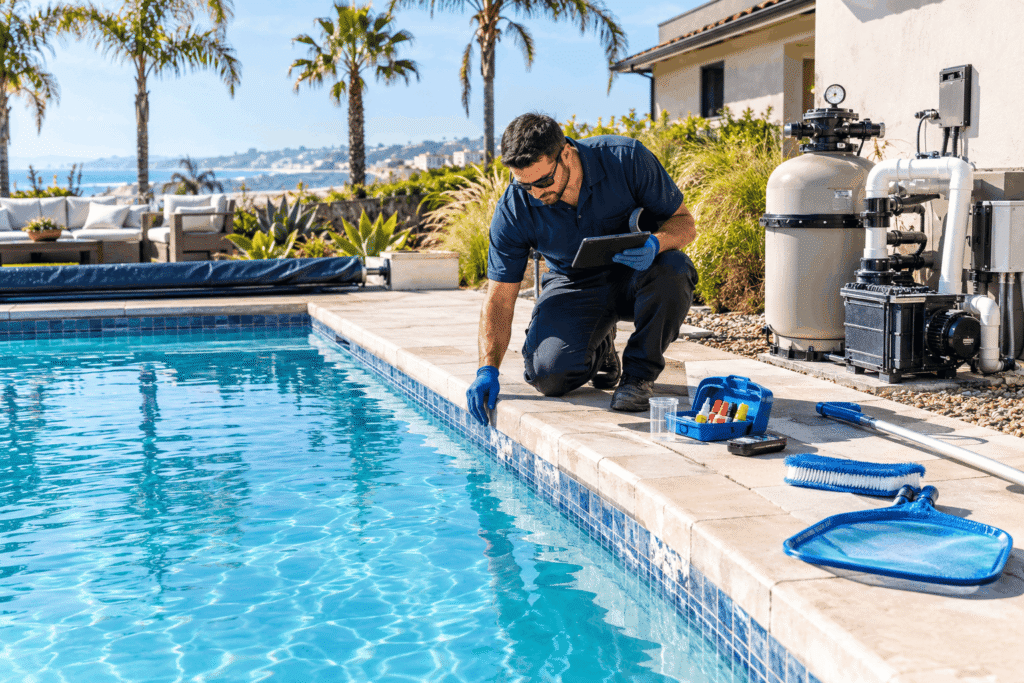
Most professional visits follow a familiar pattern, even if every provider has its own routine. A technician typically tests the water first. They check chlorine, pH, alkalinity, and often calcium hardness and stabilizer levels.
Based on those readings, they add the right chemicals to bring things back into range. This part matters more than it seems. Water that’s slightly off balance can irritate skin, fog up quickly, or slowly damage plaster and equipment.
Physical cleaning comes next. That usually means skimming the surface, brushing walls and steps, and vacuuming the floor. Brushing is often overlooked by DIY owners, yet it’s one of the best ways to stop algae before it takes hold.
Technicians also empty skimmer and pump baskets and glance over the equipment. A trained eye can catch early warning signs, like a pump that sounds rough, a small leak near a fitting, or a filter that’s due for a deeper clean.
Weekly Visits vs. Occasional Cleanings
Many homeowners wonder whether they need weekly visits or just help now and then. In most cases, weekly care is the industry standard in warm climates. The steady rhythm keeps chemicals from drifting too far and stops debris from piling up.
Occasional cleanings can work for pools that see light use or owners who enjoy doing basic upkeep. Still, those owners often call for help after a problem has already started. Clearing a green pool usually costs more time and money than simply preventing one.
A practical middle ground exists, too. Some owners handle skimming and basket cleaning themselves, then rely on a professional for water chemistry and equipment checks. This blend works well for people who like being involved but don’t want to guess on chemical balance.
The Real Benefits of Consistent Pool Care
The most obvious benefit is clean, inviting water. But the value of steady Pool Maintenance San Diego CA goes well beyond looks.
Equipment lasts longer when it’s cared for. Pumps, heaters, and filters are expensive to replace. When water stays balanced and filters stay clean, these parts don’t have to work as hard. That often adds years to their lifespan.
Health and comfort improve as well. Properly sanitized water lowers the risk of bacteria and keeps eyes and skin from feeling irritated. Families with young kids tend to notice this right away.
There’s also the question of time. A well-maintained pool can take several hours a week to keep up. For busy households, getting those hours back is often the biggest reason they choose professional care.
Finally, consistent upkeep protects property value. A sparkling pool adds appeal to a home, while a neglected one can raise concerns for buyers or inspectors. Stained plaster, cracked tile, and worn equipment are hard to hide.
Everyday Situations That Show the Difference
Consider a family in Chula Vista that hosts a Fourth of July party. Dozens of swimmers, sunscreen, and a long, hot day all hit the water at once. By the next morning, the pool looks dull and smells strongly of chlorine. That smell actually signals spent chlorine, not too much of it. A quick test and adjustment can bring the water back in a day.
Or picture a retired couple in La Jolla who travel for a few weeks each spring. Without anyone checking the pool, a jammed skimmer or a timer glitch could turn clear water into an algae problem. Regular visits while they’re away keep everything running as it should.
Inland, the story changes a bit. Homes in El Cajon or Escondido often see hotter summer temperatures than coastal areas. Warmer water grows algae faster and burns through sanitizer more quickly, so these pools may need closer monitoring in peak months.
New pool owners face their own learning curve. Someone who just bought a home with a pool may not know what a salt cell is or why the pH keeps rising. Professional care during the first season often doubles as a crash course in how the system works.
How to Choose a Reliable Provider
The pool care industry has plenty of options, from solo operators to larger local teams. A few qualities tend to separate dependable providers from the rest.
Clear communication ranks near the top. Good technicians leave notes after each visit, share test results, and flag any concerns. Owners shouldn’t have to guess what happened during a service call.
Licensing and insurance matter as well. California has specific rules for contractors who handle certain repairs, so it’s worth asking about credentials before any equipment work begins. Insurance protects the homeowner if something goes wrong on the property.
Consistency is another key factor. The best results come from technicians who show up on a predictable schedule and know the pool’s history. Local companies such as All Corners Pool Service are one example of the kind of regional providers homeowners may come across when comparing their choices for Pool Maintenance San Diego CA.
Reviews and word of mouth still carry weight, too. Neighbors with pools are often the best source of honest feedback on who is reliable and who isn’t.
Small Habits That Make Professional Care Work Better
Even with a professional on board, owners can help keep their pools in shape. Running the pump long enough each day keeps water moving and filtered. In summer, that usually means longer run times than in winter.
Keeping the water level steady also helps. If it drops below the skimmer opening, the pump can draw in air and suffer damage. Topping off after hot spells or heavy splashing is a simple fix.
Trimming nearby trees and shrubs cuts down on leaves and debris. And after big storms or windy days, a quick skim can stop organic matter from sinking and staining the floor.
Final Thoughts
Pools in Southern California are a year-round investment, shaped by strong sun, hard water, and seasonal winds. Understanding how professional pool service San Diego CA works helps homeowners set realistic expectations and spot problems early.
Whether an owner chooses full weekly care or a shared approach, the goal stays the same: safe, clear water and equipment that lasts. A little knowledge goes a long way toward keeping the backyard pool a place to relax rather than a source of stress.
Frequently Asked Questions
How often should a pool be serviced in a warm climate?
Weekly service is the common standard in warm, sunny areas. Frequent sunlight and year-round use cause chlorine levels to drop quickly, so steady attention helps prevent algae and cloudy water.
How much does professional pool service typically cost?
Prices vary based on pool size, location, and what’s included. Basic weekly service with chemicals usually costs less than plans that add filter cleaning, repairs, or equipment upgrades.
Why does my pool turn green so fast?
Green water usually means algae, which grows quickly when chlorine runs low. Heat, heavy use, poor circulation, and debris can all speed up the process.
Do saltwater pools need less maintenance?
Saltwater pools still need regular care. They create chlorine automatically, but owners must check pH, clean the salt cell, and watch for scale buildup, especially in hard water areas.