A property manager walks out to the courtyard after a week of spring rain. The grass is patchy, the walkways are tracked with mud, and the irrigation bill for last summer is still on the desk. That scene plays out across office parks, apartment communities, and campuses every year, and it’s one reason commercial turf installation has become a common topic in facility planning.
Synthetic turf is no longer just for stadiums. It now covers rooftop decks, dog parks, playgrounds, medians, and athletic fields. For many property owners, it solves a simple problem: how to keep outdoor spaces green and usable without constant upkeep.
Understanding Commercial Turf Installation
At first glance, artificial grass seems simple. Roll it out, trim the edges, and you’re done. In practice, a commercial project involves far more planning than a backyard job.
Commercial sites see heavy foot traffic, varied weather, and sometimes vehicles or equipment. The turf has to handle all of that while staying safe and good-looking for years. That durability depends largely on what happens beneath the surface.
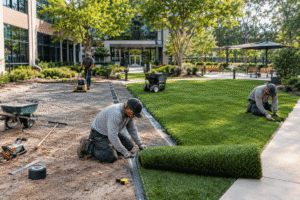
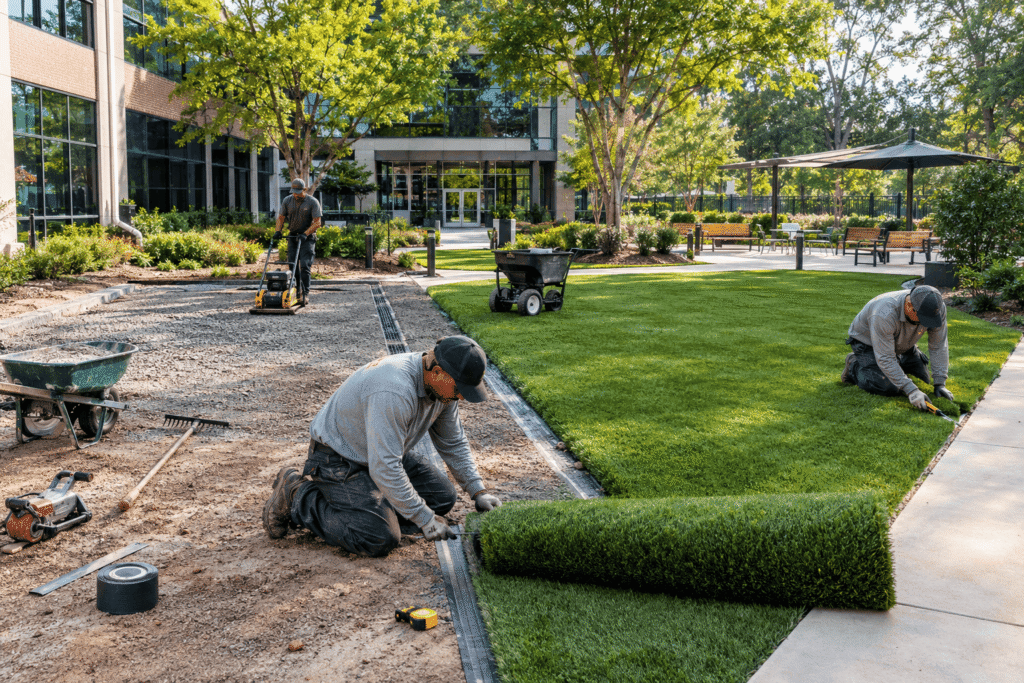
Most installations start with site evaluation. Crews look at soil type, slope, and drainage patterns. Then they remove existing grass and grade the area. Next comes a compacted aggregate base, usually crushed stone, which gives the turf a stable foundation and allows water to drain through.
After the base is set, the turf is laid, seamed, and secured. Infill, often sand, rubber, or organic material, is brushed into the fibers. Infill helps the blades stand upright, adds weight, and provides cushioning.
The type of turf matters too. Landscape turf for an office lobby entrance differs from the dense, resilient product used on a soccer field. Pile height, fiber material, and backing all affect how the surface performs. A good installer matches the product to how the space will actually be used.
Why Climate and Location Shape the Project
Regional conditions play a big role in how turf performs. In Sandy Springs, GA, summers bring high heat and humidity, while sudden heavy rainstorms are common throughout the year. Those conditions make proper drainage especially important.
The red clay soil found across much of metro Atlanta also holds water. Without a well-built base, standing water can collect under the turf and cause shifting or odors over time. Experienced installers in the region often plan for deeper base layers or added drainage features to address this.
Heat is another factor. Synthetic surfaces can get warm in direct sun. Many newer products include cooling technology or lighter-colored infill, and some properties add shade structures near play areas to keep surfaces comfortable.
The Benefits Property Owners Notice Most
Water savings are often the first advantage people mention. Natural grass on a large commercial lot can require a lot of irrigation, especially during dry summer stretches. Synthetic turf needs only occasional rinsing, which can cut outdoor water use sharply.
Maintenance is the next big shift. There’s no mowing, fertilizing, or reseeding. Grounds crews can spend their time on other tasks, and properties no longer need to schedule around growing seasons. Routine care usually involves brushing, debris removal, and periodic infill top-ups.
Appearance also counts. Commercial properties depend on curb appeal. A green, even lawn in August or January sends a message that a business or community is well cared for. Turf doesn’t brown out during droughts or turn muddy after storms.
Usability may be the most practical benefit. A natural field might need to close for days after rain. Synthetic surfaces typically drain quickly and can be used soon after a storm passes. For sports programs and recreation spaces, that means fewer canceled games and practices.
There are trade-offs worth weighing. Upfront costs are higher than seeding or sodding. Turf has a lifespan, often in the range of 8 to 15 years depending on use and care, and will eventually need replacement. Weighing these factors against long-term savings helps owners decide whether it’s the right fit.
How Different Properties Put Turf to Work
Schools are among the largest users of synthetic surfaces. A middle school football field might host physical education classes in the morning, soccer practice after school, and a band rehearsal in the evening. Natural grass rarely survives that kind of schedule. Schools turf installation projects often focus on shock absorption and safety ratings, since fall protection matters for young athletes and playground users.
Playgrounds are another common application. Turf combined with foam padding underneath can meet safety standards for fall heights while staying cleaner than mulch or wood chips. Parents and teachers often appreciate that kids come inside with less dirt and fewer splinters.
Apartment and condo communities in Sandy Springs, GA have embraced turf for pet areas. Dog parks see constant use, and natural grass quickly wears down to bare dirt. Pet turf is designed with permeable backing and antimicrobial features to handle drainage and odor control.
Office campuses use turf in courtyards, rooftop terraces, and outdoor break areas. These spaces give employees a place to step outside without the upkeep of a traditional lawn. Hotels and restaurants use it on patios and event lawns that need to look sharp every weekend.
Municipal spaces are part of the picture too. Medians, roundabouts, and small parks often sit in spots that are hard to irrigate or mow safely. Turf keeps them green with minimal crew time.
Choosing the Right Installer
Because so much depends on the base and drainage, choosing an experienced installer is one of the biggest decisions in any project. Property owners often ask for examples of past commercial work, details about base preparation, and information on product warranties.
Local knowledge helps. Installers familiar with Sandy Springs, GA understand the soil, rainfall, and heat conditions that affect long-term performance. Regional firms such as Turf Restoration And Design LLC are among those that handle commercial and school projects in the area, and comparing several providers gives owners a clearer sense of options and pricing.
It’s also smart to plan for the long term. Owners should ask what routine maintenance looks like, how often infill needs replacing, and what the expected lifespan is for their specific use. Schools turf installation planning, in particular, often involves board approval and budgeting cycles, so understanding full lifecycle costs upfront makes the process smoother.
Frequently Asked Questions
How long does commercial turf installation take?
Most projects take anywhere from a few days to several weeks. The timeline depends on the size of the area, site preparation needs, drainage work, and weather conditions.
How much does commercial artificial turf cost?
Costs vary by turf type, site condition, and base requirements. Landscape turf is usually less expensive than athletic-grade surfaces, and grading or drainage work can add to the total.
Does artificial turf get hot in the summer?
Yes, synthetic turf can get warmer than natural grass in direct sun. Cooling infill, lighter fiber colors, shade structures, and occasional water rinsing can help lower surface temperatures.
How long does artificial turf last on commercial properties?
Most commercial turf lasts between 8 and 15 years. High-traffic athletic fields may need replacement sooner, while lightly used landscape areas often last longer with routine care.
Is synthetic turf safe for schools and playgrounds?
When installed with proper padding and tested for fall height ratings, synthetic turf can meet playground safety standards. Schools often review certifications and material safety data before choosing a product.